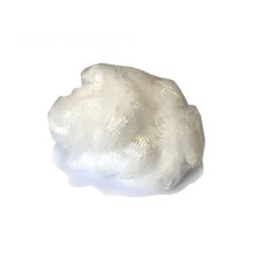
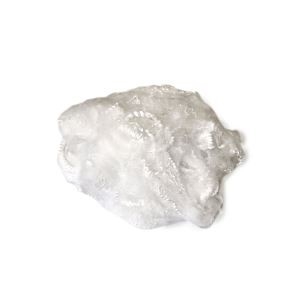
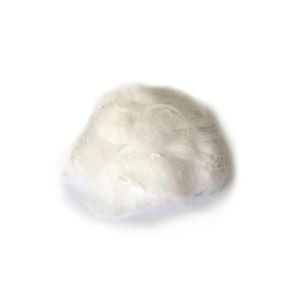
Nylon Fiber
High-Performance Nylon: A durable, high-denier staple fiber for nonwoven applications.
Versatile Processing: Compatible with thermal bonding, needle punching, chemical bonding, and spunlace.
Standard Specs: Available in various sizes, including 1.5D to 3D.
Metal Alternative: Lightweight, non-toxic, and wear-resistant—ideal for replacing metal in gears, bearings, and industrial parts.
PRODUCT DETAIL
1. What is Nylon Fiber?
In the hierarchy of synthetic polymers, Nylon Fiber (Polyamide) stands as the definitive choice for high-performance textiles and industrial materials. While continuous filaments are often used for silky, smooth fabrics, the “staple” form—fibers cut to specific, shorter lengths—allows for unparalleled versatility.
By spinning these fibers into yarns or integrating them into nonwoven webs, manufacturers can create products that combine the natural texture of wool with the “super-powers” of synthetic engineering. This guide explores why Nylon Staple Fiber remains an essential component across the global supply chain, from the fashion runways to the factory floor.
Nylon Staple Fiber is a synthetic material produced by cutting continuous nylon filaments into discrete lengths, typically ranging from 25mm to 120mm.
Derived primarily from Nylon 6 (Polycaprolactam) or Nylon 6,6 (Polyhexamethylene adipamide), these fibers are prized for their extreme durability and elastic recovery. Because they can be cut to match the lengths of natural fibers like cotton (approx. 38mm) or wool (approx. 51mm–102mm), they are the ideal candidate for blending, allowing textile engineers to create hybrid fabrics that possess the best of both worlds.
2. Key Characteristics: Why Industry Chooses Polyamide
A. High Strength and Durability
Nylon is defined by its tensile strength. With a tenacity range of 4.0 to 7.5 g/denier, it is significantly tougher than standard polyester. This mechanical strength allows fabrics to endure high-stress environments without tearing or degrading, ensuring a long product lifecycle.
B. Exceptional Elasticity and Resilience
Nylon is the “memory foam” of the fiber world. Its elongation properties (18% to 40%) allow it to stretch significantly under tension and—crucially—return to its exact original shape. This makes it indispensable for applications like hosiery, sportswear, and automotive seating, where maintaining a “tight” fit is essential.
C. Superior Abrasion Resistance
Nylon’s resistance to surface wear is unmatched. In high-traffic environments—such as airport carpets or industrial conveyor belts—nylon fibers can withstand millions of cycles of friction without pilling or thinning.
D. Moisture Management and Rapid Drying
While nylon is slightly hygroscopic (absorbing about 4% moisture), it manages water far better than natural fibers. It wicks moisture away from the skin and dries rapidly, which prevents the heavy, water-logged feeling associated with cotton in outdoor or athletic settings.
E. Deep Dyeability and Aesthetic Versatility
Nylon has an incredible affinity for dyes, particularly acidic and basic dyes. It holds vibrant colors and “dope-dyed” (solution-dyed) shades with high colorfastness, resisting fading from sunlight and repeated industrial laundering.
3. The Science of Production: Nylon 6 vs. Nylon 6,6
The manufacturing process involves the high-temperature polymerization of monomers. However, the choice of polymer drastically changes the fiber’s end-use:
Nylon 6: Created from a single monomer (Caprolactam). It has a lower melting point (~215°C) and a softer hand-feel. It is the preferred choice for fashion apparel and soft-touch textiles.
Nylon 6,6: Created from two monomers (Adipic acid and Hexamethylene diamine). It has a higher melting point (~250°C) and a denser molecular structure. This makes it the superior choice for high-temperature industrial uses and heavy-duty automotive parts.
The “Staple” Process: Once the long filaments are extruded, they are “crimped” (given a textured wave) to improve their ability to be spun or needle-punched, and then cut into the precise lengths required by the customer.
4. Major Applications Across Industries
Apparel and Sportswear
Nylon is the backbone of the “Athleisure” trend. When blended with cotton, it creates shirts that feel soft but don’t stretch out over time. In hosiery and swimwear, it provides the essential “snap-back” elasticity.
Outdoor Gear
The water resistance and durability of nylon make it the standard for backpacks, tents, and weather-resistant shells. Its quick-dry nature ensures that outdoor gear remains lightweight even in rain.
Carpets and Upholstery
In commercial flooring, Nylon 6,6 is favored because it doesn’t “crush.” It stays upright under heavy foot traffic, maintaining the carpet’s aesthetic for years.
Industrial and Engineering Components
Because of its non-toxic nature and high mechanical strength, polyamide is increasingly used as a metal substitute. It is used in:
Bearings and Gears: Utilizing its low friction and wear resistance.
Tire Cords: Providing the strength to reinforce rubber under high speed.
Nonwovens: Including industrial filters and medical grade sponges.
5. The Sustainability Conversation
While nylon is traditionally a petroleum-based product, the industry is moving toward a circular economy.
Recycled Nylon: Using post-consumer waste like old fishing nets and carpets to produce “R-Nylon” staple fibers.
Low Maintenance: Its longevity reduces the need for frequent replacement, which is a core pillar of sustainable consumption.
6. Advantages vs. Disadvantages
Benefits
Versatility: Can be blended with almost any other fiber (wool, cotton, polyester).
Maintenance: Wrinkle-resistant and machine washable.
Strength-to-Weight: Offers massive durability without the weight of metals or thicker synthetics.
Considerations
Heat Sensitivity: Must be processed with care near its melting point.
Non-biodegradable: Requires responsible end-of-life recycling programs to mitigate environmental impact.
Conclusion: Why Nylon Staple Fiber is the Engineer’s Choice
Nylon Staple Fiber is more than just a textile; it is a high-performance raw material that bridges the gap between comfort and industrial strength. Its ability to stretch, endure friction, and hold deep color makes it one of the most versatile polymers available today.
Whether you are looking for 1.5D for fine spinning or 15D for industrial filtration, the unique mechanical properties of Polyamide ensure that your final product is built to last.
Technical Parameter
When sourcing Nylon Staple Fiber, procurement teams must look at these five critical parameters:
| Parameter | Common Range | Application Note |
| Denier (Fineness) | 0.9D – 15D | 1.5D-3D for fine apparel; 6D-15D for industrial. |
| Cut Length | 38mm, 51mm, 76mm | 38mm is standard for cotton-system spinning. |
| Tenacity | 4.0 – 7.5 g/d | High tenacity fibers are used for ropes and cords. |
| Crimp Frequency | 8 – 14 CPI | Crucial for “loft” and spinning cohesion. |
| Shrinkage | 1.0% – 3.0% | Measures stability during heat-setting processes. |
Video
FAQ
1. What do you offer?
We supply a comprehensive range of fibers, including recycled hollow conjugated (both siliconized and non-siliconized) polyester staple fiber, hollow fiber, microfiber, virgin polyester staple fiber, and low-melt fiber.
2. What is it used for?
Our fibers are versatile and widely utilized across both the filling and non-woven industries, providing essential loft, durability, and texture for various consumer and industrial applications.
3. Are you a factory or a trading company?
We are primarily a manufacturer specializing in polyester staple fiber with years of industry expertise. To better serve our clients, we also operate a dedicated trading division that allows us to act as a one-stop solution provider.
In addition to our own fiber production, we source high-quality textile components (such as yarn and low-melt fibers) and finished goods (including foam, pillows, cushions, toys, and down/feather products) to ensure our customers have access to a comprehensive supply chain.
4. Where is your factory location?
To maintain a robust and flexible global supply chain, our manufacturing facilities are strategically located throughout Asia, specifically in Vietnam, China, Malaysia, Thailand, and Indonesia. If you would like to visit one of our sites, please contact your sales representative, and we will be happy to arrange transportation for you.
5. Can you accept free sample?
Yes, we provide free hand samples for quantities under 1 kilogram. Once a price is confirmed, we can prepare and dispatch your sample within 2–3 business days. Please note that while the sample is free, the freight costs are the responsibility of the client.
6. Can you provide ODM service?
Absolutely. We specialize in ODM (Original Design Manufacturing). This means we can customize the material composition, dimensions, quantity, packaging, and branding to meet your specific requirements. Your logo and unique specifications will be integrated into the final product.
7. How about your quality? What’s the minimum order Quantity (MOQ)?
We invite you to place a trial order to experience our quality firsthand. Our standard MOQ is 23,000 kilograms per order.
Regarding pricing, we maintain a no-bargain policy. We believe in transparency and efficiency, so we provide our most competitive offer upfront to save you time and ensure a straightforward procurement process.
8. Can I mix different items in one order?
Yes, for your convenience, we allow for a maximum of two different items to be mixed within a single container.
9. How can you guarantee the product quality?
Quality is the cornerstone of our business. We employ an experienced QC team that monitors every stage of production, from raw material inspection to the final manufacturing process. We utilize a range of advanced testing instruments to ensure our fibers meet strict industry standards.
Our business philosophy is simple: We aim to serve one customer 1,000 times, rather than 1,000 customers once. We prioritize long-term partnerships built on consistent excellence.
10. What’s the payment terms?
L/C at sight, 30% TT in advance are mostly accepted; other terms shall be negotiable by both sides
For more information, please feel free to contact :
Tony Tan
Mobile number: +84 90 466 5251 (Whatsapp/Wechat/Viber/Signal)