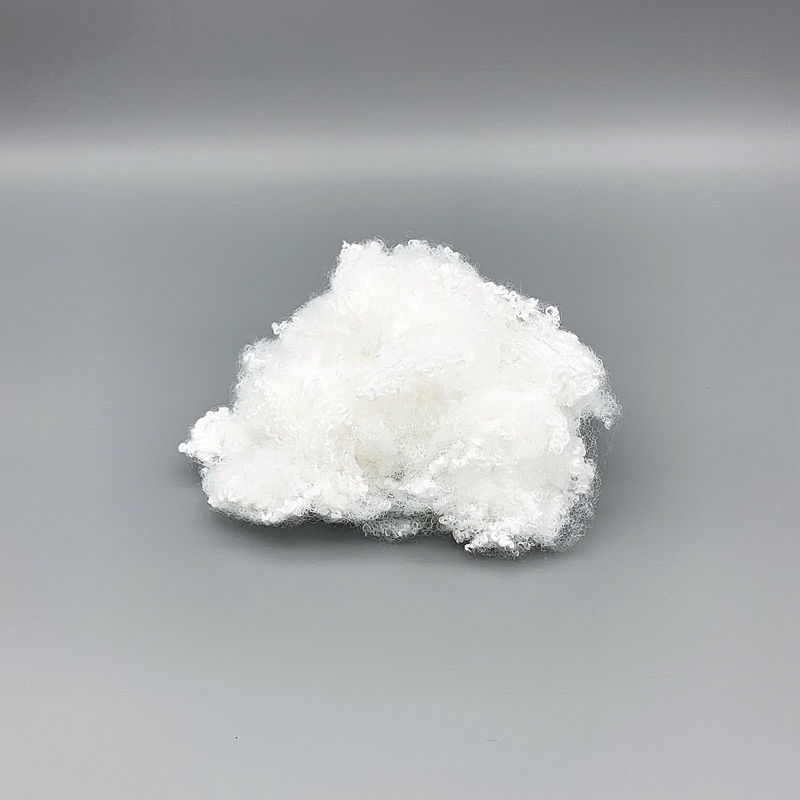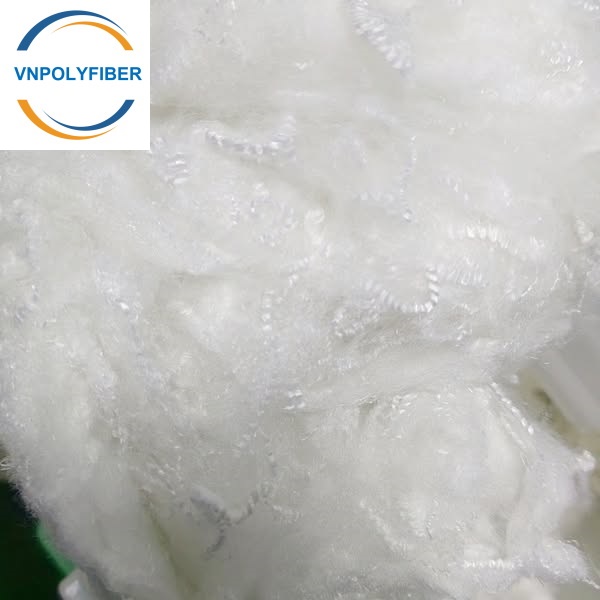
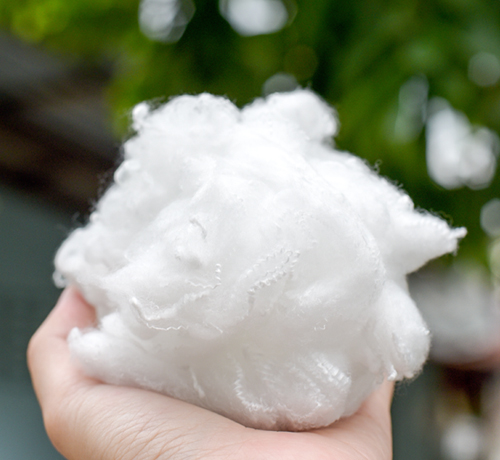
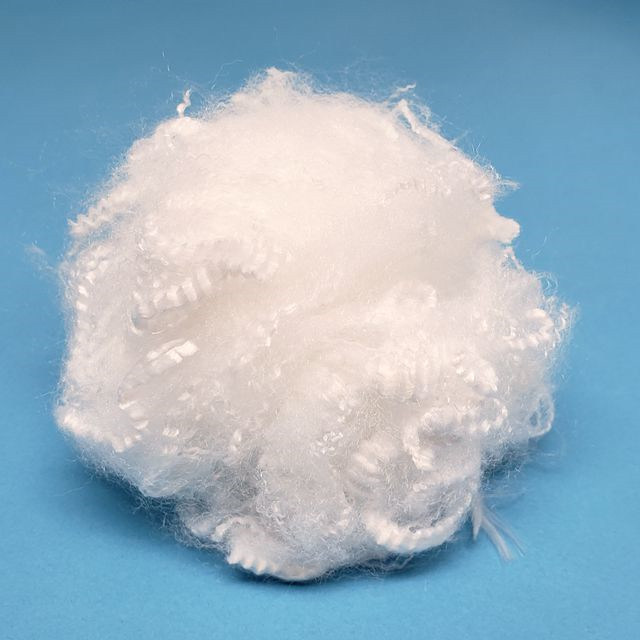
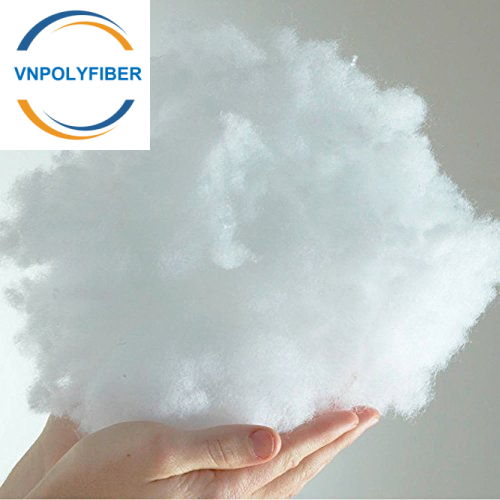
Microfiber or Down-Like Fiber
Superior Softness: The fine structure results in a soft, luxurious feel often compared to silk or high-grade cotton.
Exceptional Strength: Despite its fineness, microfiber exhibits exceptional tensile strength.
Breathability & Moisture-wicking: These fibers excel at drawing moisture away from the body and allowing air to circulate, which is particularly beneficial in sportswear and activewear.
Durability: Microfiber products tend to be long-lasting and retain their shape well, even after repeated washing and wear.
Low Maintenance: It is easy to clean, dries quickly, and is completely machine washable.
PRODUCT DETAIL
What is microfiber?
In the global textile market, microfiber has revolutionized the concept of comfort and performance. Often referred to in the industry as “Down Fiber,” it is a specialized polyester staple fiber (PSF) that offers the softest hand feel among all synthetic fibers. By mimicking the structure of natural feather down, microfiber has become the premier choice for high-end apparel, bedding, and industrial cleaning applications.
As a high-tech material, the value of microfiber lies in its microscopic dimensions and specialized finishes. In this guide, we will explore the technical properties, manufacturing processes, and diverse applications that make microfiber a crucial component of modern life.
Microfiber is defined as a synthetic fiber finer than 1.5 denier (typically ranging from 0.7D to 1.2D) that is often enhanced with a silicon finish. This fiber can be produced in either solid or hollow configurations.
Its diameter is incredibly small, measuring approximately 1/100th the diameter of a human hair and 1/20th the diameter of a silk strand. This minute size gives microfiber its distinctive properties, allowing it to mimic the loft and warmth of natural feather down—hence the common industry name “down fiber.” It is predominantly utilized for filling in clothes, duvets, comforters, pillows, and quilts.
Natural goose or duck down consists of three-dimensional clusters of fine filaments that radiate outward from a central quill point. Each cluster traps a large volume of still air relative to its mass. Still air is nature’s most efficient insulator. The more air trapped per gram of fill, the warmer and lighter the product.
This is measured in fill power — the number of cubic inches one ounce of down occupies. Premium goose down can reach 800+ fill power. The challenge for synthetic fiber engineers has always been: how do you replicate that three-dimensional, air-trapping cluster structure in a man-made filament?
The answer is microfiber polyester staple fiber: fibers so fine (0.7D–1.2D) that when processed and filled at the right density, they create an interlocking web of ultra-fine filaments that mimics the air-trapping architecture of natural down clusters—without the quill, without the allergens, and without the ethical complications.
Microfiber vs. Natural Down: A Head-to-Head Comparison
This is the comparison that every bedding manufacturer and outerwear brand eventually needs to make. Here is an honest assessment across every dimension that matters commercially:
Performance Dimension | Natural Goose/Duck Down | Microfiber (Down Alternative Fiber) |
Softness & Hand Feel | Exceptional | Excellent—approaches down at D |
Warmth-to-weight ratio | Excellent (high fill power) | Very good—approaches down with hollow versions |
Loft and volume | Excellent | Very good |
Moisture management | Poor — clumps when wet, slow to dry | Excellent—wicks moisture and dries fast |
Washability | Difficult—specialist care required | Fully machine washable, quick-dry |
Allergen risk | High — common allergen trigger | Hypoallergenic — no animal proteins |
Ethical concerns | Yes—live plucking controversy | None |
Price | High and volatile | Stable and cost-effective |
Consistency batch-to-batch | Variable — affected by bird age, season | Highly consistent — engineered specification |
Sustainability options | Limited | Recycled rPET versions available |
For most commercial applications — from mid-market to premium — microfiber polyester staple fiber delivers comparable or superior performance to natural down in every category except fill power at the very highest end. And for consumers who prioritize washability, hypoallergenic properties, and value, microfiber wins outright.
The Five Key Properties That Make Microfiber the Best Down-Like Fiber
1. Ultra-Fine Filament = Exceptional Softness
At 0.9D to 1.2D, microfiber filaments are so fine that they register to the touch more like silk than conventional synthetic fiber. When used as a fill, the sheer number of filaments per unit volume creates an extraordinarily soft, cloud-like hand feel that consumers consistently describe as “just like down.” This softness is not a finish or a coating—it is a structural property of the fiber itself.
2. Natural Loft Without the Weight
Microfiber’s high filament count creates a natural loft that traps substantial volumes of still air. The crimped structure (10–14 crimps per inch on industrial-grade microfiber) locks this air in place. The result is a fill that provides real thermal insulation at very low fill weights—essential for lightweight duvets and ultralight outerwear, where warmth-to-weight ratio is a core selling point.
3. Superior Moisture Management — Where Microfiber Beats Real Down
This is the area where microfiber decisively outperforms natural down. Natural down collapses when wet, losing virtually all of its insulating properties and taking a long time to dry. Microfiber, by contrast, excels at wicking moisture away from the body through capillary action and dries extremely quickly. For active applications—hiking, skiing, and travel—or in humid climates, microfiber is the functionally superior choice.
4. Consistent, Repeatable Performance
Natural down is an agricultural product. Fill power, cluster quality, and cleanliness vary with bird species, age, season, and processing. Microfiber polyester staple fiber is an engineered material with tightly controlled specifications: denier, cut length, crimp per inch, oil pickup (OPU), and tenacity are set and verified at the manufacturing stage. For brands that need consistent product performance across thousands of SKUs and millions of units, this repeatability is invaluable.
5. Fully Machine Washable and Hypoallergenic
Two of the biggest consumer complaints about natural down are its care complexity and allergen risk. Microfiber eliminates both. Products filled with down-like microfiber PSF can be machine washed and tumble dried repeatedly without losing loft, shape, or performance. And because it contains no animal proteins or dust mite habitat, microfiber fill is safe for allergy sufferers — a growing consideration as consumer health awareness increases.
Applications of microfiber
Apparel and Accessories
Microfiber has found widespread use in the fashion industry due to its comfort and performance properties:
- Activewear: Moisture-wicking and breathable properties make it ideal for sportswear. Global brands like Nike and Adidas frequently incorporate microfiber into high-performance lines.
- Everyday Clothing: Prized for its softness, it is used in skirts, jackets, dresses, and trousers.
- Accessories: Its ability to mimic leather (microfiber leather) makes it popular for belts, wallets, handbags, and shoes.
The outdoor and performance apparel industry has rapidly adopted microfiber as a down alternative fiber in puffer jackets, ski wear, hiking insulation layers, and travel apparel. The key advantages in this context are moisture resistance (microfiber does not collapse when wet the way down does), consistent loft after compression, and the ability to wash the garment at home.
The apparel segment leads the polyester staple fiber market with around 45.8% market share in 2025, driven by its use in affordable, durable, and versatile clothing, with innovations in microfiber and antimicrobial finishes continuing to expand its applications.
In garments designed to be worn during physical activity, microfiber’s moisture-wicking properties make it the superior choice over natural down in virtually every scenario. Moisture management, breathability, and quick-dry performance are all properties that natural down cannot match—and that microfiber delivers by design.
Home Textiles
In home décor, microfiber’s durability and aesthetic appeal make it a popular choice:
- Bedding: Sheets and comforters offer softness and effortless maintenance. They can be washed frequently without losing their “fluffy” shape.
- Upholstery: Microfiber velvet adds a luxurious touch to furniture while being resistant to stains and heavy use.
- Window Treatments: Curtains benefit from microfiber’s ability to block light and provide thermal insulation.
Premium Bedding — The Largest Market
Down-alternative bedding is the single biggest end-use for microfiber PSF globally. The global home bedding market was estimated at $126.88 billion in 2024 and is projected to reach $277 billion by 2033, growing at a CAGR of 8.8% (Grand View Research), with synthetic fills—led by microfiber—claiming a growing share as consumers prioritize washability and allergen safety alongside warmth and comfort.
Pillows, comforters, duvets, and mattress toppers filled with down-like microfiber PSF offer the following:
- The cloud-soft feel of natural down
- Machine-washable convenience
- Hypoallergenic safety for the whole family
- Consistent loft retention over years of use
- A price point accessible to mass and mid-market retail
Hotels, airlines, and cruise lines worldwide have switched from natural down to microfiber-filled pillows and duvets as the operational standard. The reasons are purely practical: microfiber fill survives industrial laundering at high temperatures and high frequency without degrading, eliminates the allergen liability of natural down in guest-facing products, and provides a consistently plush feel that premium guests expect.
Cleaning Products
One of the most significant applications is in the cleaning sector:
- Cleaning Cloths: The unique structure allows them to trap dust, dirt, and even bacteria effectively.
- Mops and Dusters: These tools leverage microfiber’s electrostatic properties to attract and hold particles efficiently.
How Microfiber Is Made: From Polymer to Down-Like Fiber
Understanding the manufacturing process helps buyers appreciate why specification consistency matters—and why not all microfiber PSF is equal.
1. Extrusion Polyester polymer (PET) is melted and forced under pressure through precision spinnerets—plates with extremely fine holes. The diameter of these holes determines the denier of the resulting filament. For microfiber, spinneret hole sizes are far smaller than for standard PSF, requiring more precise engineering and tighter process control.
2. Quenching and Drawing The extruded filaments are cooled and then drawn (stretched) to align the polymer chains, developing the fiber’s tensile strength. The drawing ratio directly affects tenacity—critical for ensuring the fiber survives high-speed industrial carding and spinning without breakage.
3. Crimping The drawn filaments pass through a mechanical crimping unit that introduces the characteristic wave pattern into the fiber. Crimp frequency (measured in crimps per inch, CPI) is a key determinant of loft—the air-trapping property that makes microfiber behave like natural down.
4. Silicon Finishing (OPU Application) The crimped fiber is treated with a silicone oil finish—measured as Oil Pickup (OPU) by weight percentage. This finish serves two purposes: it controls static electricity during processing, and it gives the fiber its characteristic “slick” feel, preventing individual filaments from tangling or clumping in the fill. Getting OPU right is critical—too low and the fiber clumps; too high and it becomes too slippery for consistent fill distribution.
5. Cutting and Baling The finished tow is cut to the specified staple length (32mm, 38mm, or 51mm) and baled for shipping. The cut length must be matched to the customer’s specific carding and filling equipment—this is one of the most common specification requirements we work through with new customers.
Down Alternative Fiber and Sustainability: The rPET Advantage
One of the most compelling recent developments in the down alternative fiber space is the rise of recycled microfiber polyester staple fiber made from post-consumer PET (rPET). This directly addresses one of the traditional criticisms of synthetic fill — its dependence on virgin petroleum feedstocks.
The recycled polyester staple fiber market is estimated at $13.75 billion in 2024 and projected to reach $26.5 billion by 2032, growing at a CAGR of 8.56% (Future Market Report)—significantly outpacing the growth of virgin PSF as sustainability mandates from global brands accelerate adoption.
At VNPolyfiber, our recycled microfiber PSF is produced from post-consumer PET bottles, offering:
- Performance equivalent to virgin fiber in softness, loft, and processing behavior
- GRS (Global Recycled Standard) certifiable supply chain
- Full traceability from bottle to fiber
- Support for brands’ ESG and circular economy commitments
- The same denier and cut length options as our virgin range (0.9D, 1.1D, 1.2D; 32mm, 38mm, 51mm)
For bedding and apparel brands navigating retailer sustainability scorecards and consumer demand for eco-conscious products, recycled microfiber offers a way to communicate a genuine environmental story without any compromise on product performance.
Environmental and Future Considerations
While microfiber offers many benefits, it is critical to take into account its environmental impact:
- Synthetic Origin: Being derived from petroleum, production contributes to fossil fuel consumption.
- Microplastic Pollution: Washing can release tiny plastic particles into waterways.
Innovations in Sustainability
- Recycled Materials: Manufacturers like Vnpolyfiber are increasingly producing microfibers from recycled plastics (rPET), promoting sustainability.
- Improved Filtration: New washing machine filters aim to capture microfibers before they enter water systems.
- Smart Textiles: Researchers are developing “smart microfibers” that can respond to temperature changes for use in medical and protective clothing.
Choosing Between Microfiber and Other Down Alternative Fibers
Microfiber is not the only down-alternative fiber on the market. Here’s how it compares to other common synthetic fill options:
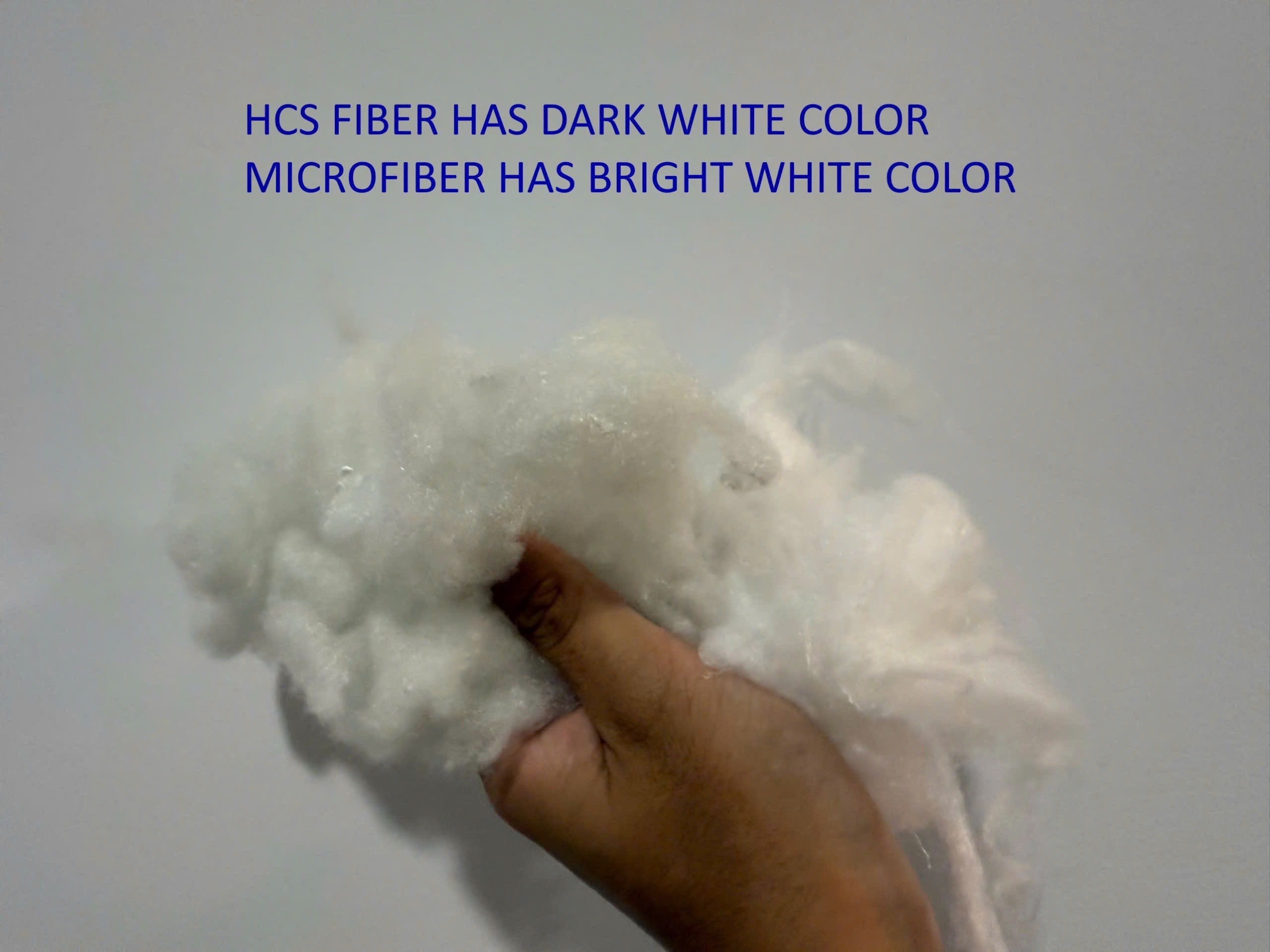
Microfiber vs. Standard Hollow Conjugated Fiber (HCS): Standard HCS fiber (typically 6D–15D) offers superior bulk and resilience—it springs back after compression better than microfiber. However, it cannot match microfiber’s softness, drape, or down-like hand feel. Many premium bedding manufacturers use both: microfiber for the outer layers where hand feel matters most, and hollow fiber for the core where bulk and recovery are priorities.
Microfiber vs. Cluster Fiber (Ball Fiber) Ball fiber (or cluster fiber) is a form of hollow polyester staple fiber processed into spherical clusters specifically to mimic the shape of natural down clusters. It offers good loft but comes at a higher processing cost. Microfiber achieves a comparable down-like feel through fineness alone, with simpler processing and lower cost—making it the more commercially practical down alternative in most applications.
Microfiber vs. Primaloft and Branded Synthetics Branded performance fills like PrimaLoft are proprietary microfiber-based technologies—they are, at their core, ultra-fine polyester staple fibers with specific engineering treatments. The branded premium is significant. For manufacturers developing their own branded down alternative products, sourcing quality microfiber PSF directly and building a proprietary fill specification offers a compelling cost and margin advantage.
Frequently Asked Questions
Is microfiber really as warm as natural down? For most practical applications, yes. Hollow microfiber at the right fill density delivers warmth performance that is very close to mid-fill-power natural down. It will not match 800+ fill power premium goose down in an ultralight application, but for the vast majority of bedding and apparel end uses, the performance gap is negligible and the practical advantages (washability, allergen safety, cost) are decisive.
What is the difference between microfiber and “down alternative fiber”? They refer to the same material used in the same application. “Microfiber” is the technical fiber description; “down alternative fiber” and “down-like fiber” are commercial descriptions of what that fiber does—it replaces natural down in fill applications.
Can I blend microfiber with hollow fiber for better performance? Yes, and many of our customers do exactly this. A common approach is a 30–50% microfiber / 50–70% hollow fiber blend, which delivers both the down-like softness of microfiber and the resilient loft recovery of hollow fiber. We can advise on blend ratios based on your specific product requirements.
What is the minimum order for VNPolyfiber microfiber PSF? Please contact our team or submit a quote request for MOQ, lead times, and pricing tailored to your volume and specifications.
Conclusion: Microfiber Is the Down Alternative Fiber the Industry Has Been Waiting For
For centuries, natural goose and duck down was the gold standard for warmth, softness, and loft in premium bedding and outerwear. A high fill-power down duvet was a luxury item—expensive, difficult to care for, ethically questionable, and allergenic for a significant portion of the population.
Today, the textile industry has a better answer: microfiber polyester staple fiber—the original and still the finest down alternative fiber available at an industrial scale.
The global home bedding market is estimated to reach $120 billion in 2025, growing at a CAGR of 7.4% through 2032 (Metastat Insight), driven precisely by consumer demand for comfort, warmth, and easy-care materials that perform as well as natural down at a fraction of the cost. At the center of this shift is microfiber—the ultra-fine polyester staple fiber that has quietly become the backbone of the modern bedding and premium apparel supply chain.
At VNPolyfiber, we supply microfiber polyester staple fiber to manufacturers across the globe. In this guide, we break down exactly why microfiber has become the dominant down-like fiber, how it compares to real down across every performance dimension, and what specifications matter most when sourcing it for production.
Natural down had a 500-year head start. But microfiber polyester staple fiber has closed the gap faster than anyone anticipated. Today, the finest microfiber PSF delivers a down-like hand feel, loft, and warmth that satisfies even premium consumers—while adding machine washability, allergen safety, consistent specifications, ethical sourcing, and now a sustainable rPET option that natural down simply cannot offer.
Whether you are manufacturing bedding for a global retailer, developing a premium down-alternative outerwear line, or sourcing fill for luxury hospitality products, microfiber as a down-like fiber and down-alternative fiber deserves to be your first specification choice.
Explore VNPolyfiber’s microfiber range or request a quote today — our team will help you identify the right denier, cut length, finish, and grade for your specific production needs.

Technical Parameter
For textile engineers and procurement managers, the quality of microfiber is determined by its physical parameters. Consistency in these specs ensures that the fiber behaves predictably during high-speed carding and filling processes.
| Parameter | Recommended Range | Why It Matters for Down-Like Performance |
|---|---|---|
| Fineness (Denier) | 0.9D / 1.1D / 1.2D | Finer = softer hand feel; 0.9D is the closest to natural down softness |
| Cut Length | 32mm / 38mm / 51mm | Must match your carding and filling line specifications |
| Crimp per Inch (CPI) | 10–14 CPI | Higher CPI = more loft and air trapping; essential for down-like volume |
| Oil Pickup (OPU) | 0.15%–0.35% | Controls static build-up and ensures smooth processing on carding lines |
| Tenacity | 3.5–4.5 g/denier | Prevents filament breakage during high-speed processing |
| Moisture Regain | < 1% | Ensures quick drying and resistance to mildew in the finished product |
FAQ
1. What do you offer?
We supply a comprehensive range of fibers, including recycled hollow conjugated (both siliconized and non-siliconized) polyester staple fiber, hollow fiber, microfiber, virgin polyester staple fiber, and low-melt fiber.
2. What is it used for?
Our fibers are versatile and widely utilized across both the filling and non-woven industries, providing essential loft, durability, and texture for various consumer and industrial applications.
3. Are you a factory or a trading company?
We are primarily a manufacturer specializing in polyester staple fiber with years of industry expertise. To better serve our clients, we also operate a dedicated trading division that allows us to act as a one-stop solution provider.
In addition to our own fiber production, we source high-quality textile components (such as yarn and low-melt fibers) and finished goods (including foam, pillows, cushions, toys, and down/feather products) to ensure our customers have access to a comprehensive supply chain.
4. Where is your factory location?
To maintain a robust and flexible global supply chain, our manufacturing facilities are strategically located throughout Asia, specifically in Vietnam, China, Malaysia, Thailand, and Indonesia. If you would like to visit one of our sites, please contact your sales representative, and we will be happy to arrange transportation for you.
5. Can you accept free sample?
Yes, we provide free hand samples for quantities under 1 kilogram. Once a price is confirmed, we can prepare and dispatch your sample within 2–3 business days. Please note that while the sample is free, the freight costs are the responsibility of the client.
6. Can you provide ODM service?
Absolutely. We specialize in ODM (Original Design Manufacturing). This means we can customize the material composition, dimensions, quantity, packaging, and branding to meet your specific requirements. Your logo and unique specifications will be integrated into the final product.
7. How about your quality? What’s the minimum order Quantity (MOQ)?
We invite you to place a trial order to experience our quality firsthand. Our standard MOQ is 23,000 kilograms per order.
Regarding pricing, we maintain a no-bargain policy. We believe in transparency and efficiency, so we provide our most competitive offer upfront to save you time and ensure a straightforward procurement process.
8. Can I mix different items in one order?
Yes, for your convenience, we allow for a maximum of two different items to be mixed within a single container.
9. How can you guarantee the product quality?
Quality is the cornerstone of our business. We employ an experienced QC team that monitors every stage of production, from raw material inspection to the final manufacturing process. We utilize a range of advanced testing instruments to ensure our fibers meet strict industry standards.
Our business philosophy is simple: We aim to serve one customer 1,000 times, rather than 1,000 customers once. We prioritize long-term partnerships built on consistent excellence.
10. What’s the payment terms?
L/C at sight, 30% TT in advance are mostly accepted; other terms shall be negotiable by both sides
For more information, please feel free to contact :
Tony Tan
Mobile number: +84 90 466 5251 (Whatsapp/Wechat/Viber/Signal)