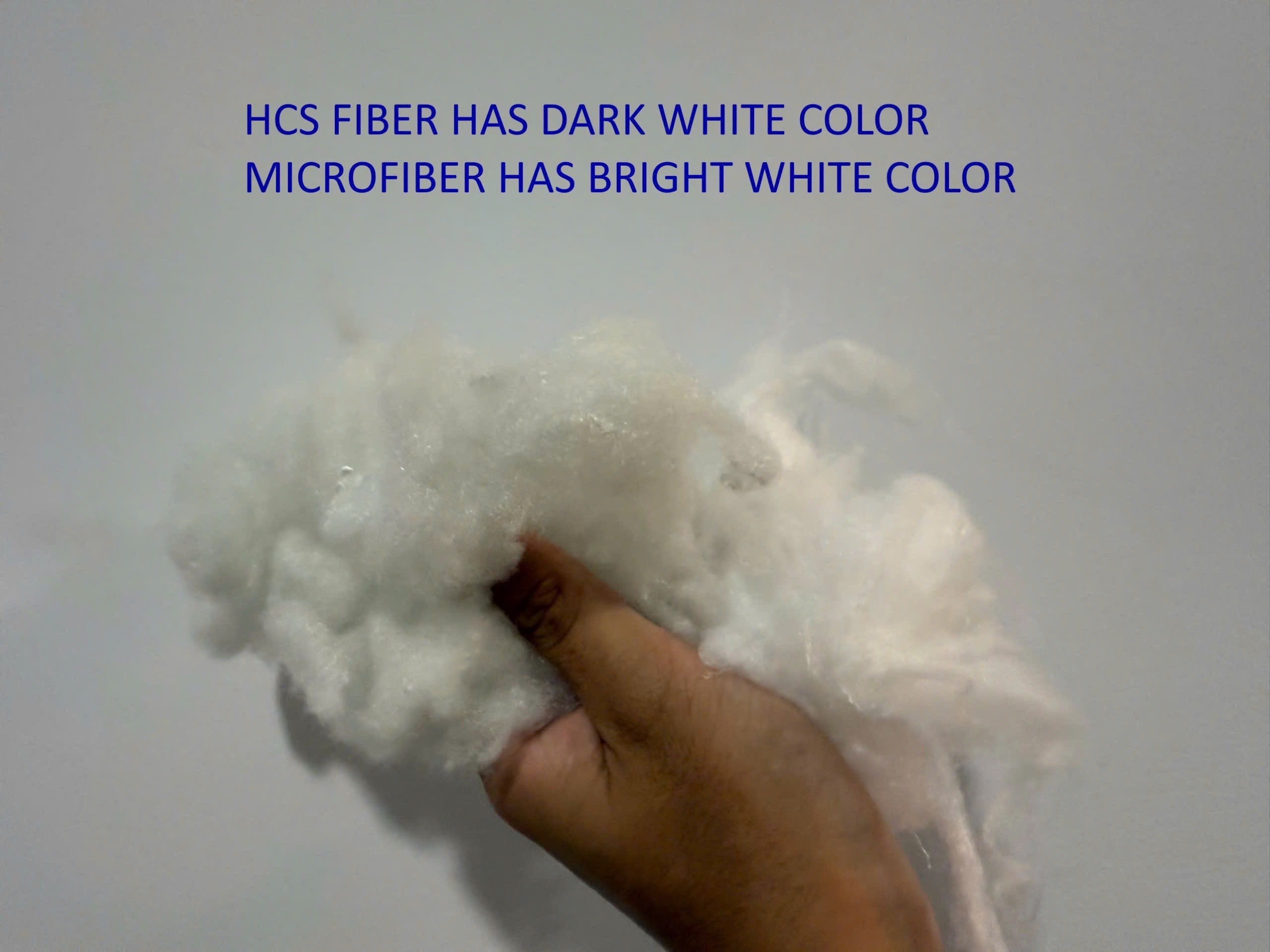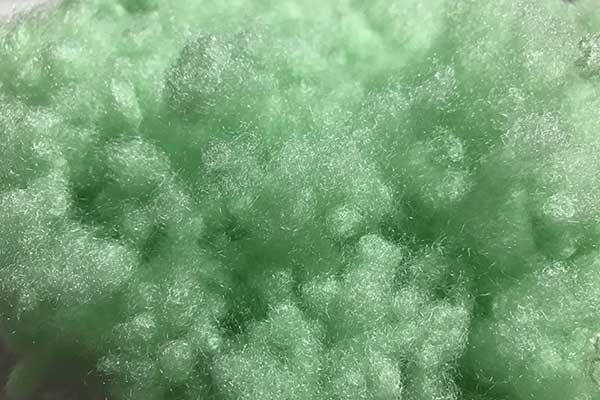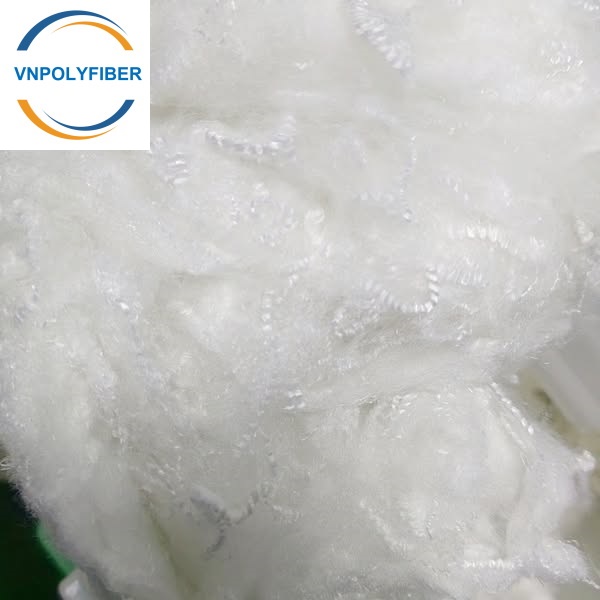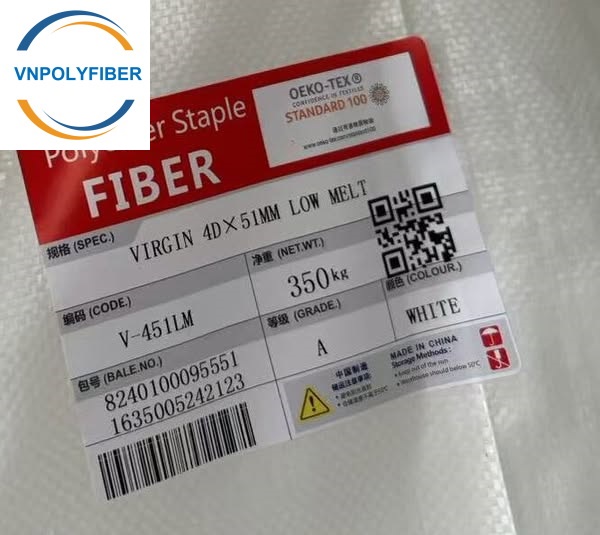
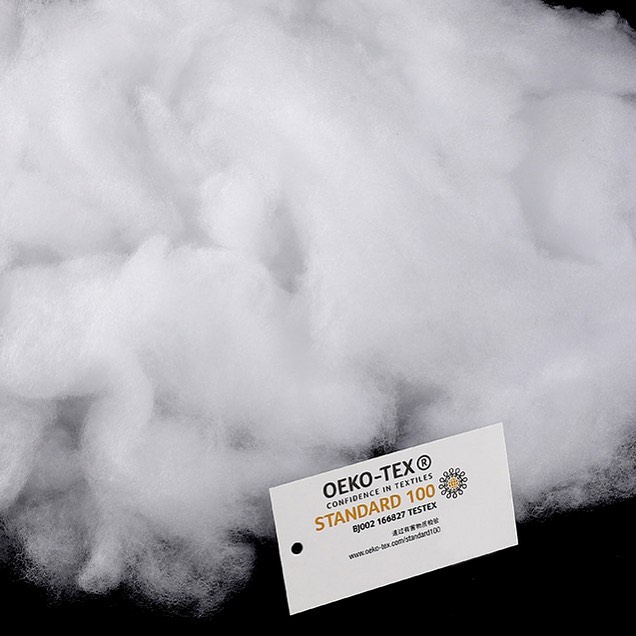
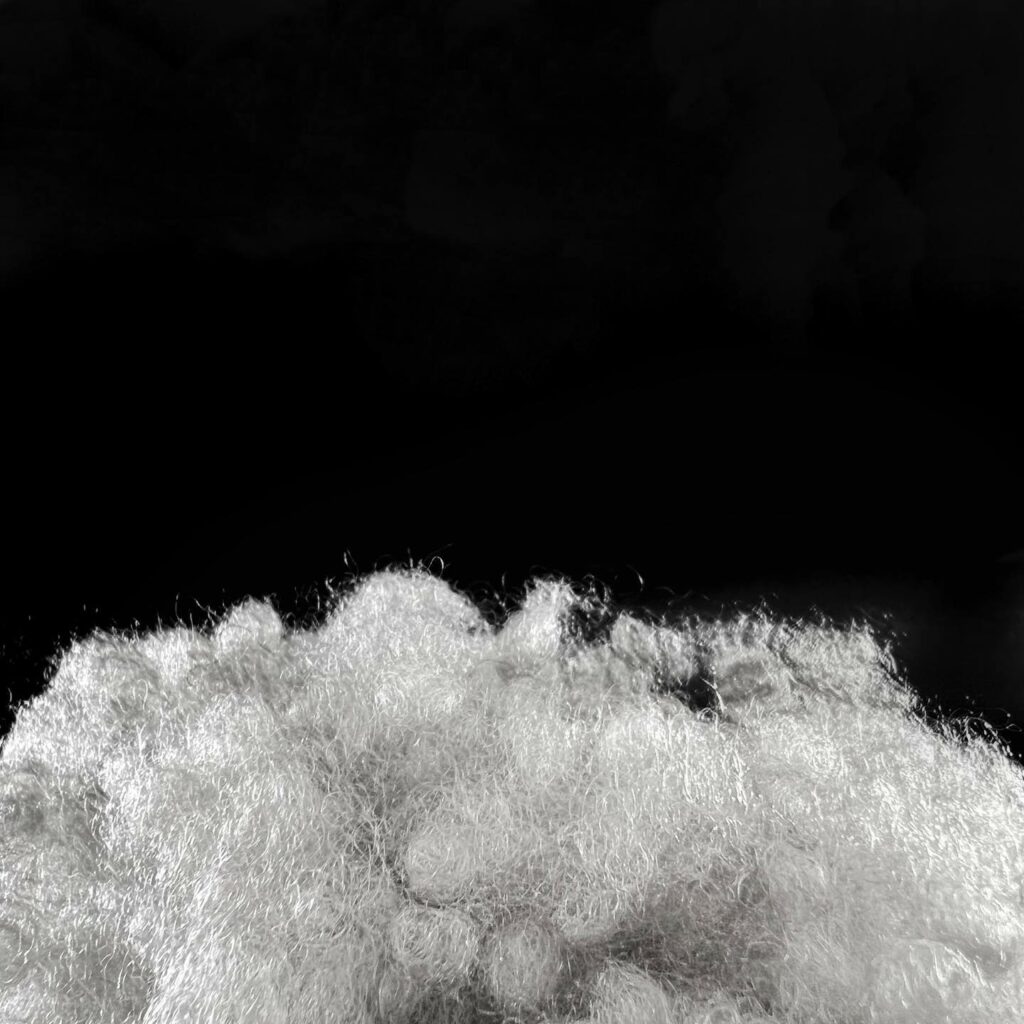
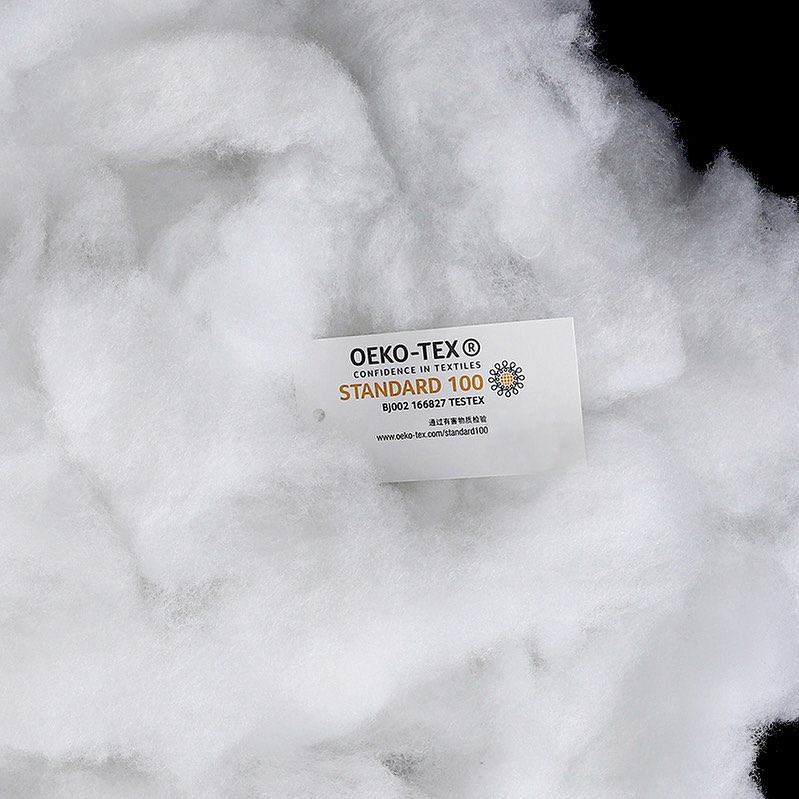
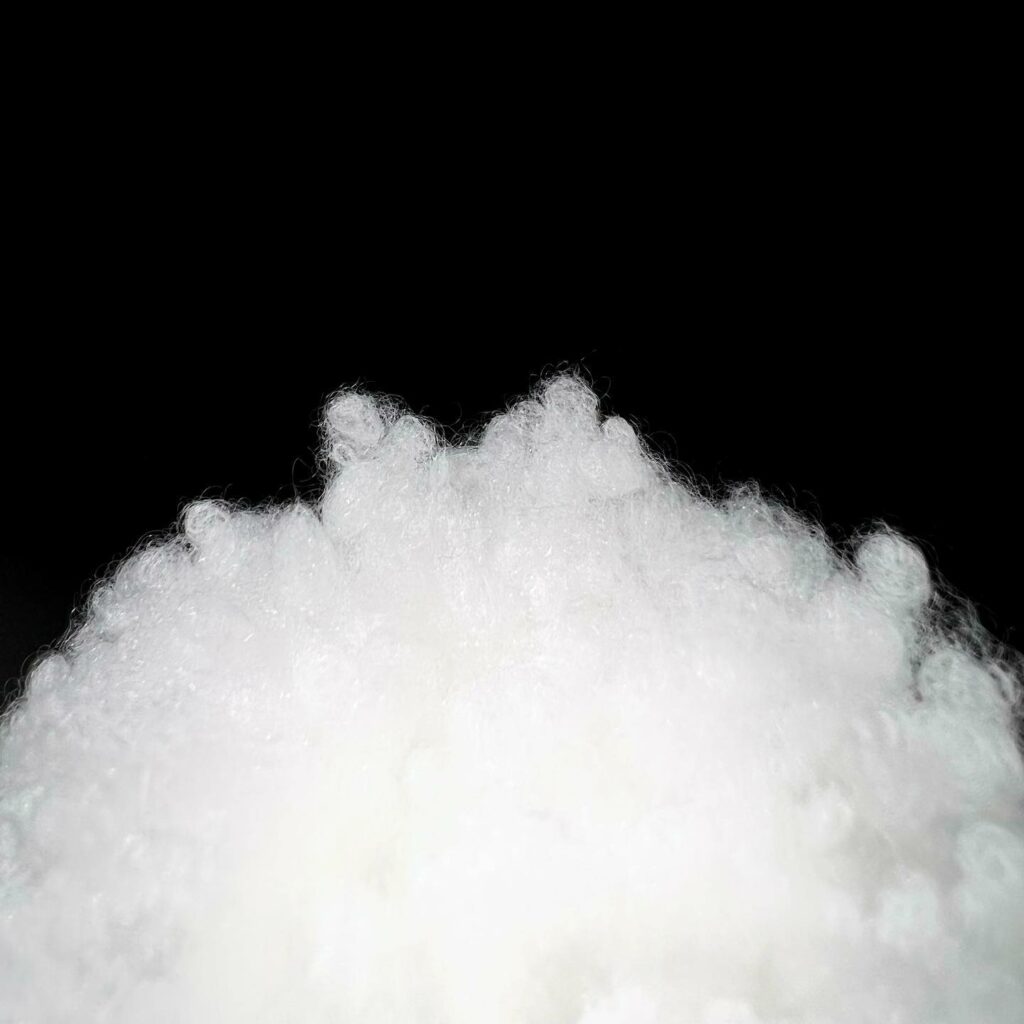
Hollow Conjugate Fiber for Stuffing, Filling Pillows and Nonwoven
Highly elastic with good raw white
Super soft hand feeling with silicon
Less flaw and better warmth character
Mainly used for filling material, non-woven fabric, polyester wadding ,polyester cotton, silk-like cotton,needle-punched cotton and so on.
PRODUCT DETAIL
Hollow Conjugate Fiber Siliconized Polyester
| Model NO. | Hollow Conjugate Siliconized Polyester |
| Width | 51mm/64mm /32mm /38mm /76mm |
| Grade | Virgin/ Recycled |
| Shape | Hollow Conjugated |
| Transport Package | by Ocean |
| Specification | 3d /2.8d/ 6d /7d/ 10d/12d /15d/ 20d/24d/27d/30d et |
| Trademark | VNPOLYFIBER |
| Origin | Viet Nam, China |
| HS Code | 55032000 |
| Production Capacity | 50000 tons |
Product Description
Product Description
| Fineness | 0.9D ~ 25D |
| Fiber length | 25/32/28/38/51/64/76/108MM |
| material | Chips or Pet Flakes |
| pattern | Silicon or Non-silicon |
| color | OB or RW |
| delivery time | 3 days after getting original lc or T/T advanced prepayment |
| payment | L/C OR T/T |
| loading port | Any port in Viet Nam or China |
| package | Non-woven Bags |
| MOQ | 1 x40ft HC |
| Specification sheet for 1.2D | |||||||
| No. | Inspection Item | Unit | Standard | Measure Value | Result | ||
| 1 | fineness | dtex | 1.21 | Passed | |||
| 2 | Tolerance | % | ±30 | 10 | Passed | ||
| 3 | Length | mm | 52.5 | Passed | |||
| 4 | Length Tolerance | % | ±10 | +3 | Passed | ||
| 5 | Crimp | pcs/25mm | 8±3.0 | 8.2 | Passed | ||
| 6 | Doubles long fiber content | mg/100g | ≤200 | 0 | Passed | ||
| 7 | Flaw content | mg/100g | ≤1000 | 362.7 | Passed | ||
| Specification sheet for 1.4D | |||||||
| No. | Inspection Item | Unit | Standard | Measure Value | Result | ||
| 1 | fineness | dtex | 1.52 | Passed | |||
| 2 | Tolerance | % | ±30 | -14 | Passed | ||
| 3 | Length | mm | 51.5 | Passed | |||
| 4 | Length Tolerance | % | ±10 | +1 | Passed | ||
| 5 | Crimp | pcs/25mm | 8±3.0 | 7.8 | Passed | ||
| 6 | Doubles long fiber content | mg/100g | ≤200 | 0 | Passed | ||
| 7 | Flaw content | mg/100g | ≤1000 | 352.4 | Passed | ||
| Specification sheet for 3D | |||||||
| No. | Inspection Item | Unit | Standard | Measure Value | Result | ||
| 1 | fineness | dtex | 3.15 | Passed | |||
| 2 | Tolerance | % | ±30 | -5.4 | Passed | ||
| 3 | Length | mm | 50.8 | Passed | |||
| 4 | Length Tolerance | % | ±10 | 0.4 | Passed | ||
| 5 | Crimp | pcs/25mm | 8±3.0 | 8.6 | Passed | ||
| 6 | Doubles long fiber content | mg/100g | ≤200 | 0 | Passed | ||
| 7 | Flaw content | mg/100g | ≤1000 | 169 | Passed | ||
| Specification sheet for 6D | |||||||
| No. | Inspection Item | Unit | Standard | Measure Value | Result | ||
| 1 | fineness | dtex | 7.71 | Passed | |||
| 2 | Tolerance | % | ±30 | 28.5 | Passed | ||
| 3 | Length | mm | 56.1 | Passed | |||
| 4 | Length Tolerance | % | ±10 | +10 | Passed | ||
| 5 | Crimp | pcs/25mm | 8±3.0 | 10.1 | Passed | ||
| 6 | Multiple Length Fiber | mg/100g | ≤200 | 1 | Passed | ||
| 7 | Defect Content | mg/100g | ≤1000 | 344 | Passed | ||
| 8 | bulking intensity V1 | cm3/g | ≥140 | 172 | Passed | ||
| 9 | bulking intensity V2 | cm3/g | ≥35 | 62 | Passed | ||
| 10 | bulking intensity V3 | cm3/g | ≥140 | 150 | Passed | ||
| 11 | rebound degree | % | ≥70 | 72 | Passed | ||
| 12 | Hollow rate | % | ≥12 | 12 | Passed | ||
| Specification sheet for 7D | ||||||||
| No. | Inspection Item | Unit | Standard | Measure Value | Result | |||
| 1 | fineness | dtex | 8.82 | Passed | ||||
| 2 | Tolerance | % | ±30 | 26.0 | Passed | |||
| 3 | Length | mm | 55.8 | Passed | ||||
| 4 | Length Tolerance | % | ±10 | +9 | Passed | |||
| 5 | Crimp | pcs/25mm | 8±3.0 | 8.1 | Passed | |||
| 6 | Multiple Length Fiber | mg/100g | ≤200 | 29 | Passed | |||
| 7 | Defect Content | mg/100g | ≤1000 | 480 | Passed | |||
| 8 | bulking intensity V1 | cm3/g | ≥140 | 190 | Passed | |||
| 9 | bulking intensity V2 | cm3/g | ≥35 | 76 | Passed | |||
| 10 | bulking intensity V3 | cm3/g | ≥140 | 156 | Passed | |||
| 11 | rebound degree | % | ≥70 | 76 | Passed | |||
| 12 | Hollow rate | % | ≥12 | 14 | Passed | |||
Technical Parameter
Usually used as padding/filling material of cushions, bedding, sofas, etc.
Specification:
size(denier):3D 7D 15D 30D
length(mm):28mm -152mm
Category: Chemical Fiber
Usage: Garment, Industrial, Home Textile, Army, Bag, Shoes, Tent and Awning
Grade: Recycled
Transport Package: PP Bales
Fiber Type: Staple
Material: Pet
Feature: Heat-Resistant, Anti-Static, Anti-Distortion, Flame Retardant, Abrasion-Resistant, Anti-Pilling
Shape: Rayon
About Us:
We are a leading supplier of polyester staple fiber based in Viet Nam. With a strong presence in both the domestic and international markets, we can supply various types of PSF, both recycled and virgin grades.
Our product offerings include a range of hollow conjugated polyester staple fiber (white, brown, green), as well as solid, conjugate, and siliconized fibers ranging from 3D to 15D. We also have microfiber, with sizes ranging from 0.9D to 1.4D and cut lengths from 25mm to 32mm. Our fibers are primarily utilized in the production of non-woven fabrics and spinning yarns, and are in high demand in European and South American markets.
We adhere to international quality standards and pride ourselves on delivering products that are well-received across various global markets. Our state-of-the-art facilities and stringent quality control measures ensure that we consistently meet and exceed customer expectations.
If you are interested in knowing more about our products, please do not hesitate to reach out to us. We welcome the opportunity to establish mutually beneficial partnerships with new clients worldwide. Thank you for considering us.
Staple fiber production process

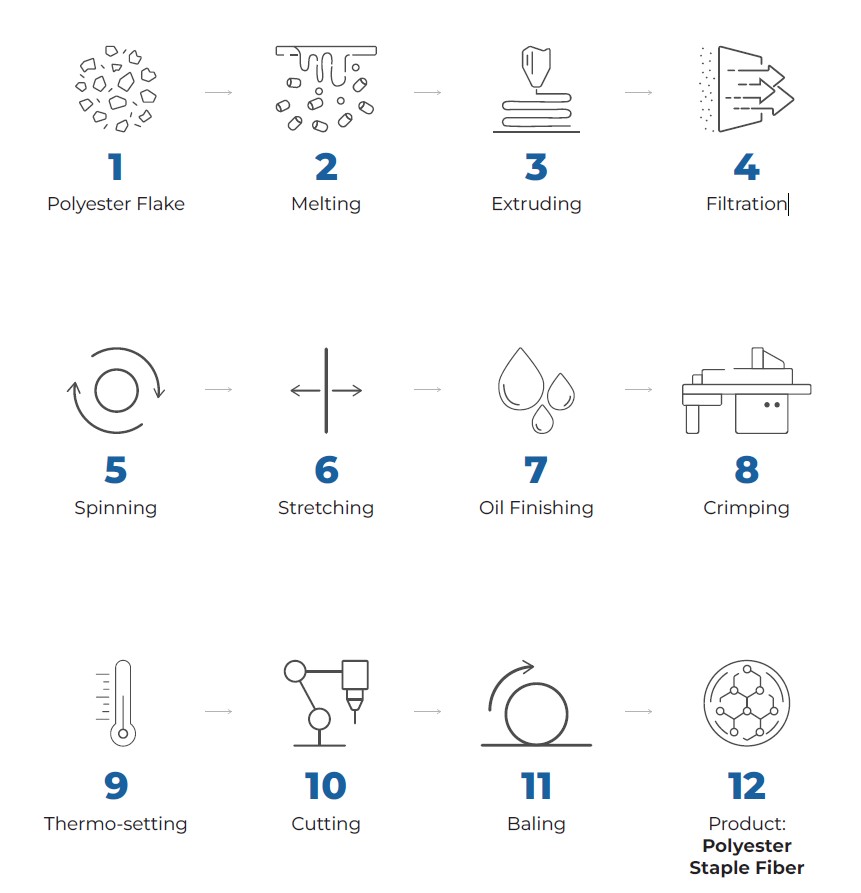
The base material, which comes in chips, is melted in an extruder before being quantified in a gear pump and transferred to a nozzle. Polymers that pass through the nozzle are cooled and solidified in a spinning tank, and end up in a fiber form (semi-finished product). Fiber released from multiple spinning tanks is lubricated and gathered before being wound by a gear wheel and placed in cans. Fiber placed in cans is given various properties through a stretching process, in which fiber is stretched at various roller speeds designed to endow different degrees of rigidity and elasticity.
The fiber is again lubricated for enhanced quality and to facilitate the processes that follow. A crimping process takes place to give the fiber various properties, including bulk and mixability. Moisture and lubricant on the fiber is dried off in a heat dryer. The fiber is then cut into required lengths and end up in a bale form. The fiber is then compressed, packaged, and stored for factory release when ordered.
PRODUCTION PROCESS OF POLYESTER STAPLE FIBER
Video
FAQ
1. What do you offer?
We supply a comprehensive range of fibers, including recycled hollow conjugated (both siliconized and non-siliconized) polyester staple fiber, hollow fiber, microfiber, virgin polyester staple fiber, and low-melt fiber.
2. What is it used for?
Our fibers are versatile and widely utilized across both the filling and non-woven industries, providing essential loft, durability, and texture for various consumer and industrial applications.
3. Are you a factory or a trading company?
We are primarily a manufacturer specializing in polyester staple fiber with years of industry expertise. To better serve our clients, we also operate a dedicated trading division that allows us to act as a one-stop solution provider.
In addition to our own fiber production, we source high-quality textile components (such as yarn and low-melt fibers) and finished goods (including foam, pillows, cushions, toys, and down/feather products) to ensure our customers have access to a comprehensive supply chain.
4. Where is your factory location?
To maintain a robust and flexible global supply chain, our manufacturing facilities are strategically located throughout Asia, specifically in Vietnam, China, Malaysia, Thailand, and Indonesia. If you would like to visit one of our sites, please contact your sales representative, and we will be happy to arrange transportation for you.
5. Can you accept free sample?
Yes, we provide free hand samples for quantities under 1 kilogram. Once a price is confirmed, we can prepare and dispatch your sample within 2–3 business days. Please note that while the sample is free, the freight costs are the responsibility of the client.
6. Can you provide ODM service?
Absolutely. We specialize in ODM (Original Design Manufacturing). This means we can customize the material composition, dimensions, quantity, packaging, and branding to meet your specific requirements. Your logo and unique specifications will be integrated into the final product.
7. How about your quality? What’s the minimum order Quantity (MOQ)?
We invite you to place a trial order to experience our quality firsthand. Our standard MOQ is 23,000 kilograms per order.
Regarding pricing, we maintain a no-bargain policy. We believe in transparency and efficiency, so we provide our most competitive offer upfront to save you time and ensure a straightforward procurement process.
8. Can I mix different items in one order?
Yes, for your convenience, we allow for a maximum of two different items to be mixed within a single container.
9. How can you guarantee the product quality?
Quality is the cornerstone of our business. We employ an experienced QC team that monitors every stage of production, from raw material inspection to the final manufacturing process. We utilize a range of advanced testing instruments to ensure our fibers meet strict industry standards.
Our business philosophy is simple: We aim to serve one customer 1,000 times, rather than 1,000 customers once. We prioritize long-term partnerships built on consistent excellence.
10. What’s the payment terms?
L/C at sight, 30% TT in advance are mostly accepted; other terms shall be negotiable by both sides
For more information, please feel free to contact :
Tony Tan
Mobile number: +84 90 466 5251 (Whatsapp/Wechat/Viber/Signal)