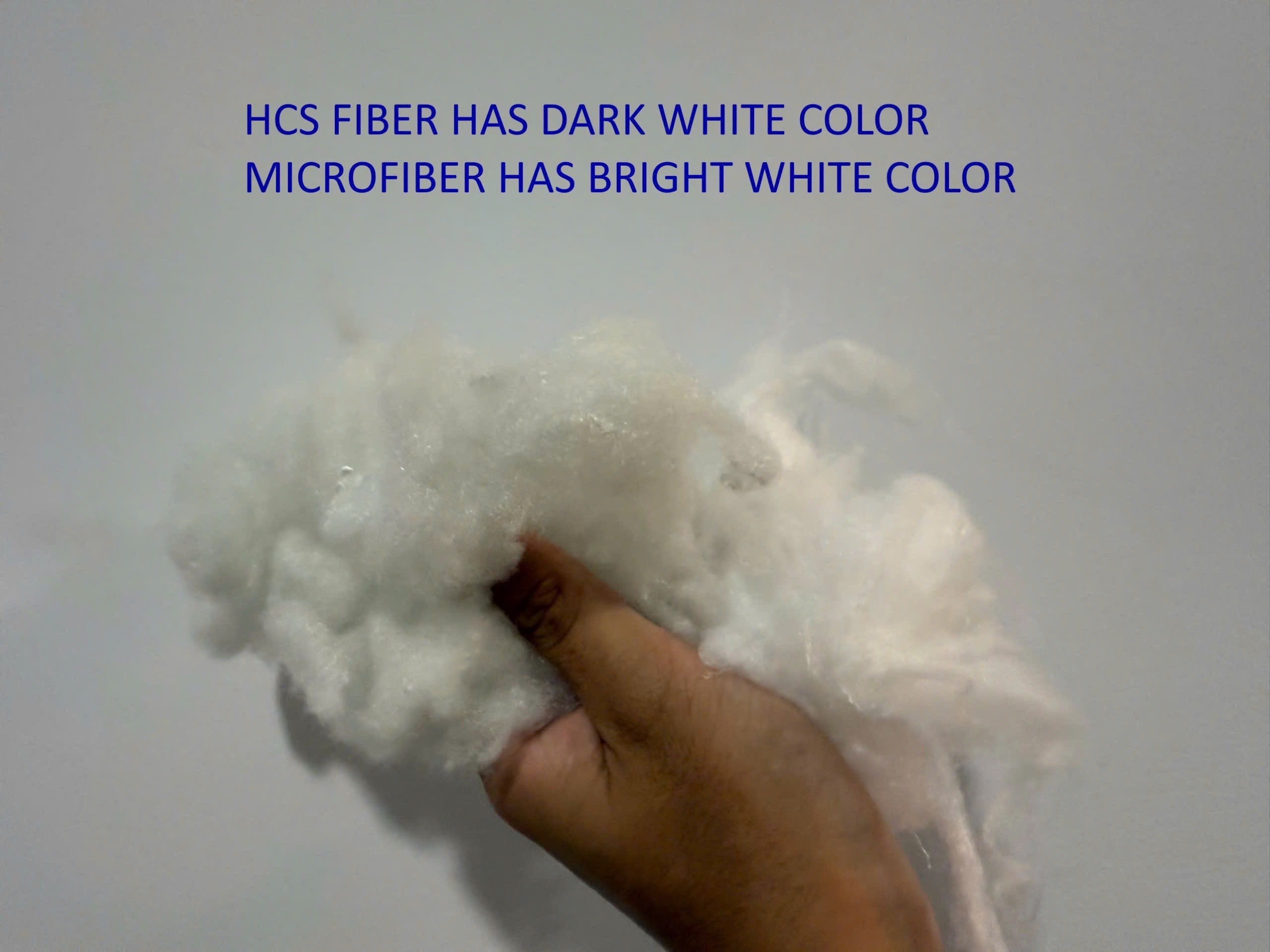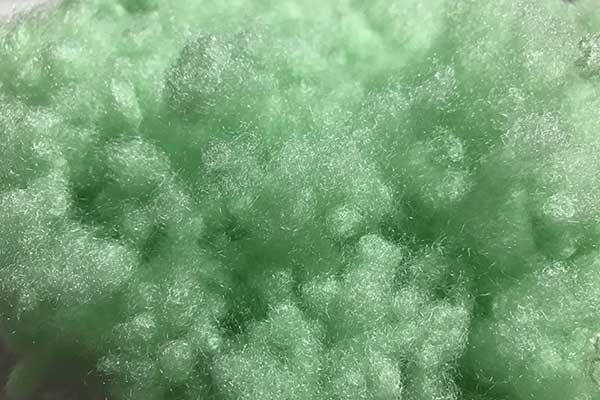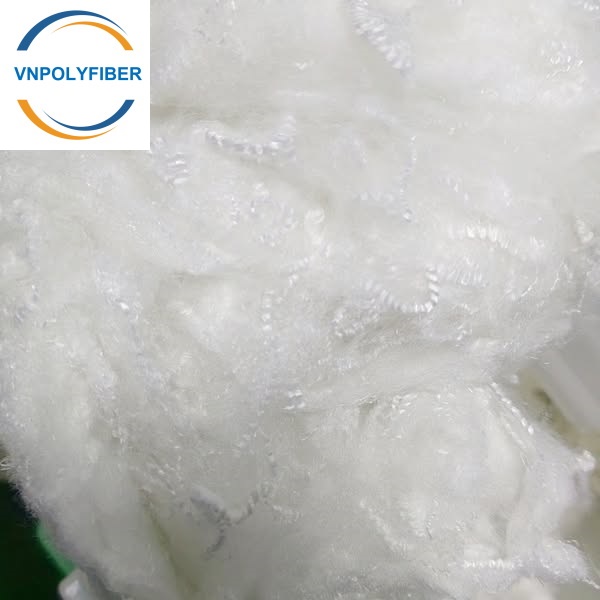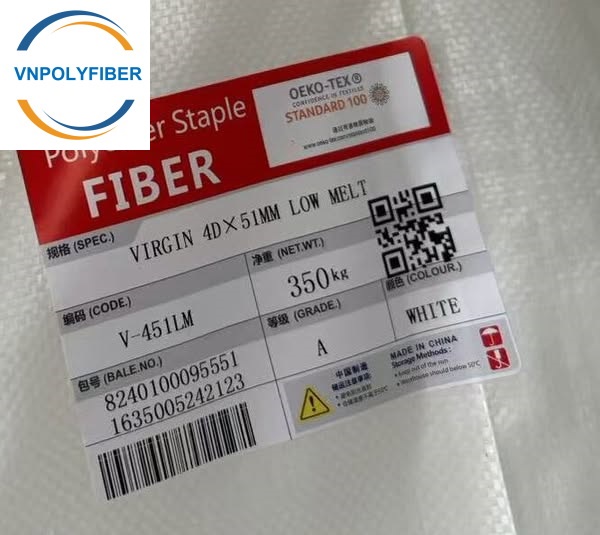
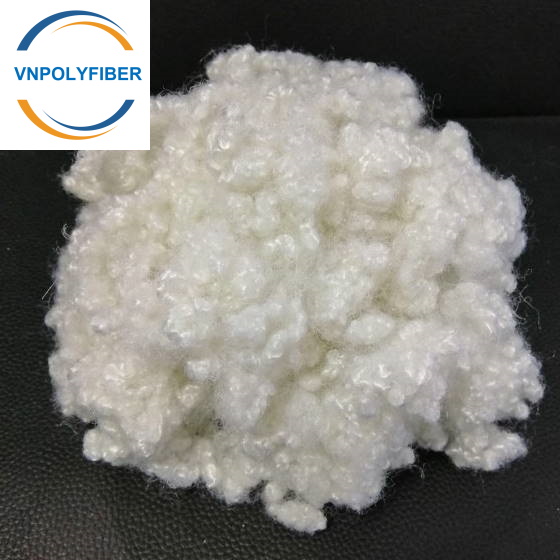
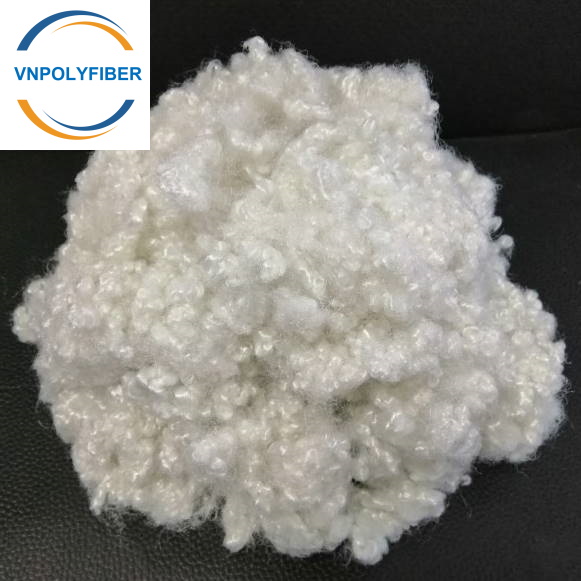
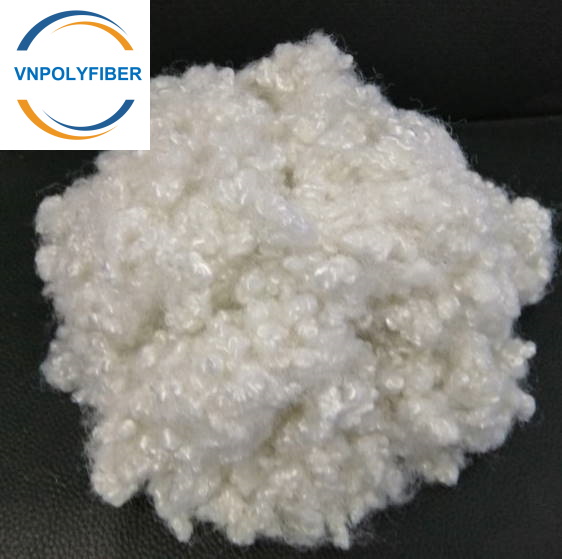
High Tenacity Hollow Conjugate Siliconized HCS Fiber
Thermal Insulation: The hollow core traps air to block out the cold and retain body heat.
Moisture Wicking: Quickly draws sweat away from the skin to keep the user dry and comfortable.
Superior Drape: Soft and flexible with excellent “pendency,” making it ideal for high-end thermal wear and winter sports apparel.
PRODUCT DETAIL
In the high-stakes world of synthetic textiles and industrial manufacturing, High Tenacity Hollow Conjugate Siliconized (HCS) fiber represents the peak of engineering for filling and non-woven applications. Whether manufactured directly from virgin PTA and MEG or high-grade recycled PET bottle flakes sourced across major South East Asia and China supply chains, this fiber is defined by its 3D spiral structure and microscopic hollow core.
As a primary material for everything from luxury bedding and high-performance sportswear to technical geotextiles, understanding the specific grades—ranging from 3D to 15D—is essential for optimizing production quality and cost-efficiency in the global market.
What is High Tenacity Hollow Conjugate Fiber?
High Tenacity PSF (Polyester Staple Fiber) is a synthetic man-made fiber manufactured through high-temperature polymerization. The “Hollow Conjugate” designation refers to a specific 3D helical crimp (spiral shape) that provides superior loft and resiliency.
The “HCNS” and “HCS” Distinction
HCS (Hollow Conjugate Siliconized): This fiber is treated with a silicone emulsion to provide a “down-like” feather touch. The silicone reduces the coefficient of friction, ensuring the fiber does not bunch or clumping after repeated use.
HCNS (Hollow Conjugate Non-Siliconized): Also known as “Dry” fiber, this version provides a “harsh” or high-friction feel. It is the preferred choice for industrial filtration and resin-bonding processes where fiber-to-fiber “grip” is necessary.
Virgin vs. Recycled Polyester: Making the Choice
Manufacturers in South East Asia and China now lead the world in balancing performance with environmental responsibility.
Virgin PSF: Derived from petroleum-based PTA and MEG. It offers the highest purity and maximum tensile strength, making it the preferred choice for medical-grade textiles, premium innerwear, and high-tenacity industrial yarns.
Recycled PSF (AAA Grade): Made from 100% post-consumer PET bottle flakes. This is the more eco-friendly alternative, as virgin polyester fiberball production relies on petroleum oil which can harm the environment. Recycled fiber maintains excellent filling power, resilience, and a soft touch while supporting a circular economy.
The 5 Key Advantages of Polyester Staple Fiber (PSF)
Regardless of the production method, PSF offers five structural advantages that outperform natural fibers in industrial settings:
Dimensional Stability: PSF does not warp; it neither stretches nor shrinks. It possesses a resilience that prevents wrinkles—a quality natural fibers lack. This is why high-performance stretch textiles are predominantly polyester-based.
Blending Versatility: It can be combined with materials like rayon, cotton, wool, or viscose. This increases the quality of the final product, allowing for a multiplicity of uses where you can leverage the natural feel of cotton with the durability of polyester.
Lightweight Construction: PSF is remarkably light, but this does not prevent it from being a solid and durable material for heavy-duty industrial use.
Microbial Resistance: Because it absorbs less moisture, it repels fungus, mold, and bacteria. This increases durability and prevents the generation of bad odors.
Superior Ink Absorption: Polyester garments and fillings tend to hold brighter, more durable colors and prints, making them the standard for the home textile and fashion industries.
Industrial Applications of PSF
The Non-Woven Industry
Hollow and Solid PSF are vital in the non-woven sector across South East Asian factories. High-void conjugate fibers (3D-15D) are used for needle-punching, resin bonding, and thermal bonding. These processes create the interlining, sanitary materials, and filter medics used in modern healthcare and construction.
Home Textiles & Bedding
Premium fiberfill is the top-performing material for dolls and stuffed toys. It offers a feather-touch softness and will not bunch. In high-grade bedding, the hollow construction provides a 20% weight reduction compared to ordinary fiber. By wrapping warm air and isolating cold air, it provides superior warmth-keeping properties.
Geotextiles & Civil Engineering
High tenacity 1.2D solid fibers are used to create high-strength geotextiles. These are essential for water transport, filtration, and soil stabilization in large-scale infrastructure projects across China and the emerging markets of South East Asia.
Sourcing from South East Asia and China
Factories in these regions offer some of the most competitive pricing for HCS Hollow Conjugate Fiber. The advanced infrastructure in these hubs allows for a “High Void” Conjugate that maximizes filling power while maintaining a soft, comfortable feel.
Warmth Keeping: The hollow structure prevents air convection within the fiber, keeping the body warm by isolating cold air.
Hygroscopicity: Special wicking effects allow the fiber to discharge moisture quickly from the skin, keeping the user dry and warm.
Soft Pendency: The fiber is soft and excellent in “pendency” or drape, making it ideal for high-grade thermal underwear and winter sportswear.
Conclusion: The Performance Choice
From anti-bacterial hospital textiles to automotive speaker felts, Polyester Staple Fiber is the most cost-efficient and practical filling material available today. Its unique ability to combine hypoallergenic safety with industrial-grade durability—all while utilizing recycled PET technology—ensures its continued dominance in the global market.
Polyester Staple Fiber used in Non-woven Industry
| Luster | Denier | Cross Section | End-Use |
| SD | 1.5, 1.7, 2, 3, 4, 6 & 15 | Solid | Nonwoven Interlining, Sanitary Material, Microfiber and Thermal Bonding |
| FBR (Black) | 1.5, 1.7 & 3 | Solid | Needlepunch, Resin Bonding & Fiberfill |
| SD | 1.5 & 4.5 | Solid | Dyeable Fabric & High-Pile |
| SD | 6, 8 & 15 | Hollow and Hollow-Siliconized | Resin Bonding, Needlepunch, Fiberfill, Flame Retardant Fabric, Anti Bacteria & Platinum Photon Fiber |
| SD, BR,OBBR | 0.7, 1.1, 1.2, 1.4, 2.0, 6, 8, 12, 15 & 20 | Solid | Low Pilling, Knitting, Fiberfill, Thermal Bonding, Needlepunch, Infrared Fiber & Resin Bonding |
| SD | 2, 3, 4.5, 7, 12 & 15 | Hollow Conjugate | Resin Bonding, Needlepunch & Fiberfill |
| SD | 7 | Hollow Conjugate | Anti-Bacteria |
Polyester Staple Fiber as per Direct End Use
| Type | Denier | Section | End Use |
| Anti Pilling | 1.4, 1.5, 2, 2.5 & 3 | Solid & Hollow | Sportswear, Underwear, Casual wear |
| Bamboo Charcoal | 1.5, 1.7 & 6 | Hollow | Bedding, Shoe pad, Cushion, Thermal Sock |
| Spinning Use | 1.3, 1.4, 1.5 & 1.7 1.5 | Solid Hollow | Sportwear, Casual Wear, Underwear |
| Dopedyed Black | 1.5, 2 & 3 | Solid | Nonwoven, Casual wear, Sport wear, Underwear |
| Flame Retardant | 1.4 | Solid | Home, Comfort & Clothing textiles |
| Micro Fiber | 0.8 – 1.0 | Solid | Cloth & Fleece |
| High Tenacity | 1.2 | Solid | Yarn, Cloth & Water transport |
| High Void Conjugate | 3, 7, 12 & 15 | Hollow | Toy Padding, Badding, Furniture Cushion, etc |
| Regular Fiber | 2, 2.5, 3, 6 & 15 | Solid | Nonwoven, Filter medics, Padding, etc. |
Technical Parameter
The manufacturing of Virgin Polyester Staple Fiber involves polymerization performed at high temperature and pressure. After the spinning and drawing process, the polymer becomes staple fibers when cut short into a cotton-like form.
Technical Performance Metrics
| Parameter | Value / Range |
| Tensile Strength | 3.5 to 4.5 g/Denier |
| Elongation | 40% to 60% |
| Oil Pickup (OPU) | 0.20% to 0.35% |
| Crimps per CM | 3 to 5 |
| Color Fastness | 4+ |
Core Specifications Table
| Denier Size | Cut Length | Finish | Application |
| 3D, 7D | 32mm, 51mm, 64mm | Siliconized | Pillows, Quilts, Soft Toys |
| 15D, 20D | 64mm, 76mm | Dry / Slick | Furniture, Padding, Mattresses |
| 1.2D, 1.5D | 38mm, 51mm | Solid | Spinning Yarns, Geotextiles |
FAQ
1. What do you offer?
We supply a comprehensive range of fibers, including recycled hollow conjugated (both siliconized and non-siliconized) polyester staple fiber, hollow fiber, microfiber, virgin polyester staple fiber, and low-melt fiber.
2. What is it used for?
Our fibers are versatile and widely utilized across both the filling and non-woven industries, providing essential loft, durability, and texture for various consumer and industrial applications.
3. Are you a factory or a trading company?
We are primarily a manufacturer specializing in polyester staple fiber with years of industry expertise. To better serve our clients, we also operate a dedicated trading division that allows us to act as a one-stop solution provider.
In addition to our own fiber production, we source high-quality textile components (such as yarn and low-melt fibers) and finished goods (including foam, pillows, cushions, toys, and down/feather products) to ensure our customers have access to a comprehensive supply chain.
4. Where is your factory location?
To maintain a robust and flexible global supply chain, our manufacturing facilities are strategically located throughout Asia, specifically in Vietnam, China, Malaysia, Thailand, and Indonesia. If you would like to visit one of our sites, please contact your sales representative, and we will be happy to arrange transportation for you.
5. Can you accept free sample?
Yes, we provide free hand samples for quantities under 1 kilogram. Once a price is confirmed, we can prepare and dispatch your sample within 2–3 business days. Please note that while the sample is free, the freight costs are the responsibility of the client.
6. Can you provide ODM service?
Absolutely. We specialize in ODM (Original Design Manufacturing). This means we can customize the material composition, dimensions, quantity, packaging, and branding to meet your specific requirements. Your logo and unique specifications will be integrated into the final product.
7. How about your quality? What’s the minimum order Quantity (MOQ)?
We invite you to place a trial order to experience our quality firsthand. Our standard MOQ is 23,000 kilograms per order.
Regarding pricing, we maintain a no-bargain policy. We believe in transparency and efficiency, so we provide our most competitive offer upfront to save you time and ensure a straightforward procurement process.
8. Can I mix different items in one order?
Yes, for your convenience, we allow for a maximum of two different items to be mixed within a single container.
9. How can you guarantee the product quality?
Quality is the cornerstone of our business. We employ an experienced QC team that monitors every stage of production, from raw material inspection to the final manufacturing process. We utilize a range of advanced testing instruments to ensure our fibers meet strict industry standards.
Our business philosophy is simple: We aim to serve one customer 1,000 times, rather than 1,000 customers once. We prioritize long-term partnerships built on consistent excellence.
10. What’s the payment terms?
L/C at sight, 30% TT in advance are mostly accepted; other terms shall be negotiable by both sides
For more information, please feel free to contact :
Tony Tan
Mobile number: +84 90 466 5251 (Whatsapp/Wechat/Viber/Signal)