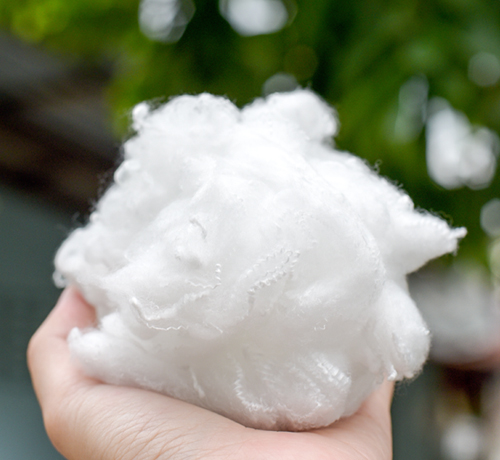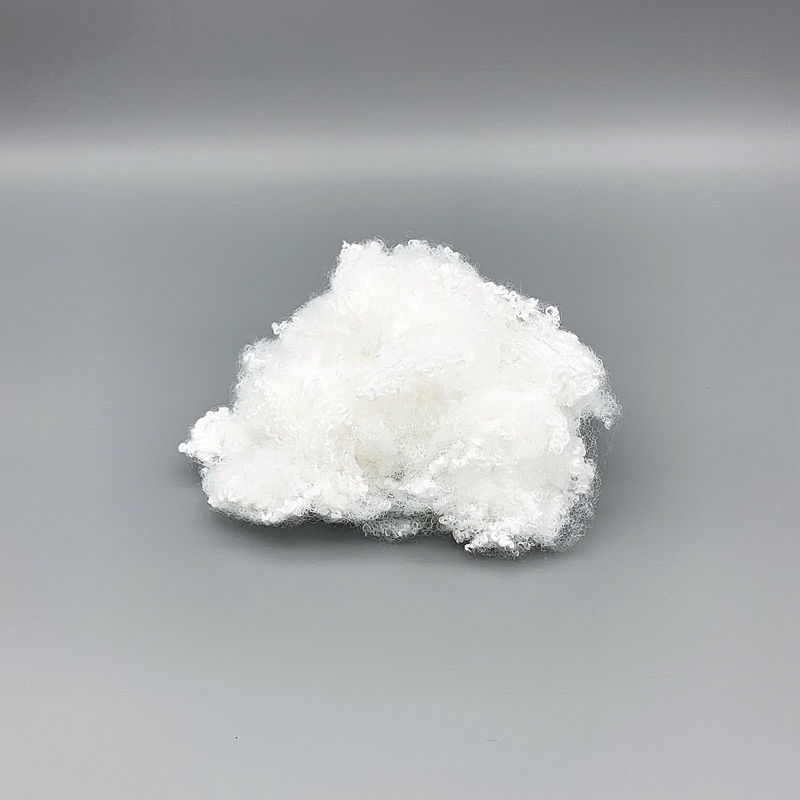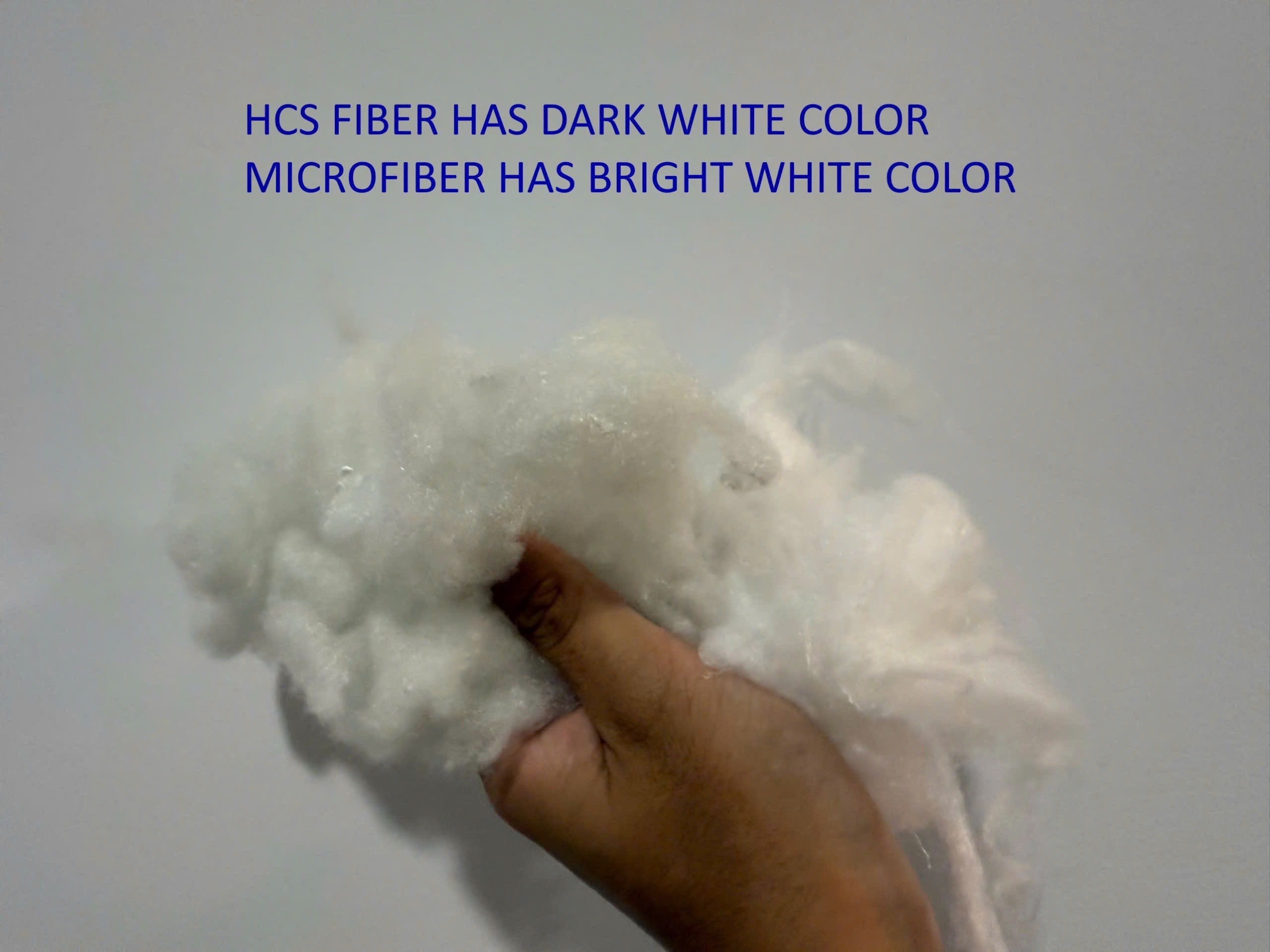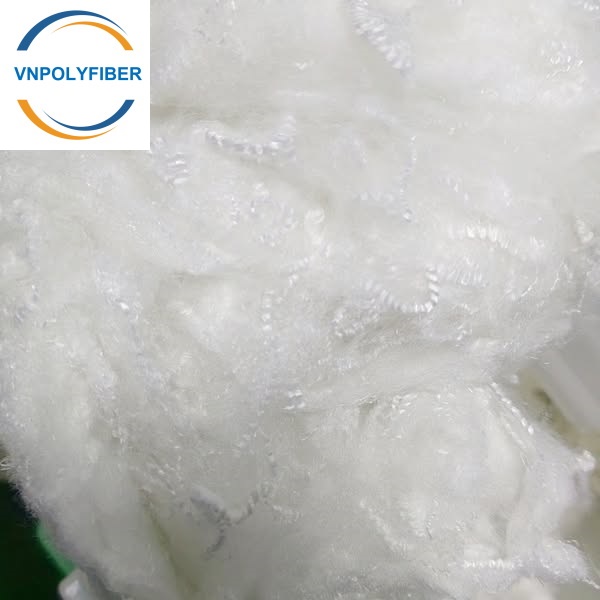
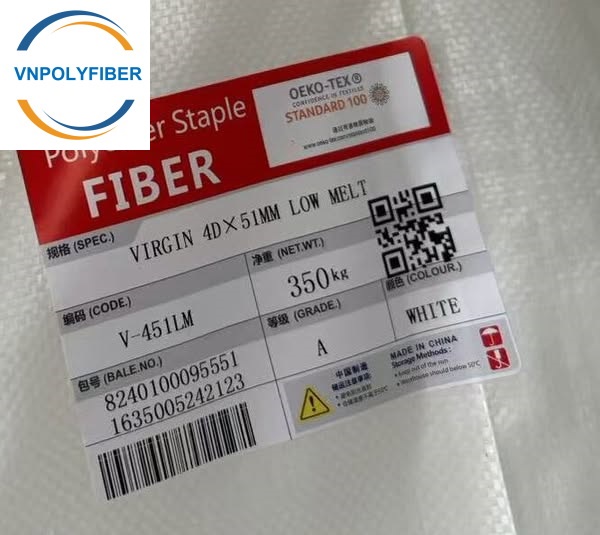
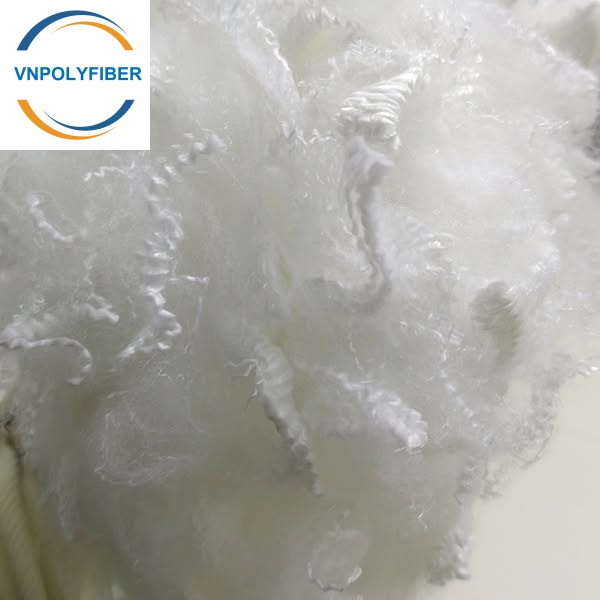
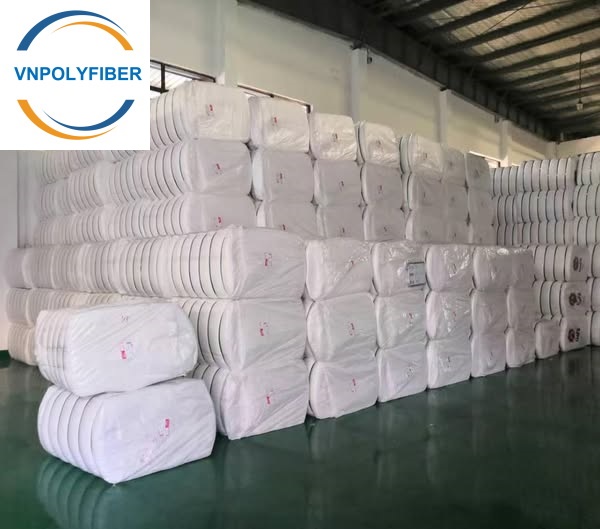
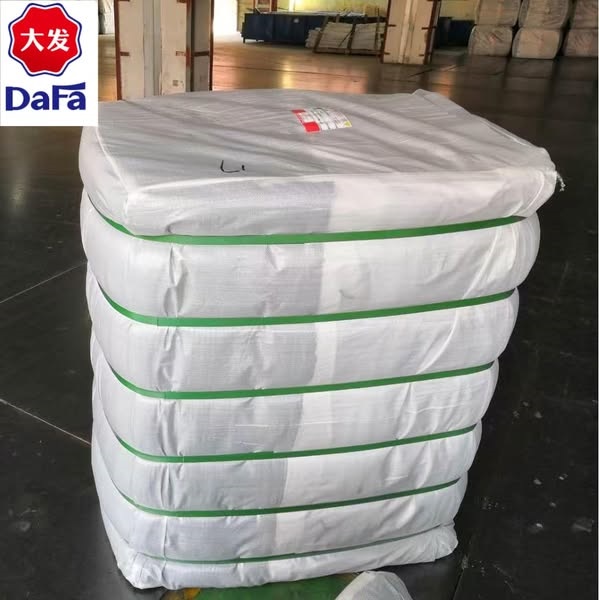
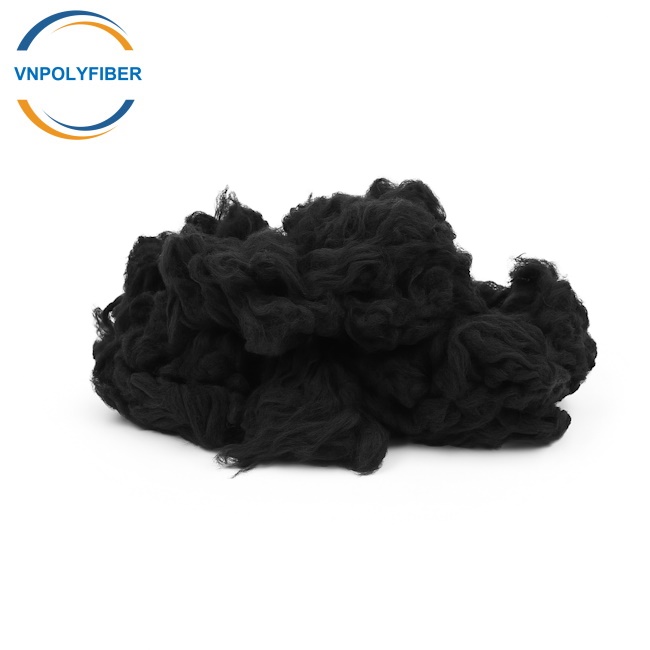
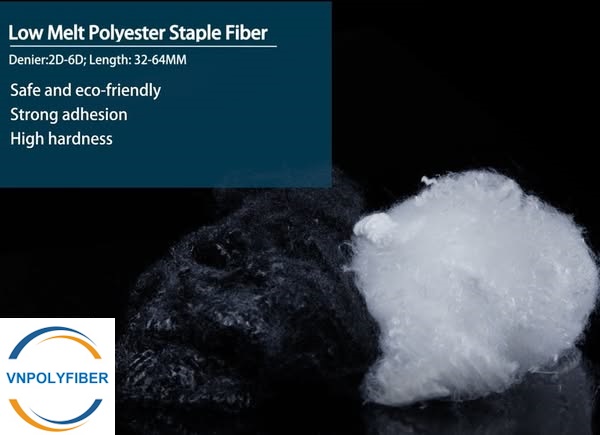
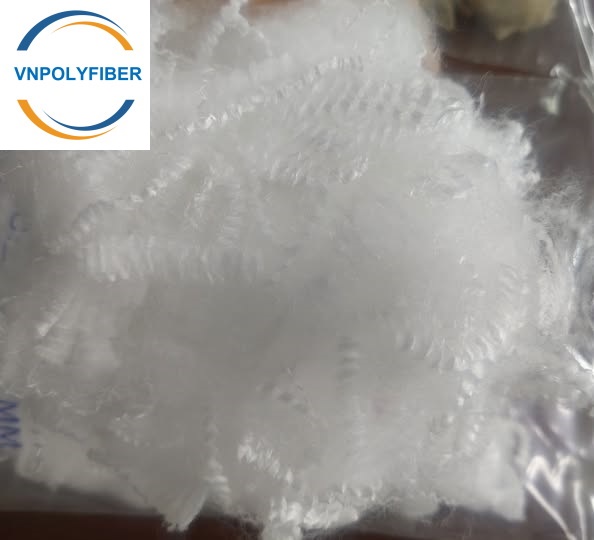
4D 51MM Low Melt Fiber
Low-Temp Melting: Engineered to melt at lower temperatures than standard fibers.
The “Glue” of Fibers: Acts as a bonding agent within a fiber blend.
Clean Bonding: Fuses fibers together when heated, creating a strong structure without using traditional adhesives.
PRODUCT DETAIL
What is low melt fiber?
Low Melt Fiber (LMF), also known as fusible fiber, has emerged as the undisputed leader in thermal bonding technology. Valued at over $2.45 billion this year, the LMF market is expanding as industries from automotive to high-end bedding prioritize mono-material recyclability and zero-VOC (volatile organic compound) production.
Low melt fibers are a specialized class of synthetic materials designed to melt at significantly lower temperatures compared to standard polyester or natural fibers. This calibrated thermal profile allows them to serve as a bonding agent within a fiber blend.
At VNPOLYFIBER, we specialize in the high-precision extrusion of these technical “bonding agents.” This guide explores the mechanical functions, molecular composition, and multi-industry applications that make low melt fiber the structural backbone of modern manufacturing.
How Thermal Bonding Works
When a blend of fibers (typically containing 10% to 30% LMF) passes through a thermal bonding oven or a heated calender, the low-melt components reach their “glass transition” point and fuse. They effectively act as a liquid-state adhesive during the heating phase. As they cool, they solidify into a permanent physical bond, creating a unified, three-dimensional structure without the need for traditional liquid glues or toxic chemical resins.
This process results in fabric, or padding, that is
Stronger: The bond is integrated into the molecular structure of the material.
Safer: It eliminates the chemical outgassing associated with solvent-based glues.
Sustainable: It simplifies the recycling process by creating 100% polyester “mono-material” products.
Composition: The Bicomponent Engineering
The key to LMF’s performance is its bicomponent structure. Unlike standard fibers, which are uniform throughout, these are typically sheath-core fibers. This means the filament consists of two polymers with distinct melting points that extrude simultaneously into a single strand.
The Sheath-Core Dynamics
The sheath: This is the lower-melting polymer (often a modified co-polyester or co-PET). It is engineered to soften and bond with surrounding fibers at precise temperatures—usually between 110°C and 180°C.
The Core: This part is the higher-melting polymer (standard PET or polypropylene) that remains solid and maintains structural integrity. While the sheath “glues” the material together, the core ensures the padding or fabric does not collapse, maintaining its thickness and hand feel.
Common polymer combinations include:
CoPET/PET: Favored for high-strength, rigid bonds in furniture and construction.
PP/PE: Utilized for flexibility and superior moisture resistance in hygiene and medical non-wovens.
Key Specifications for Professional Procurement
In 2026, precision is the difference between a high-performance product and production-line waste. At VNPOLYFIBER, we monitor five critical specifications:
Melting Point: The most critical variable. We offer fibers with melting points below 130°C for sensitive materials and above 130°C for high-heat industrial applications.
Denier (Linear Density): Determines the fineness of the fiber. Lower deniers (2D–4D) create a soft touch, while higher deniers (15D+) provide heavy-duty support.
Cut Length: Standard lengths (32mm, 51mm, 64mm) are optimized to ensure the LMF is distributed evenly throughout the fiber web during carding.
Polymer Type: The specific chemical makeup of the core and sheath, which determines the fiber’s chemical resistance and thermal stability.
Color: White is the standard for neutrality and dye compatibility, while black is engineered for the deep, uniform finishes required in the automotive and industrial sectors.
Multi-Industry Applications in 2026
Low melt fibers are the “invisible glue” behind some of the world’s most essential products:
Non-Woven Fabrics & Hygiene
LMF is the primary bonding method for creating non-woven fabrics used in filtration, medical textiles, and hygiene products. In 2026, the rise of biodegradable and bio-based alternatives is further expanding the use of LMF in eco-friendly diapers and masks.
Automotive Interiors (The EV Standard)
As the automotive industry shifts toward electric vehicles (EVs), weight reduction and cabin quietness are paramount. LMF is used in headliners, carpets, and door panels, creating a durable, lightweight bond that replaces heavy mechanical fasteners and toxic glues.
Furniture & Mattress Manufacturing
In the bedding industry, LMF plays a crucial role in creating high-loft wadding and mattress ticking. It enhances the resilience and support of cushions, sofas, and soft toys, ensuring they maintain their “like-new” feel for years.
Advanced Filtration
Because LMF creates consistent “pore sizes” in non-woven media, it is the standard for both liquid and air filtration. It ensures that filters are hygienic, cheaper to produce, and highly effective at capturing micro-particulates.
Environmental Benefits: The 2026 Perspective
Low melt fibers are a cornerstone of sustainable manufacturing:
Lower VOC Emissions: By eliminating chemical binders, manufacturers comply with increasingly strict 2026 global air quality regulations.
Energy Efficiency: Thermal bonding requires less energy and shorter processing times compared to traditional resin-drying cycles.
Recyclability: Using mono-materials (all polyester) means that end-of-life products can be chemically or mechanically recycled into new high-performance fibers.
Global Market Analysis and Projections
The low melt fiber market is projected to maintain steady growth through 2030, with a Compound Annual Growth Rate (CAGR) of 6.8% from 2021 to 2030.
Market Size Evolution: The market value has grown significantly, reaching an estimated $2.95 billion by 2027.
Regional Dominance: As of late 2020, the Asia-Pacific region emerged as the undisputed leader in market share, followed by Europe and North America.
This reinforces the strategic position of VNPOLYFIBER, operating directly at the heart of the world’s most important production hub.
Performance Features: The VNPOLYFIBER Difference
Our Low Melt Fibers are engineered with specialized features to meet the demands of high-speed industrial lines:
Anti-Distortion & Anti-Static: Ensures the fiber flows smoothly through high-speed carding machines without clumping or fire risk.
Flame Retardancy: Inherent FR properties are available for the automotive and construction sectors.
Heat Resistance: The high-melting core ensures that the bond remains stable even under the extreme temperature fluctuations of industrial usage.
Low Melting Point: Significant energy savings across the production line.
High Bond Strength: Superior durability in padding, interlining, and mattresses.
Elasticity and Rebound: Essential for automotive interior components and high-quality mattresses.
Medical Safety: Ideal for healthcare and medical products due to its non-toxic, hypoallergenic nature.
Key Market Drivers
Three fundamental pillars are accelerating the adoption of low melt fiber in 2026:
Urbanization and Population: Rising populations and urbanization rates are positively impacting the home furnishings sector, particularly in markets like the U.S.
Industrial Acceleration: Growing demand in the automotive industry and bedding sector is driving the need for fibers that enable efficient thermal bonding without toxic adhesives.
Corporate Strategy: Strategic partnerships between key global players are essential for strengthening competitive positions and enhancing technical innovation capabilities.
The Sustainability Challenge and “White Pollution”
While human civilization continues to modernize, it also brings negative impacts like white pollution. Disposable plastic products and synthetic fishing nets are difficult to recycle. Incineration produces harmful gases, while landfilling contaminates the soil for centuries.
The Solution: Biodegradable Fibers
Promoting green consumption is imperative. Microorganisms (bacteria, fungi, and algae) can completely break down biodegradable fibers under natural conditions.
Positive Impact: Upon degradation, they convert into low-molecular-weight compounds that do not harm crop root systems or cause marine life fatalities through intestinal obstruction.
Global Sourcing and Quality Control with VNPOLYFIBER
Managing the supply of technical fibers requires a global vision. At VNPOLYFIBER, our Quality Control (QC) team oversees every stage of the process. We are more than just a supplier; we are your external control department.
We guarantee:
Thermal Precision: The sheath melts at the exact agreed-upon temperature (110°C, 130°C, etc.).
Process Stability: Fibers engineered for high-speed carding, wet-laid, or airlaid processes.
Supply Chain Expertise: Efficient logistics management to ensure your production never stops.
Conclusion: Leading the Way Toward 2030
Low-melt fiber and biodegradable solutions represent the future of responsible manufacturing. By choosing materials that bond thermally, you are reducing heat, CO₂, and the use of harmful chemicals in your facility.
The data is clear: low-melt fiber is the preferred solution for an industry seeking efficiency and environmental respect. By choosing VNPOLYFIBER, you partner with an expert who understands both the technology and global market dynamics to ensure your commercial success.
The transition to low-melt fiber is a strategic move toward quality, efficiency, and sustainability. At VNPOLYFIBER, we don’t just supply fiber; we provide the technical rigor and QC expertise you need to optimize your production for the 2026 market. We aim to serve one customer 1,000 times, ensuring that every bale of LMF provides the precise bonding activation your product deserves.
Technical Parameter
PET/COPET Low Melt Fiber
- Before Heating

- After Heating

PE/PP Low Melt Fiber
- ES fiber is a bi-component fiber composed of low melt PE and hydrophobic PP which has excellent adhesion through core-sheath spinnerets.
- The fibers are widely applied for non-woven applied to mask, protective clothing, sanitary pad, diapers.
Video
FAQ
1. What do you offer?
We supply a comprehensive range of fibers, including recycled hollow conjugate (both siliconized and non-siliconized) polyester staple fiber, hollow fiber, microfiber, virgin polyester staple fiber, and low-melt fiber.
2. What is it used for?
Our fibers are versatile and widely utilized across both the filling and non-woven industries, providing essential loft, durability, and texture for various consumer and industrial applications.
3. Are you a factory or a trading company?
We are primarily a manufacturer specializing in polyester staple fiber with years of industry expertise. To better serve our clients, we also operate a dedicated trading division that allows us to act as a one-stop solution provider.
In addition to our own fiber production, we source high-quality textile components (such as yarn and low-melt fibers) and finished goods (including foam, pillows, cushions, toys, and down/feather products) to ensure our customers have access to a comprehensive supply chain.
4. Where is your factory location?
To maintain a robust and flexible global supply chain, our manufacturing facilities are strategically located throughout Asia, specifically in Vietnam, China, Malaysia, Thailand, and Indonesia. If you would like to visit one of our sites, please contact your sales representative, and we will be happy to arrange transportation for you.
5. Can you accept free sample?
Yes, we provide free hand samples for quantities under 1 kilogram. Once a price is confirmed, we can prepare and dispatch your sample within 2–3 business days. Please note that while the sample is free, the freight costs are the responsibility of the client.
6. Can you provide ODM service?
Absolutely. We specialize in ODM (Original Design Manufacturing). This means we can customize the material composition, dimensions, quantity, packaging, and branding to meet your specific requirements. Your logo and unique specifications will be integrated into the final product.
7. How about your quality? What’s the minimum order Quantity (MOQ)?
We invite you to place a trial order to experience our quality firsthand. Our standard MOQ is 23,000 kilograms per order.
Regarding pricing, we maintain a no-bargain policy. We believe in transparency and efficiency, so we provide our most competitive offer upfront to save you time and ensure a straightforward procurement process.
8. Can I mix different items in one order?
Yes, for your convenience, we allow for a maximum of two different items to be mixed within a single container.
9. How can you guarantee the product quality?
Quality is the cornerstone of our business. We employ an experienced QC team that monitors every stage of production, from raw material inspection to the final manufacturing process. We utilize a range of advanced testing instruments to ensure our fibers meet strict industry standards.
Our business philosophy is simple: We aim to serve one customer 1,000 times, rather than 1,000 customers once. We prioritize long-term partnerships built on consistent excellence.
10. What’s the payment terms?
L/C at sight, 30% TT in advance are mostly accepted; other terms shall be negotiable by both sides
For more information, please feel free to contact :
Tony Tan
Mobile number: +84 90 466 5251 (Whatsapp/Wechat/Viber/Signal)