Basic Information about Low Melt Staple Fiber
Low melting fiber is a bicomponent fiber known for its strong bonding properties, often used in the spinning of durable yarns. It is valued for its thermal bonding capabilities, making it a popular choice in industries such as automotive and construction for insulation. This fiber can be blended with solid recycled material or solid polyester fibers for applications such as car molding. Its easy bonding and high elasticity properties make it ideal for producing interior car parts, mattresses, medical goods, and more.
Low melting fiber is composed of a sheath/core structure, with the sheath polymer having a lower melting point than the core polymer. This fiber offers benefits such as low melting point, durability, and high bonding strength, making it versatile for various applications. It is commonly blended with other fibers to create padding, interlining, high-quality mattresses, and sanitary and medical products. The unique advantages of low-melting fiber make it a sought-after material worldwide.
Low-melt fibers utilize sheath-core fibers that melt at high temperatures and bond with other fibers to provide excellent matrix stability and handling characteristics. Low-melt fibers also enhance cushioning product quality and are more compatible with the environment.
Use: Mattress of bed, seat cushions
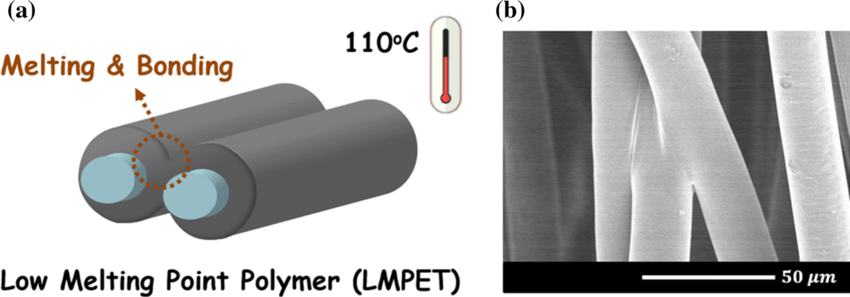
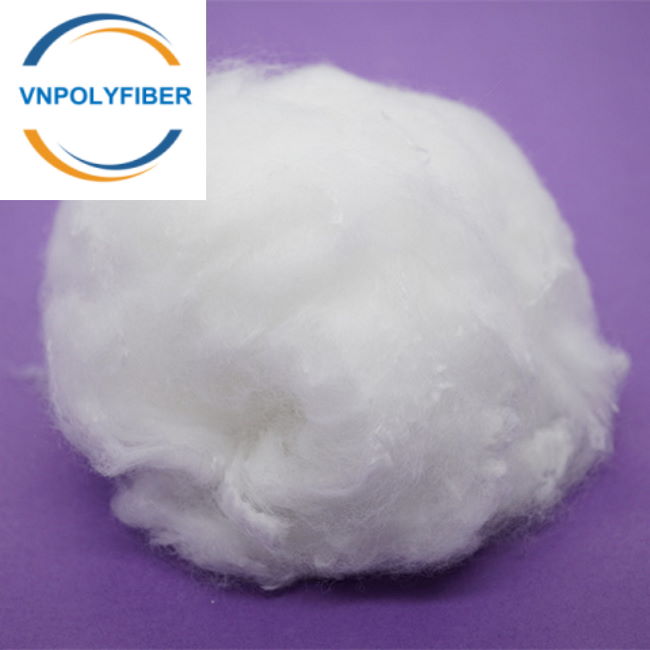
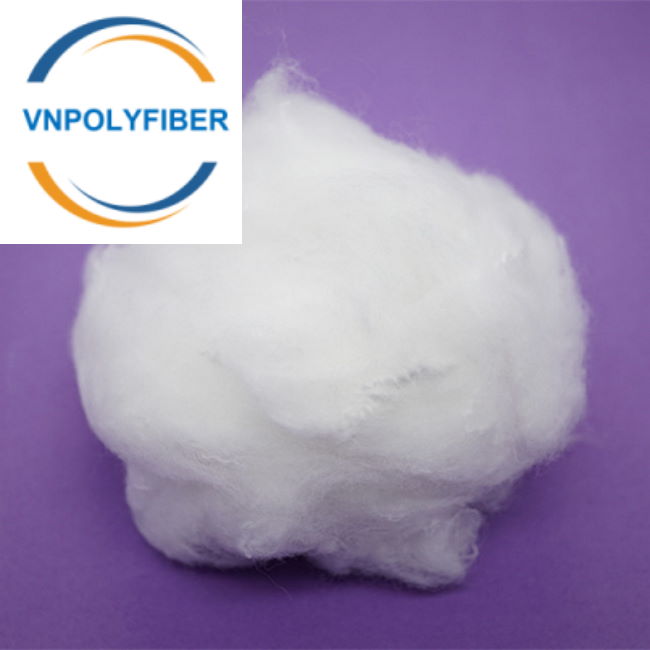
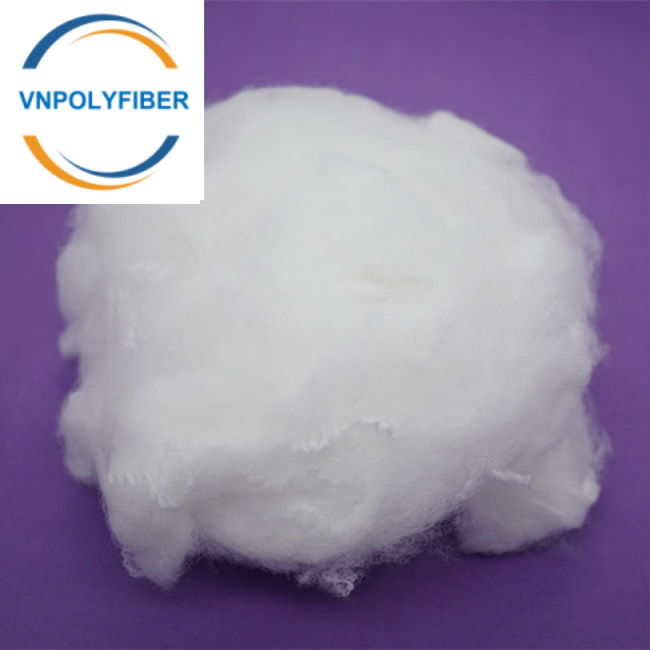
Low-melting fiber can be melted at a lower temperature (approximately 100–200°C), allowing it to bond with other fibers without harmful adhesives, unlike normal polyester fiber, which melts at a higher temperature of over 280°C. This property contributes to environmental conservation by generating less carbon dioxide and heat. Its applications vary from automotive car interiors (door trims, ceiling materials, headliners, etc.) to furniture, construction, and industrial use.
Huvis, the largest polyester company in Korea, was launched in 2000 when SK Chemical and Samyang Corporation separated their fabric divisions, which led the polyester business for the past 30 years. Currently, the world’s largest LM fiber company produces about 40% low-melting fiber in the world and exports to 80 countries, including Europe and North America, growing by 8% annually.
Currently, there are no Vietnamese suppliers of low-melt fibers. But we can supply this low-melt fiber and mix it with our current products to load into containers for export.
What is a bicomponent fiber?
By blending two kinds of polymers, new fibers are made that own every characteristic of each polymer.
Bi-component binder fibers with high-performance ability.
Bicomponent fibers have various types that are suitable for heat-bonded nonwoven fabrics, depending on their purpose and application (carding, wetlaid, airlaid).
Among other advantages such as soft touch, durable performance, process stability, and high speed, the bicomponent fibers have different melting points depending on the raw material used and make it possible to achieve a significantly higher material strength.
The first specific characteristic of bi-component fibers is the difference in melting points between the two polymers, which causes one polymer to act as glue, sticking the two fibers together.
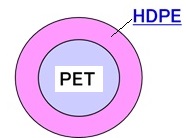

The best-known bi-component fibers are PET-PET, PET-PP, PET-PE, PP-PE.
The following options/combinations are available:
- Polyester/Polyethylene
- Polyester/PBT
- Polyester/Co-polyester
- PLA / Co-PLA
- PLA / PBS
Fineness: 0.9 – 9 dtex
Cut length: 3-80 mm
Fiber shape: Round
Applications:
1- Health and Medical Industry
2- Hospital Bedsheets and Wearing
3- Industrial filtration
4- Food Packaging (tea Bag)
5- Automotive Industry