Spunlace (Hydroentangled) Nonwoven: Complete Guide — Parallel vs Cross-Lapped, Fiber Types and Applications
Spunlace nonwoven — also called hydroentangled nonwoven or water-jet-entangled nonwoven — is the process that produces the most fabric-like of all nonwoven constructions. Where needlepunching uses mechanical barbed needles and thermal bonding uses heat and binder fiber, spunlace uses high-pressure water jets to mechanically entangle fibers into a coherent, flexible, strong fabric without any bonding agent or thermal treatment. The result is a soft, drapeable, highly absorbent nonwoven that behaves more like a woven or knit textile than most other nonwovens.
Spunlace’s defining applications — wet wipes, medical dressings, cosmetic pads, and premium synthetic leather substrate — reflect its distinctive combination of softness (no stiff binder), wet strength (mechanical entanglement is not weakened by moisture), absorbency (no binder occupying inter-fiber space), and surface texture control (the drum or belt pattern imprints into the fabric during water jet entanglement). This guide covers the spunlace process in full technical depth, the critical distinction between parallel-laid and cross-lapped constructions, fiber selection for each application, and the complete specification and application reference.
VNPOLYFIBER supplies spunlace nonwoven fabric from our manufacturing network — 100% PET, viscose/PET blends, and cotton/PET blends — in parallel and cross-lapped constructions, 30–120 gsm, widths to 320 cm. We also supply solid polyester staple fiber in the specification ranges required for spunlace production (1.5D–3D × 38–51 mm).
How Spunlace Works: The Hydroentanglement Process
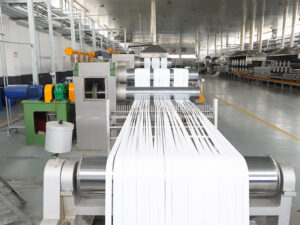
The spunlace production process combines web formation (carding or wet-laying) with water jet entanglement to produce the finished fabric:
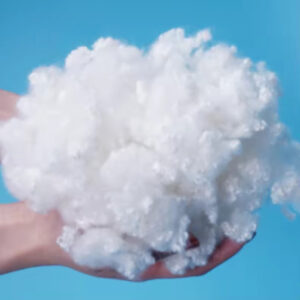
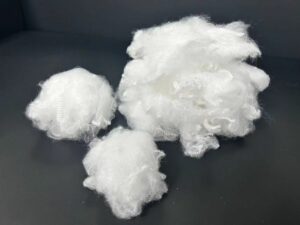
- Fiber selection and preparation: Spunlace uses relatively short staple fiber — typically 38–51 mm — that disperses well in carding and entangles effectively under water jet impact. Fiber denier is typically 1.5D–3D for fine, soft spunlace; up to 6D for coarser industrial grades. Viscose, polyester, cotton, and their blends are the dominant fiber systems.
- Web formation — carding: Fibers are processed through a carding machine into a thin, uniform batt. For parallel spunlace, the carded web is used directly — machine-direction (MD) fiber orientation is maintained. For cross-lapped spunlace, the carded web is cross-lapped before hydroentanglement to create a cross-direction (CD) fiber orientation and achieve better MD/CD strength balance.
- Web formation — wet-laying (alternative): Some spunlace fabrics use wet-laid web formation — fibers are dispersed in water and deposited onto a moving wire screen in a process similar to papermaking. Wet-laying achieves very high uniformity and can use extremely short fibers (wood pulp) that cannot be carded. The wet-laid web is then hydroentangled.
- Pre-wetting: The fiber web is pre-wetted to remove air from the web before water jet entanglement — trapped air pockets would cause uneven entanglement and fabric defects.
- Hydroentanglement — multiple passes: The pre-wetted web is supported on a rotating drum or moving belt and subjected to multiple passes of high-pressure water jets (typically 30–100 bar pressure, arranged in rows of very fine nozzles). The first pass at lower pressure consolidates the web surface; subsequent passes at higher pressure drive fibers from the jet impact region through the web thickness, mechanically interlocking them with fibers from lower layers. The web is processed on both sides — top and bottom — to achieve symmetric entanglement.
- Drying: The hydroentangled web contains significant water (100–200% pick-up by weight) that must be removed by through-air drying drums or flat-bed drying systems. Energy-efficient drying is the most significant cost driver in spunlace production.
- Finishing and winding: Optional finishing steps include: aperturing (the drum pattern creates holes in the fabric surface for drainage applications), printing (for patterned wipes), chemical finishing (anti-microbial, hydrophobic treatments), lamination, and slitting to width. Finished spunlace is wound onto rolls and slit to customer specification.
Parallel vs Cross-Lapped Spunlace: The Most Important Construction Choice
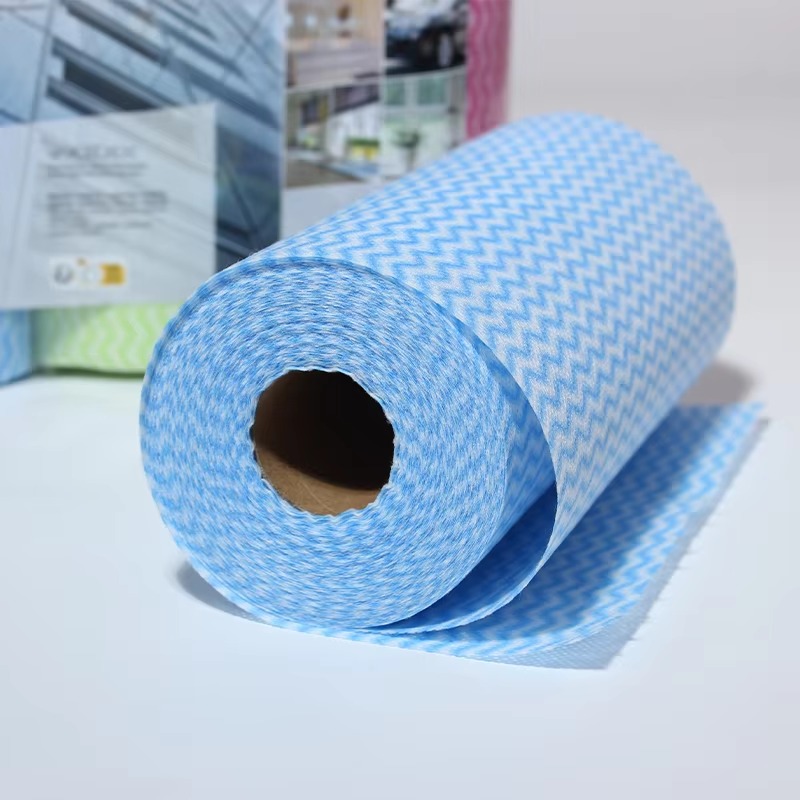
The orientation of fibers in the web before hydroentanglement determines the fabric’s directional strength properties — and this choice has major commercial implications for the finished product’s application performance:
| Dimension | Parallel | Semi-Cross (NEW) | Cross-Lapped |
| Fiber orientation | MD predominant | Mixed — partial CD orientation from partial cross-lapping | CD predominant |
| MD tensile strength | High | Moderate-high | Moderate |
| CD tensile strength | Low | Moderate | High |
| MD/CD strength ratio | 3:1 to 5:1 (strongly MD-biased) | 1.5:1 to 2.5:1 (intermediate balance) | 1:1 to 2:1 (near-balanced) |
| MD elongation | Low | Moderate | Higher |
| CD elongation | High | Moderate | Lower |
| Softness | Very soft | Soft | Slightly firmer |
| Production cost | Lower — no cross-lapping | Moderate — partial cross-lapping step | Higher — full cross-lapping |
| Best for | Medical bandages, industrial wipers, wound dressings | Wipes requiring moderate MD strength with better CD balance than parallel — a versatile middle-ground specification | Wet wipes, cosmetic pads, surgical drape — applications requiring balanced multi-directional strength |
The practical buyer’s rule: wet wipes and face cloths that must resist tearing in any direction a user might pull → cross-lapped construction. Surgical gauze and wound dressings where the primary stress is along the body’s long axis → parallel construction. Industrial wiper rolls where machine-direction strength during dispensing matters → parallel. When in doubt for a new application, request tensile strength data in both MD and CD from the supplier.
Fiber Selection for Spunlace: The Big Three
Polyester (PET) Spunlace — The Durable Industrial Grade
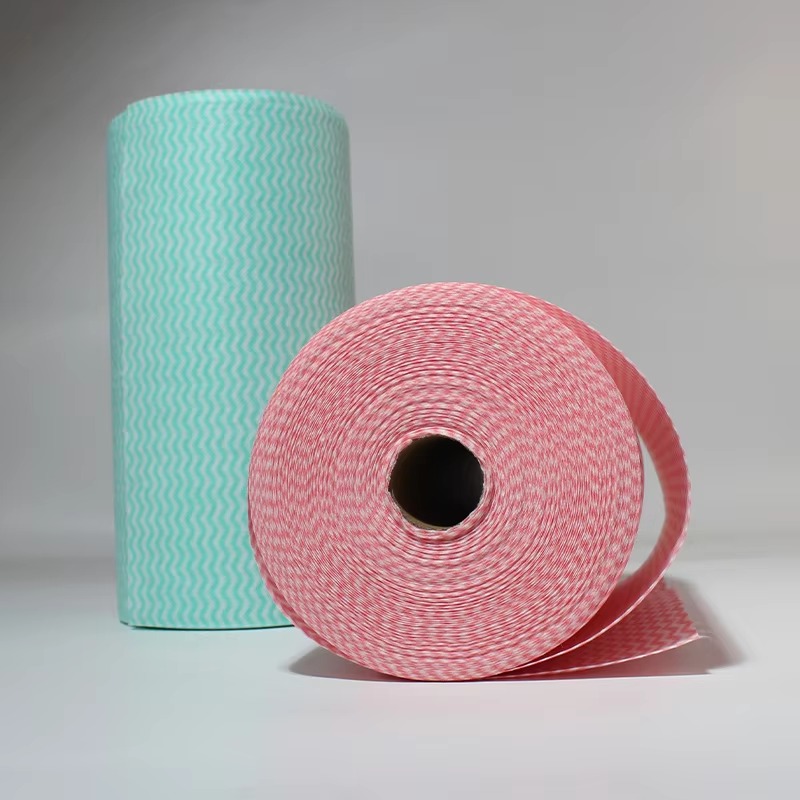
100% polyester spunlace uses fine solid PET staple fiber (typically 1.5D–3D × 38–51 mm) hydroentangled into a tough, dimensionally stable fabric. PET spunlace has excellent tensile strength (particularly in the MD for parallel construction), excellent chemical resistance across a wide pH range, good dimensional stability in high-temperature laundering, and does not swell or weaken when wet — unlike viscose.
The limitation: PET is hydrophobic and does not absorb water readily. 100% PET spunlace has lower absorbency than viscose or cotton spunlace, making it less suitable for consumer wipes where immediate liquid pickup is the primary function. However, for industrial applications where the wiper must hold up under harsh chemical exposure, be reusable through industrial laundering, and provide physical strength rather than absorbency, 100% PET spunlace is the preferred choice.
- Key applications: Industrial cleaning wipes (automotive, aerospace, printing); medical non-absorbent draping fabric; premium synthetic leather substrate (needlepunched then spunlace-finished); reusable cleaning cloths; technical filtration and separation layers
- Key advantages: Reusable (survives many industrial wash cycles); excellent chemical resistance; high tensile strength; dimensional stability
Viscose / Polyester Blend Spunlace — The Wet Wipe Standard
The most widely produced spunlace construction globally — viscose/PET blends in ratios of 70/30, 60/40, or 50/50 — combines the best of both fibers for consumer wipe applications. Viscose contributes its high absorbency (it absorbs 6× its weight in water), soft hand feel (viscose fibers have a very smooth surface), and biodegradability potential (viscose is cellulose-based and can biodegrade under appropriate conditions). Polyester contributes tensile strength, dimensional stability, and the processing behavior needed for hydroentanglement.
The 70% viscose / 30% polyester ratio is the global standard for baby wipes — the viscose provides the immediate liquid absorption and soft surface contact that baby wipe performance requires, while the polyester provides the structural integrity to survive the dispensing process (pulling individual wipes from a pack against the friction of wetting solution) and the wiping action.
- Baby wipes specification: 50–80 gsm; 70/30 viscose/PET; cross-lapped for balanced strength; hydrophilic finish; OEKO-TEX Standard 100 Class I mandatory; often tested for skin compatibility
- Facial wipes / makeup removal: 40–70 gsm; 50/50 viscose/PET; very soft surface requirement; low linting
- Household cleaning wipes: 50–80 gsm; 50/50 or 30/70 viscose/PET; higher PET ratio for durability through multiple uses
- Wet wipes biodegradability: A growing regulatory priority — UK and EU are legislating against plastic-containing wipes that are flushed as ‘flushable.’ 100% viscose or 100% cotton spunlace (without PET) produces genuinely biodegradable wipes. The PET component in standard viscose/PET blends prevents full biodegradation.
Bamboo viscose — produced from bamboo cellulose by the same viscose dissolution and spinning process as standard wood-pulp viscose — is increasingly specified for premium cosmetic and personal care wipes, where brands market the bamboo origin as a natural and sustainable credential; the fiber properties are identical to standard viscose, but the ‘bamboo’ origin carries strong positioning value in premium retail.
Cotton Spunlace — The Premium Natural Option
100% cotton or cotton/polyester blend spunlace uses cotton fiber hydroentangled into a soft, absorbent fabric with the natural fiber credentials increasingly demanded in premium personal care and medical applications. Cotton spunlace offers excellent skin compatibility, is free from the synthetic fiber concerns of PET, and — when produced from certified organic cotton — carries GOTS certification for brands requiring organic natural fiber credentials.
- Cosmetic pads and facial rounds: 100% cotton or cotton/polyester spunlace; very soft surface; low linting; biodegradable option; OEKO-TEX and GOTS certification available
- Medical wound dressings: 100% cotton spunlace meets the absorbency and skin compatibility requirements for wound care; natural fiber preferred in medical contexts for patient skin contact
- Premium feminine hygiene: Organic cotton spunlace top sheet as an alternative to synthetic coverstock in premium positioning
Spunlace Finishing Treatments
After hydroentanglement and drying, spunlace fabric can receive additional finishing treatments that modify its surface appearance, texture, and functional properties. Three finishing treatments are commercially significant:
Embossing: The bonded spunlace fabric passes through heated embossing rollers engraved with a repeating pattern — geometric shapes, diamond grids, dot arrays, floral motifs. The pattern is pressed permanently into the fabric surface, creating a textured appearance and, in some cases, localized areas of higher density that influence the fabric’s absorbency distribution. Embossed spunlace is widely used in premium baby wipes and facial wipes where the textured surface is a sensory quality signal to the consumer; in industrial wipes where embossing improves grip on surfaces; and in medical dressings where specific emboss patterns control wound contact pressure.
Aperturing: High-pressure water jets directed at the spunlace web through a patterned drum or screen create defined holes (apertures) in the fabric structure. Aperturing serves two functions: it creates visual texture (the regular hole pattern gives an aesthetic similar to lace or mesh); and it improves drainage in wipes applications by providing defined flow channels through the fabric. Apertured spunlace is used in wet wipes, feminine hygiene products, and cosmetic wipes where the open structure allows fluid to pass through rapidly while the surrounding intact fiber structure retains its tensile strength.
Printing: Spunlace fabric accepts printing by rotary screen, digital inkjet, or flexographic printing processes — allowing branded wipe products to carry logos, product information, and decorative patterns directly on the wipe substrate. Printed spunlace is standard for branded baby wipe products from major consumer goods companies where the print identifies the product and communicates brand identity. Inks used for skin-contact printed wipes must comply with OEKO-TEX Standard 100 restricted substance requirements.
Spunlace Fabric Specification Guide
| Product Grade | GSM | Fiber Composition | Construction, Applications and Key Specs |
| Baby wipes | 50–80 gsm | 70/30 Viscose/PET | Cross-lapped; OEKO-TEX Class I; hydrophilic; low irritant tested |
| Facial wipes | 40–60 gsm | 50/50 Viscose/PET | Cross-lapped; very soft; low linting; skin-compatible |
| Household wipes | 50–80 gsm | 30/70 Viscose/PET | Cross-lapped or parallel; reusable; higher PET for durability |
| Industrial wiper | 60–120 gsm | 100% PET | Parallel; high MD strength; chemical resistant; reusable |
| Medical dressing | 45–80 gsm | 100% Cotton or 70/30 Cotton/PET | Parallel; absorbent; low linting; medical grade |
| Cosmetic pad | 30–50 gsm | 100% Cotton or cotton/PET | Very soft surface; low linting; GOTS organic available |
| Synthetic leather substrate | 300–600 gsm | 100% PET | Dense parallel or cross-lapped; tight entanglement; PU saturation grade |
| Biodegradable wipe | 50–80 gsm | 100% Viscose or 100% Cotton | Cross-lapped; no PET; EN 13432 or similar biodegradation certified |
The Biodegradable Wipe Opportunity
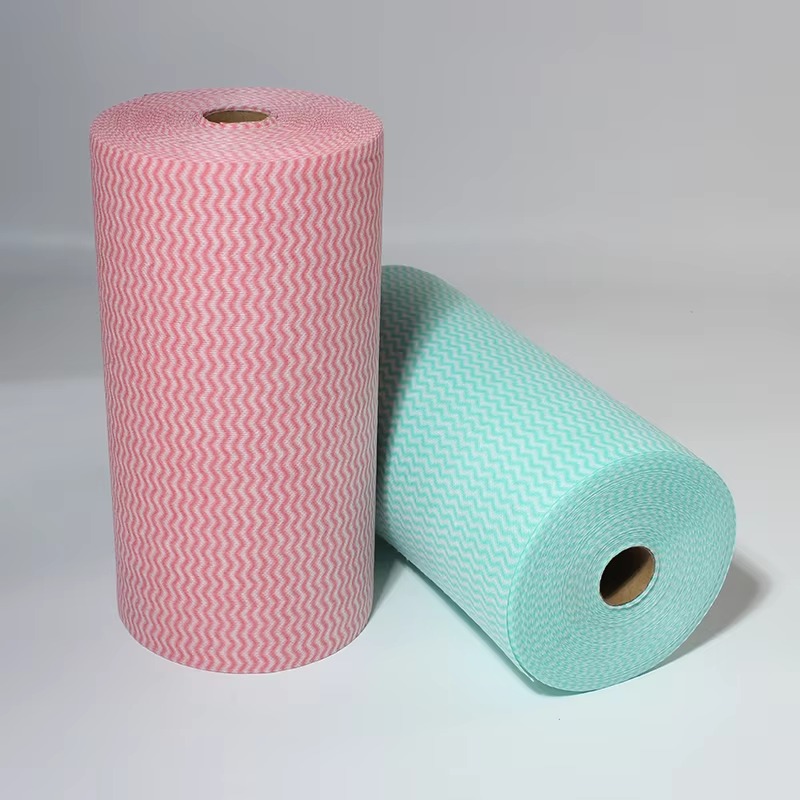
One of the most commercially significant trends in spunlace is the accelerating regulatory and consumer pressure toward biodegradable wipes — driven by the persistent problem of PET-containing wipes being flushed into sewage systems where they cause fatbergs, damage pumping equipment, and contribute persistent microplastics to waterways.
The UK government implemented a ban on plastic-containing ‘flushable’ wipes effective from 2026. The EU is pursuing similar legislation. Several major brands including Procter & Gamble, Kimberly-Clark, and Essity have publicly committed to transitioning wipe portfolios to plastic-free construction. This creates a significant growth opportunity for 100% viscose spunlace and 100% cotton spunlace — the only spunlace constructions that meet biodegradability standards without synthetic fiber.
For buyers sourcing spunlace fabric for wipe applications, specifying the fiber composition precisely — and ensuring the composition excludes PET for biodegradable claims — is increasingly critical for regulatory compliance and brand credibility.
Conclusion
Spunlace nonwoven’s combination of softness, wet strength, absorbency, and fabric-like drape makes it the nonwoven of choice for applications involving skin contact and liquid management — a specification that maps precisely onto the world’s largest nonwoven market: disposable consumer wipes. The parallel vs cross-lapped construction choice determines directional strength properties that must match the mechanical stresses of the specific application. The fiber composition choice — PET for durability and chemical resistance, viscose for absorbency and softness, cotton for natural fiber credentials — determines the product’s market positioning and sustainability profile.
VNPOLYFIBER supplies spunlace nonwoven fabric from our manufacturing network in Asia — viscose/PET blends, 100% PET, and cotton spunlace in parallel and cross-lapped constructions from 30 gsm to 120 gsm. We also supply the solid polyester staple fiber (1.5D–3D × 38–51 mm) used as the PET component in spunlace production. Contact us for fabric samples, specifications, certifications, and pricing.