Polycotton Fabric: The Complete Guide to Polyester-Cotton Blends—Ratios, Properties, Applications and Care
Polycotton—the textile industry’s term for fabrics and yarns blending polyester and cotton—is one of the most commercially important fabric categories in the world. It is so ubiquitous that most people wear it daily without thinking about it: the school uniform shirt, the hotel bedsheet, the work polo, and the printed T-shirt. Polycotton is the default fabric choice wherever manufacturers need to balance cotton’s natural comfort with polyester’s durability, easy care, and cost efficiency.
Yet polycotton is not a single product. The term covers a spectrum of blends—from 80% polyester / 20% cotton to 80% cotton / 20% polyester—each with genuinely different properties, feel, and appropriate applications. A 65/35 polycotton workwear fabric and a 20/80 CVC (chief value cotton) apparel fabric share only their blended nature; in performance, hand feel, and appropriate use, they are markedly different materials.
This complete guide covers what polycotton is, how it is made, every important blend ratio and its specific properties, performance across all key dimensions, applications by industry sector, how polycotton compares to 100% cotton and 100% polyester, how to choose the right blend for your application, and care guidance for different polycotton constructions.
What Is Polycotton? Definition and Structure
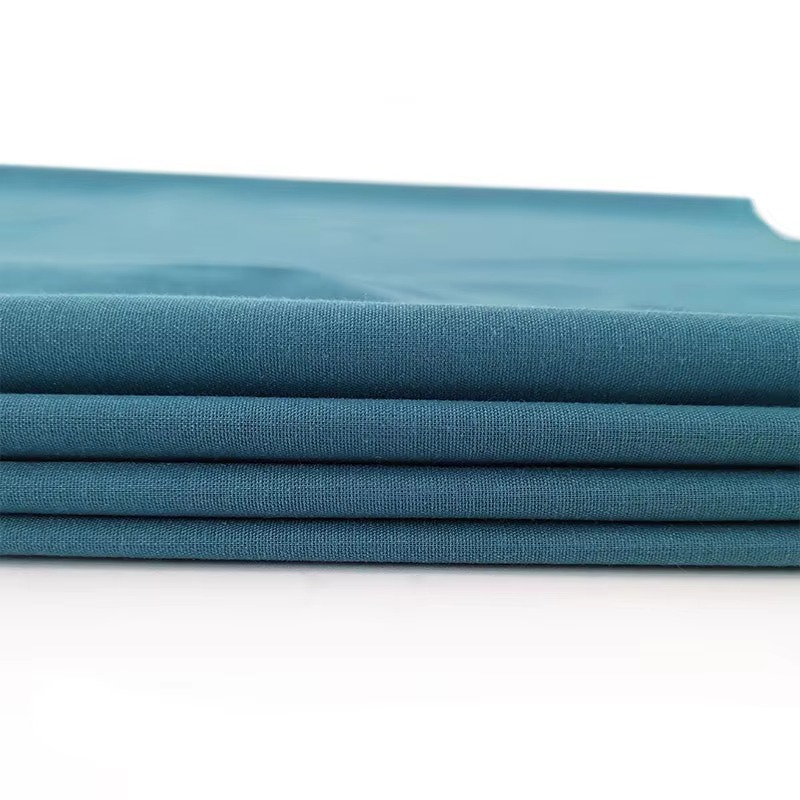
Polycotton (also written as “poly-cotton” or “polyester-cotton” or abbreviated as “PC” or “TC” in trade terminology) is a blended textile produced by combining polyester fiber and cotton fiber in a single yarn or fabric structure. The two fibers can be blended at the yarn stage—where polyester staple fiber and cotton staple are mixed in the opening and carding process before spinning into a single blended yarn—or at the fabric stage, where polyester yarns and cotton yarns are woven or knitted together in a defined structure.
The fundamental rationale for blending is to create a material that accesses properties from both fiber components simultaneously: cotton contributes its natural breathability, moisture absorption, soft skin feel, and biodegradability; polyester contributes its durability, wrinkle resistance, dimensional stability, quick-drying character, and cost efficiency. Neither fiber alone delivers all these properties—polycotton blending is the commercial solution to that gap.
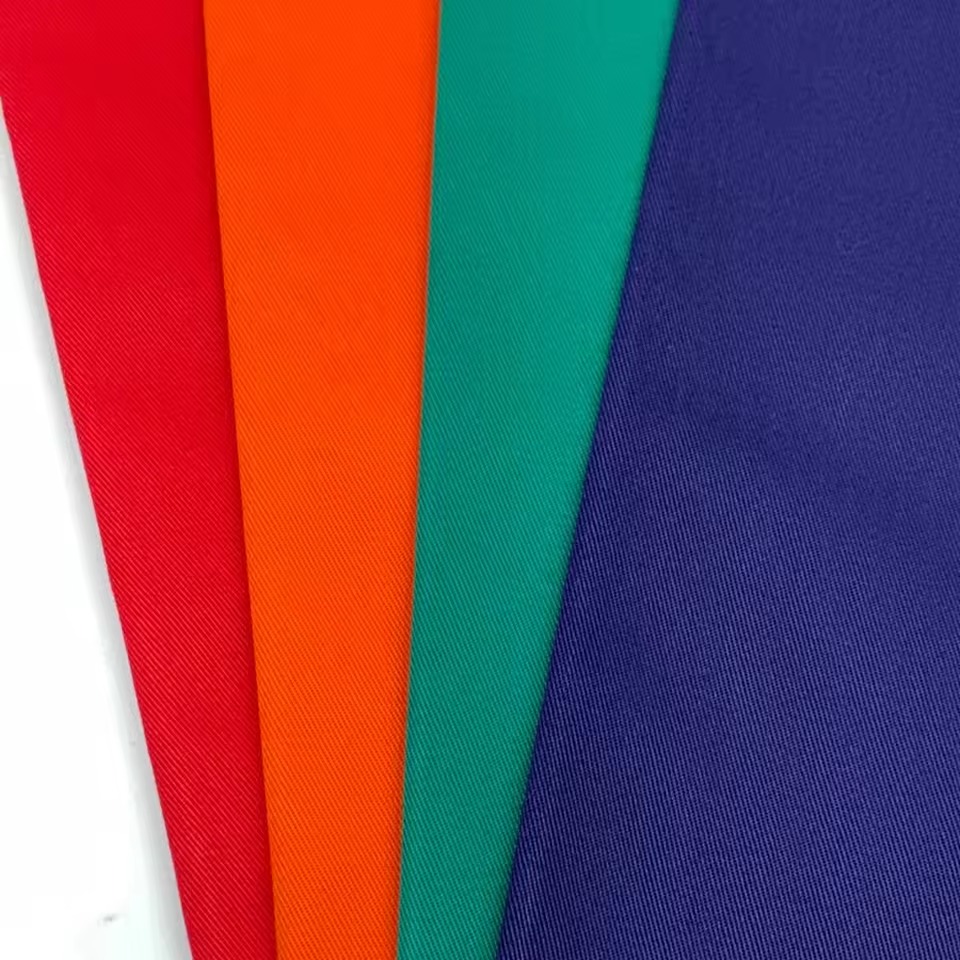
The terminology ‘TC fabric’ in Asian textile markets (particularly China and India) typically refers to polyester-rich polycotton, often 65% polyester / 35% cotton. ‘CVC fabric’ (Chief Value Cotton) refers to cotton-rich polycotton where cotton exceeds 50%—typically 60/40 or 80/20 cotton/polyester. Understanding these trade abbreviations is important for accurate specification in international sourcing.
How Polycotton Is Made: From Fiber to Fabric
Fiber Blending at the Spinning Stage
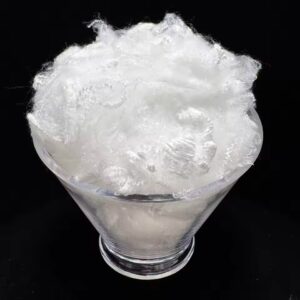
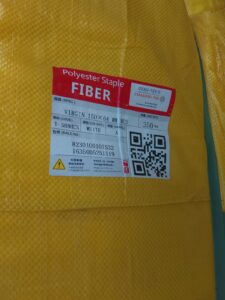
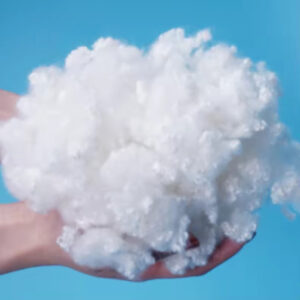
The most common and most thoroughly integrated method of producing polycotton yarn is intimate blending at the opening stage of cotton processing. Polyester staple fiber (PSF)—cut to the same staple length as the cotton fiber being blended (typically 32–38 mm for cotton-system spinning)—is introduced to the cotton opening line and mixed with cotton fiber during the blending, carding, and drafting operations. The result is a yarn in which polyester and cotton fibers are thoroughly intermixed at the fiber level throughout the yarn cross-section. This intimate blend produces the most uniform distribution of properties and is the construction used for the vast majority of polycotton apparel and home textile fabrics.
Yarn-Level Blending
An alternative approach weaves or knits separately spun polyester yarns and cotton yarns together in a fabric structure. This yarn-level blending allows the two fiber types to be placed differently in the fabric structure—for example, cotton yarns at the face (skin contact side) and polyester yarns at the back, or alternating stripe patterns. It also allows each yarn type to be optimized independently before combining. The result can achieve differentiated face and back properties that intimate blending cannot—a fabric with cotton softness on the skin-contact face and polyester durability and quick-drying on the exterior.
The Blend Ratio Spectrum: What Each Ratio Means
The blend ratio is the single most important specification decision for polycotton — it fundamentally determines where the resulting fabric sits in the performance space between pure cotton and pure polyester. Here is the complete guide to what each ratio delivers:
Ratio (Poly/Cotton) | Trade Name | Properties and Best Applications |
80/20 Polyester/Cotton | Technical TC | Maximum polyester character: very high durability, excellent wrinkle resistance, rapid drying, lowest cost, and minimal shrinkage. Low breathability; can feel warm and slightly synthetic against skin. Best for: industrial and commercial textiles, flag fabric, outdoor banners, furniture backing fabric, and promotional printed garments where cost is the primary driver. |
65/35 Polyester/Cotton | TC or polycotton (standard) | The dominant commercial workwear and uniform blend. Polyester character dominates: excellent wrinkle resistance, strong dimensional stability, easy care, and good durability. The cotton component adds a meaningful breathability improvement over 80/20 and reduces the synthetic feel. Standard for: workwear, corporate uniforms, school uniforms, hospitality linen (hotel bedding, tablecloths), and military and public service uniforms. The 65/35 ratio is the ISO standard reference blend for polycotton testing. |
50/50 Polyester/Cotton | Balanced blend | True midpoint: meaningful contributions from both fibers in all dimensions. Noticeably softer and more breathable than 65/35; still significantly more durable and wrinkle-resistant than pure cotton. The most commercially versatile ratio for apparel. Best for: general-purpose T-shirts and casual tops, polo shirts, everyday casual apparel, bed linen that needs a comfortable feel with easy care, and branded workwear where comfort matters alongside durability. |
40/60 Polyester/Cotton | CVC (light) | Cotton begins to dominate: noticeably softer and more breathable than 50/50. Wrinkling increases vs. 50/50 but remains significantly lower than pure cotton. Best for: quality casual apparel, children’s clothing, mid-premium polo and T-shirt styles, and apparel where a cotton feel is important but some performance enhancement is desired. |
35% Polyester / 65% Cotton | CVC | Cotton is clearly dominant. Substantially cotton-like hand feel and breathability; polyester contributes mainly to reducing shrinkage and wrinkle tendency. Best for: quality apparel and home textiles where a near-cotton feel is required with improved care performance vs. pure cotton. |
20% Polyester / 80% Cotton | CVC (cotton-rich) | Near-cotton character. Very soft, breathable, and comfortable—the consumer perceives it as essentially a cotton fabric. The polyester component primarily contributes shrinkage control and slight durability enhancement. Best for: premium casual apparel, quality children’s clothing, and high-comfort applications where a cotton feel is the primary requirement and only modest performance improvement is needed. |
Polycotton Properties: The Complete Performance Profile
Property | Pure Cotton (reference) | 65/35 Polycotton (reference) |
Moisture absorption | 8% regain—highly absorbent; feels damp when saturated | ~3–5% regain—meaningfully lower; faster to feel dry on skin |
Breathability | Excellent—open fiber structure allows air circulation | Good—the cotton component preserves meaningful breathability vs. pure polyester |
Wrinkle resistance | Poor—creases readily; requires ironing for crisp appearance | Excellent—polyester component provides good wrinkle recovery; minimal ironing needed |
Shrinkage | 3–10% in first wash without pre-treatment | Very low—the polyester component restrains cotton from contracting |
Dimensional stability | Moderate — can stretch or distort when wet | Excellent — maintains shape through washing and use |
Durability | Good—fibers degrade with abrasion over time | Excellent—the polyester component significantly improves resistance to wear and repeated laundering |
Quick-drying | Slow—retains absorbed moisture | Faster than cotton—polyester component reduces overall moisture retention |
Softness | Natural soft hand feel (ELS varieties noticeably softer) | Good — cotton component maintains acceptable softness; 50/50 and cotton-rich ratios feel quite similar to pure cotton |
Pilling tendency | Moderate (varies by cotton quality) | Lower — polyester component improves pilling resistance in blended construction |
Static buildup | Minimal—cotton is a poor electrical insulator | Moderate — polyester component increases static tendency vs. pure cotton |
Dyeability | Excellent—wide dye class compatibility | More complex—requires two-bath dyeing (disperse dye for polyester, reactive for cotton) or pigment; affects dye cost |
Colour fastness | Good—reactive and vat dyes give excellent wash fastness | Good—the reactive/disperse combination maintains good fastness; dope-dyed polyester component doesn’t fade |
Biodegradability | Fully biodegradable (100% cotton, unblended) | Not fully biodegradable—the polyester component persists in the environment. |
Microplastic shedding | None—cotton fibres are biodegradable | Yes—the polyester component sheds synthetic microfibers during washing |
Washing temperature | 30–60°C (hotter causes shrinkage) | Up to 60°C without shrinkage—the polyester component prevents dimensional change |
Ironing requirement | High-cotton wrinkles readily | Low to none—excellent wrinkle resistance reduces ironing significantly |
Cost (fabric level) | Higher — cotton commodity price plus quality premium | Lower—the polyester component is cheaper than cotton; significant cost savings at high polyester ratios |
Applications of Polycotton by Sector
Workwear and Uniforms — The Dominant Application
65/35 polycotton is the global standard fabric for workwear and corporate uniforms — an application where the blend ratio’s specific balance of properties (excellent wrinkle resistance, durability through industrial laundering, color retention, dimensional stability, and cost efficiency) precisely matches the requirements. Commercial laundries can wash polycotton workwear at 60°C for hygienic washing without shrinkage or distortion; the garments emerge requiring minimal or no ironing because the polyester component prevents creasing during the wash-dry cycle. Polycotton workwear outlasts 100% cotton workwear significantly in commercial use environments, reducing the total cost of ownership despite the initial fabric cost difference.
Key workwear and uniform applications: corporate shirts and trousers, hospitality front-of-house uniforms, healthcare scrubs and clinical garments (where the 60°C wash capability is important for infection control), military and security uniforms, school uniforms, catering and food service apparel, and retail staff uniforms.
Bedding and Home Textiles
Polycotton bedding occupies the dominant position in the mid-market and commercial bedding segments globally. For hotel and hospitality bedding specifically—where sheets are laundered at high frequency in commercial laundries—50/50 polycotton is the standard specification, combining acceptable comfort for guests with the laundry durability, 60°C washability, minimal ironing requirement, and dimensional stability that commercial operations require. A polycotton hotel sheet lasts significantly longer through commercial laundering cycles than an equivalent 100% cotton sheet, a commercial consideration that outweighs the modest comfort difference for most hospitality purchasing teams.
- Hotel and hospitality linen: 50/50 polycotton standard; 200 thread count percale construction for sheets and pillowcases; satin stripe (‘hotel stripe’) duvet covers and pillowcases
- Healthcare and institutional bedding: 65/35 polycotton for maximum durability through high-frequency industrial laundering at 60°C+ disinfection temperatures
- Retail mid-market bedding: 50/50 or 40/60 polycotton for consumer bedding combining easy care with acceptable comfort at accessible price points
- Children’s bedding: 50/50 or 60/40 cotton-rich for comfort; easy care is particularly valued for children’s bedding subject to frequent washing
Casual and Fashion Apparel
The global market for 50/50 and CVC (chief value cotton) polycotton T-shirts and casual apparel is enormous—driven by the screen printing, promotional clothing, and fast fashion segments, where the blend delivers good printability, acceptable comfort, easy care, and significantly lower cost than 100% cotton at equivalent weights.
- Screen-printed promotional T-shirts: 50/50 polycotton is widely specified for screen printing because the polyester component provides excellent ink adhesion and colour vibrancy; the cotton component provides adequate comfort for occasional use
- Casual shirts and polos: 50/50 for price-driven casual; 35/65 CVC for better-quality casual apparel where a more natural feel is desired
- Sportswear and activewear: Higher polyester ratios (65/35 or 80/20) for moisture management and durability; cotton component adds comfort versus 100% polyester, though dedicated moisture-wicking 100% polyester often outperforms polycotton for high-intensity performance applications
Medical and Healthcare Textiles
Healthcare textiles have demanding requirements that polycotton serves well: the need for 60°C+ washing for infection control, repeated industrial laundering durability, and acceptable comfort for patient and staff contact. Standard polycotton (65/35) is widely used for staff uniforms and scrubs, bed linen in standard wards, curtains and privacy screens, and institutional laundry applications. The polyester component’s dimensional stability prevents the shrinkage that would make repeated industrial laundering of 100% cotton problematic at scale.
Flag, Banner, and Promotional Fabric
80/20 polycotton is widely used for flag and banner production because the high polyester content gives excellent dimensional stability, color vibrancy for reactive dye printing, resistance to outdoor weathering, and cost efficiency. The cotton component in 80/20 improves the fabric’s hand and reduces the synthetic crispness of 100% polyester for indoor decorative applications.
Polycotton vs. Pure Cotton vs. Pure Polyester: Quick Decision Guide
Priority | Choose Pure Cotton | Choose polycotton. | Choose Pure Polyester |
Maximum breathability | ✅ Best choice | ⚠️ Good (higher cotton ratio) | ❌ Limited without treatment |
Easy care / no ironing | ❌ Wrinkles readily | ✅ Excellent | ✅ Excellent |
Commercial laundry 60°C+ | ⚠️ Shrinks at 60°C | ✅ Stable at 60°C | ✅ Stable at 60°C |
Natural soft hand feel | ✅ Best choice | ✅ Good (cotton-rich ratio) | ❌ Varies; not naturally soft |
Maximum durability | ⚠️ Good but degrades | ✅ Very good | ✅ Best choice |
Biodegradable | ✅ 100% cotton | ❌ Not fully (polyester component) | ❌ Not biodegradable |
No microplastics | ✅ Cotton is safe | ❌ Polyester component sheds | ❌ Sheds microplastics |
Lowest cost at scale | ⚠️ Higher than polycotton | ✅ Significantly lower than cotton | ✅ Lowest cost |
Shrink resistance | ❌ Can shrink 3–10% | ✅ Minimal shrinkage | ✅ No shrinkage |
Screen print quality | ✅ Good | ✅ Excellent (polyester helps) | ✅ Best for sublimation |
Skin-contact comfort | ✅ Best (long-term wear) | ✅ Good (cotton-rich) | ⚠️ Less comfortable |
Workwear / uniforms | ⚠️ Cotton needs ironing; wears out | ✅ Standard choice for workwear | ⚠️ Less comfortable than polycotton |
Hotel bedding | ⚠️ Premium option; needs ironing | ✅ Standard commercial choice | ⚠️ Less comfortable than polycotton |
Polycotton and Sustainability: An Honest Assessment
Polycotton’s sustainability profile is genuinely mixed—it improves some environmental dimensions versus pure cotton while introducing the environmental costs of its polyester component:
- Lower agricultural water use per garment: By replacing a proportion of cotton with polyester, polycotton reduces the very high water demand of cotton cultivation per kilogram of fabric produced. A 65/35 polycotton shirt uses approximately 35% less agricultural water than an equivalent 100% cotton shirt—a meaningful environmental improvement given cotton’s irrigation intensity.
- Lower pesticide use per garment: The polyester component requires no agricultural pesticides, reducing the overall pesticide burden per unit of fabric compared to 100% cotton.
- Microplastic shedding: The polyester component of polycotton sheds synthetic microfibers during machine washing—persistent plastic particles that accumulate in aquatic environments. This is the most significant unique environmental cost of the polyester component. Natural cotton fibers, by contrast, shed biodegradable cellulose fibers that do not persist as microplastics.
- Non-biodegradable at end of life: Unlike 100% cotton, polycotton does not biodegrade. The polyester component persists in landfills. Mixed cotton-polyester fabric is also extremely difficult to recycle into new textile fiber—the polymers cannot be easily separated mechanically, and chemical separation is not yet at commercial scale.
- Recycled polycotton options: GRS-certified recycled polyester fiber can be blended with recycled or conventional cotton to produce a more sustainable polycotton — the recycled polyester reduces the GHG footprint of the synthetic component by 60–70% while maintaining the blend’s performance properties. This is the most practical sustainability improvement available within the polycotton category for brands with recycled content commitments.
Polycotton Care Guide
Polycotton’s easy-care character is one of its primary selling points, but the specific care guidance varies by blend ratio and application. The general principles:
Care Step | Guidance |
Washing temperature | 30–60°C for most polycotton. The polyester component allows higher temperatures (60°C) without shrinkage—an advantage over pure cotton, which would shrink at 60°C. Color-fast polycotton in dark colors should use 30–40°C to preserve dye longevity. |
Wash cycle | Normal machine wash cycle appropriate for most polycotton. Gentle cycle for delicate polycotton with fine construction or printed surface decoration. |
Detergent | Standard laundry detergent is suitable. Avoid strong bleach (chlorine bleach can degrade polyester). Fabric softener is optional but not usually necessary for polycotton—the polyester component already reduces static and improves drape. |
Tumble drying | Low to medium heat. Polycotton dries significantly faster than pure cotton and requires lower heat than pure cotton for tumble drying. Remove promptly from dryer to prevent heat-set creasing. Air drying is ideal for preserving fabric quality long-term. |
Ironing | Most polycotton requires little or no ironing after tumble drying—wrinkle resistance is a primary benefit. If ironing is needed: medium heat (polyester/cotton setting, approximately 150°C). Never use a high cotton heat setting on polycotton—this can glaze or distort the polyester component. |
Stain treatment | Most standard stain treatments are safe on polycotton. Avoid oil-based solvents on high-cotton polycotton. Test on an inconspicuous area first for unfamiliar treatments. |
Microplastic mitigation | Polycotton sheds synthetic microfibers from its polyester component during washing. Mitigation: Use a Guppyfriend wash bag or in-machine microplastic filter; wash at lower temperatures; use liquid detergent rather than powder; reduce unnecessary wash cycles. |
Choosing the Right Polycotton: A Specification Framework
When selecting a polycotton blend for a specific application, work through these questions:
- What is the priority — comfort or performance? If skin comfort in warm conditions is paramount: 50/50 or cotton-rich (60/40, 80/20). If durability, easy care, and wrinkle resistance are primary: 65/35 or 80/20 polyester-rich.
- What washing conditions will this product experience? Commercial laundering at 60°C requires 50/50 or higher polyester content to avoid shrinkage. Consumer laundering at 30–40°C can use any blend ratio.
- What is the price point? Higher polyester content = lower material cost. 80/20 is significantly cheaper than 20/80 for equivalent weight. Budget-driven commercial applications should lean toward higher polyester ratios.
- Is sustainability certification required? GRS-certified recycled polyester component available for recycled content claims. GOTS or OCS certification for the cotton component if organic claims are needed. Specify both if a fully certified sustainable poly-cotton is required.
- What is the printing or decoration method? Screen printing: 50/50 gives excellent results. Sublimation printing requires high polyester content (80%+ polyester) for best color transfer and vibrancy. Embroidery: any ratio suitable.
- Is the application for skin-contact, long-duration wear? For garments worn against skin for extended periods (base layers, underwear, and workwear worn all day), a minimum 50% cotton content is generally recommended for comfort; 35% cotton in a 65/35 blend is a minimum for all-day wear comfort.
Conclusion: Polycotton — Engineered for the Real World
Polycotton is not a compromise between cotton and polyester—it is a deliberately engineered material that makes specific tradeoffs to serve specific commercial needs better than either pure fiber can alone. The 65/35 polycotton shirt worn by hotel staff is not a cheaper imitation of a cotton shirt; it is a product specifically designed for the demands of commercial laundering, daily institutional use, and easy care that 100% cotton cannot meet at equivalent durability and cost.
The key to working with polycotton effectively is understanding the blend ratio spectrum—recognizing that each ratio represents a different position in the performance space between pure cotton and pure polyester and selecting the ratio that positions correctly for the specific application, care requirements, price point, and sustainability objectives of the product being developed.
As the textile industry’s sustainability agenda advances, recycled polycotton — using GRS-certified recycled polyester fiber blended with conventional or organic cotton — offers a meaningful environmental improvement within the polycotton category: reduced GHG footprint for the synthetic component without sacrificing the blend’s performance advantages. This is the direction the commercial polycotton market is moving, driven by brand commitments, retailer requirements, and the regulatory frameworks that are making verified recycled content increasingly standard across the industry.