Synthetic Fibers vs. Man-Made Fibers: What’s the Actual Difference? The Complete Classification Guide
If you have ever read a textile specification, a care label, or a sustainability report and wondered whether ‘synthetic fiber’ and ‘man-made fiber’ mean the same thing — you are not alone. These two terms are used interchangeably in everyday conversation, in marketing copy, and even in some professional textile contexts. But they are not identical. The difference between them is precise, technically meaningful, and practically important for anyone working in fiber sourcing, textile manufacturing, sustainability reporting, or product development.
The short version: all synthetic fibers are man-made fibers, but not all man-made fibers are synthetic. Viscose (rayon) is man-made but not synthetic. Polyester is both man-made and synthetic. This distinction matters because it determines the fiber’s raw material origin, its environmental profile, its regulatory classification, and the sustainability claims that can be made about it.
This guide clarifies the terminology definitively, explains the complete fiber classification system from first principles, profiles every major fiber type within each category, and provides the comparison framework that procurement professionals, designers, and sustainability teams need to work accurately with fiber classification.
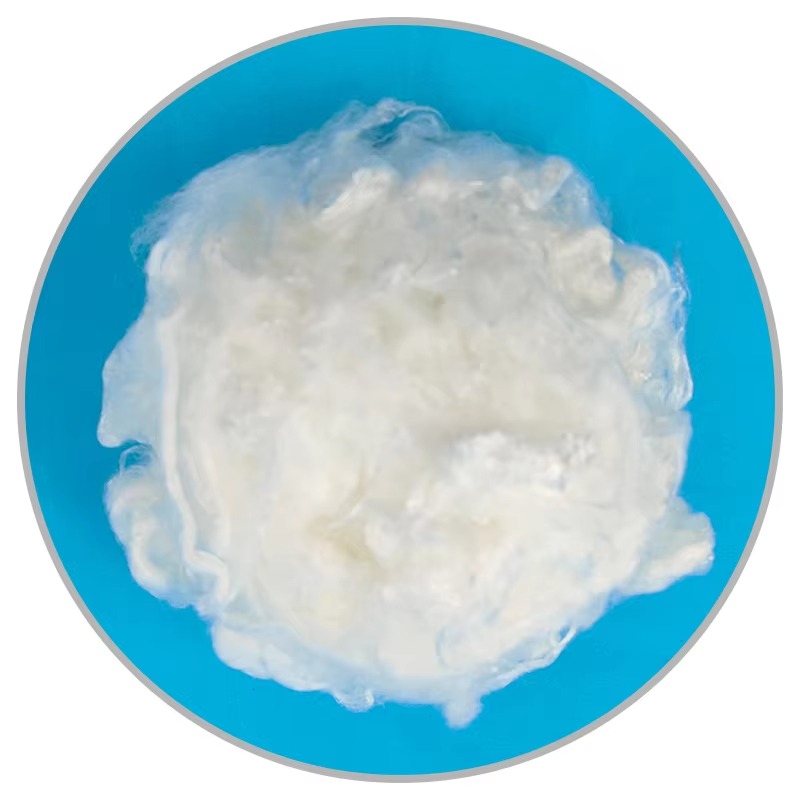
The one-sentence rule: ‘Man-made fiber’ refers to any fiber produced by an industrial manufacturing process — the category includes both regenerated natural polymers (like viscose, which starts with wood pulp cellulose) and fully synthetic polymers (like polyester, which starts with petroleum). ‘Synthetic fiber’ refers only to fibers built entirely from chemically synthesized polymers. Every synthetic fiber is man-made, but some man-made fibers are not synthetic.
The Fiber Family Tree: A Complete Classification Framework
All textile fibers can be organized within a three-branch classification based on their origin and production method. Understanding this framework precisely eliminates the confusion between man-made and synthetic that is common even in professional textile contexts.
Branch | Category | Examples | Key Distinction |
NATURAL FIBERS | Plant-based (cellulosic) | Cotton, linen, hemp, jute, ramie | Grown from plants; no industrial polymer processing |
Animal-based (protein) | Wool, silk, cashmere, alpaca | Harvested from animals; protein polymers | |
Mineral | Asbestos (banned), basalt | Inorganic; limited modern use | |
MAN-MADE FIBERS (all of the below are man-made) | Regenerated cellulosic | Viscose, modal, lyocell, cupro, acetate | Natural polymer (cellulose) dissolved and re-spun — man-made, NOT synthetic |
Regenerated protein | Soy fiber, casein fiber | Natural protein dissolved and re-spun — rare, man-made, NOT synthetic | |
SYNTHETIC FIBERS (subset of man-made) | Polyester family | PET, PTT, PBT, PCDT | 100% petroleum-derived polymer built from scratch — man-made AND synthetic |
Polyamide family | Nylon 6, Nylon 66, Nylon 11, PA12 | 100% synthetic polyamide — man-made AND synthetic | |
Polyolefin family | Polypropylene (PP), polyethylene (PE) | Lightest synthetics; olefin polymer — man-made AND synthetic | |
Acrylic | PAN (polyacrylonitrile) | Wool-like synthetic — man-made AND synthetic | |
Elastomeric | Spandex/elastane (polyurethane) | Extreme stretch synthetic — man-made AND synthetic | |
High-performance | Aramid (Kevlar, Nomex), UHMWPE, carbon fiber | Specialty engineering synthetics — man-made AND synthetic |
The Critical Distinction: Regenerated vs. Synthetic
The distinction within the man-made fiber family — between regenerated fibers and synthetic fibers — is the most commonly misunderstood boundary in textile classification. Getting it right matters for sustainability claims, regulatory compliance, and accurate product specification.
Regenerated Fibers: Natural Polymer, Industrial Process
Regenerated fibers begin with a natural polymer — almost always cellulose from wood pulp — that is dissolved using chemical solvents and then re-formed into fiber by extrusion through a spinneret into a coagulation bath. The cellulose molecule itself is not synthesized; it comes from a biological source. What is manufactured is the physical form — the fiber — not the base polymer.
This is why viscose (rayon), modal, lyocell (Tencel), and cupro are classified as man-made but not synthetic. The cellulose they contain is the same cellulose found in wood or cotton — nature-derived, biodegradable, and fundamentally different in origin from the petroleum-derived polymers of truly synthetic fibers. The ‘man-made’ aspect is the industrial dissolution-and-re-spinning process; the ‘natural’ aspect is the cellulose feedstock.
Acetate and triacetate occupy a slightly different position: the cellulose is chemically modified (acetylated) rather than purely regenerated, making them technically cellulose esters — still derived from natural cellulose but more chemically transformed than pure regenerated cellulosics like viscose or lyocell.
Synthetic Fibers: Polymer Built from Chemical Monomers
Synthetic fibers are produced by polymerization — the chemical reaction that builds large polymer molecules by linking small monomer units together. The monomers are almost exclusively derived from petroleum refining (PTA and MEG for polyester; caprolactam or adipic acid and hexamethylene diamine for nylon; propylene for polypropylene; acrylonitrile for acrylic). No natural polymer exists in the production chain — the polymer is built entirely from scratch through industrial chemistry.
This total dependence on fossil fuel feedstocks is what gives synthetic fibers their characteristic environmental challenges: high embedded carbon, non-biodegradability, and microplastic shedding. It also gives them their characteristic performance advantages: precise engineering of properties, unlimited scale of production, and freedom from agricultural constraints.
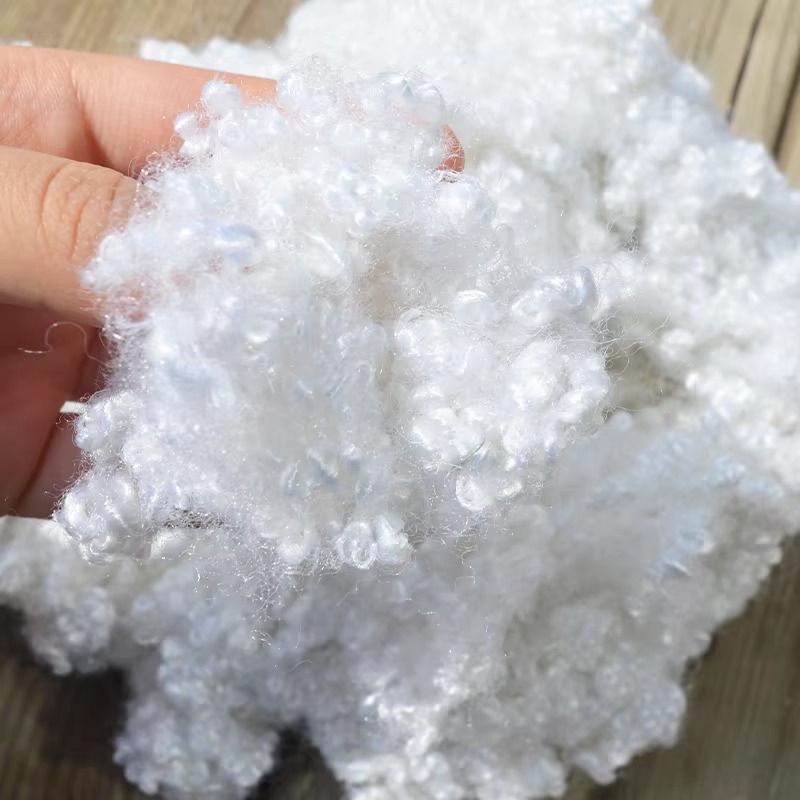
The Most Commonly Confused Fibers: Definitive Classification
Fiber | Man-Made? | Synthetic? | Why / Key Fact |
Viscose / Rayon | ✅ Yes | ❌ No | Wood pulp cellulose dissolved and re-spun. Natural polymer origin. Biodegradable. |
Modal | ✅ Yes | ❌ No | Refined viscose process using beechwood pulp. Better wet strength than standard viscose. |
Lyocell / Tencel | ✅ Yes | ❌ No | Closed-loop NMMO solvent process. Most environmentally advanced MMCF. Biodegradable. |
Cupro (Bemberg) | ✅ Yes | ❌ No | Cotton linter cellulose in copper-ammonia solution. Silk-like; closed-loop production. |
Acetate | ✅ Yes | ❌ No | Cellulose chemically modified with acetic acid. Technically cellulose acetate ester. |
Polyester (PET) | ✅ Yes | ✅ Yes | Petroleum-derived PTA + MEG polymerized. World’s #1 produced fiber. Not biodegradable. |
Nylon (Polyamide) | ✅ Yes | ✅ Yes | Petroleum-derived. PA6 from caprolactam; PA66 from adipic acid + hexamethylene diamine. |
Polypropylene (PP) | ✅ Yes | ✅ Yes | Petroleum-derived. Lightest standard fiber (density <1.0 g/cm³). Not dyeable conventionally. |
Acrylic (PAN) | ✅ Yes | ✅ Yes | Petroleum-derived acrylonitrile. Wool-like hand. Also the precursor for carbon fiber. |
Spandex / Elastane | ✅ Yes | ✅ Yes | Polyurethane elastomer. Extreme stretch (400–700%). Always blended, never 100%. |
Aramid (Kevlar) | ✅ Yes | ✅ Yes | Synthetic polyamide with aromatic rings. High-performance: 5× steel strength by weight. |
Bamboo fiber | Depends | ❌ No | If viscose process: man-made, not synthetic. If mechanically processed: natural. Label matters. |
Recycled polyester (rPET) | ✅ Yes | ✅ Yes | Same polymer as virgin PET, from bottle feedstock. Still synthetic — origin, not chemistry, changes. |
Bio-based PET | ✅ Yes | ✅ Yes | Same PET chemistry, monomer from sugarcane. Still synthetic — bio-based feedstock, same polymer. |
Wool | ❌ No | ❌ No | Animal fiber. Protein polymer (keratin). Fully natural — no industrial polymer processing. |
Cotton | ❌ No | ❌ No | Plant fiber. Cellulose polymer. Fully natural — same cellulose as viscose uses, but not dissolved. |
Why Does This Distinction Matter Practically?
For Sustainability Claims and Reporting
The man-made vs. synthetic distinction is fundamental to accurate sustainability communication. ‘Synthetic fiber’ carries the environmental associations of petroleum dependence, non-biodegradability, and microplastic shedding. ‘Man-made cellulosic fiber’ (like lyocell from sustainably managed wood pulp) is biodegradable, from a renewable feedstock, and produced in a closed-loop process. Lumping both under ‘synthetic’ misrepresents the environmental profile of regenerated fibers — a mistake that both overstates the sustainability challenges of responsible MMCF producers and undersells the genuine problems of fossil-derived synthetics.
EU textile regulations (Textile Regulation EU 1007/2011 and the forthcoming Sustainable Products Regulation) use precise fiber taxonomy. Mislabeling a regenerated cellulosic as ‘synthetic’ or vice versa on product labeling constitutes a regulatory compliance failure in EU markets.
For Product Labeling (Care Labels and Fiber Content)
International labeling standards (ISO 2076 / EN ISO 2076) define precise abbreviations for each fiber type. The key codes for man-made fibers on care labels:
Code | Fiber | Category |
CV | Viscose (Rayon) | Man-made regenerated cellulosic — NOT synthetic |
MD | Modal | Man-made regenerated cellulosic — NOT synthetic |
CLY | Lyocell | Man-made regenerated cellulosic — NOT synthetic |
CUP | Cupro | Man-made regenerated cellulosic — NOT synthetic |
CA | Acetate | Man-made cellulose ester — NOT synthetic |
PES | Polyester | Man-made AND synthetic |
PA | Polyamide (Nylon) | Man-made AND synthetic |
PP | Polypropylene | Man-made AND synthetic |
PAN / AC | Acrylic | Man-made AND synthetic |
EL | Elastane (Spandex) | Man-made AND synthetic |
AR | Aramid | Man-made AND synthetic |
CO | Cotton | Natural — neither man-made nor synthetic |
WO | Wool | Natural — neither man-made nor synthetic |
For Biodegradability and End-of-Life Assessment
The man-made vs. synthetic distinction maps directly onto biodegradability:
- Regenerated cellulosic fibers (viscose, modal, lyocell, cupro): fully biodegradable under natural conditions — the cellulose reverts to CO₂, water, and biomass through microbial action
- Cellulose acetate: biodegradable but at a slower rate than pure regenerated cellulosics — the acetate groups delay microbial breakdown
- All synthetic fibers (polyester, nylon, polypropylene, acrylic, spandex): not biodegradable under natural environmental conditions — they persist in soil and marine environments for decades to centuries, and shed persistent microplastics during washing
This is not a minor technical distinction — it determines whether a fiber contributes to or helps solve the microplastic pollution problem, and whether a product carrying a ‘biodegradable’ claim can substantiate that claim for its fiber content.
For Sourcing and Trade Classification
HS (Harmonized System) codes used for international trade distinguish between man-made cellulosic fibers (HS Chapter 55.01–55.04 for filament; 55.01–55.07 for staple) and synthetic fibers (Chapter 54 for filament yarns; 55.03 and 55.04 for synthetic staple). Incorrect classification creates customs compliance problems and potential import duty issues in markets with different tariff rates for the two categories.
Natural vs. Man-Made vs. Synthetic: The Three-Way Comparison
Dimension | Natural Fibers | Regenerated Fibers (man-made, not synthetic) | Synthetic Fibers (man-made and synthetic) |
Raw material origin | Plants or animals — renewable, biological | Natural cellulose (wood, bamboo, cotton linters) — renewable | Petroleum-derived monomers — fossil fuel feedstock |
Polymer origin | Nature-produced — no polymerization step | Nature-produced cellulose — dissolved and re-spun | Chemically synthesized from monomers — full polymerization |
Biodegradability | Fully biodegradable | Fully biodegradable (pure cellulosic); slower for acetate | Not biodegradable — persists decades to centuries |
Microplastic shedding | No synthetic microplastics | No synthetic microplastics | Yes — sheds persistent synthetic microfibers during washing |
Agricultural land use | High — competes with food crops | Low — wood pulp from managed forests or marginal land | None — industrial, not agricultural production |
Water in production | High (cotton up to 25,000 L/tonne) | Low to moderate (viscose ~350 L/tonne; lyocell less) | Very low (polyester ~4 L/tonne) |
Chemical processing | Minimal (cotton ginning); more for wool | Moderate to significant (viscose uses CS₂; lyocell closed-loop) | Moderate — petrochemical synthesis; some solvents |
Carbon footprint | Variable: cotton ~2–4 kg CO₂/kg; wool ~24 kg | Moderate: viscose ~2–4 kg; lyocell ~2 kg | High: polyester ~5.5 kg; nylon ~6–7 kg; acrylic ~35 kg |
Property control | Constrained by biology — variable | Better than natural; some property engineering possible | Full engineering control — properties precisely specified |
Durability | Moderate — cotton and wool degrade over time | Good — comparable to synthetics for most applications | Very high — resistant to degradation in use |
Moisture comfort | Excellent — high natural absorption | Very good — cellulosics are highly absorbent | Poor to moderate — hydrophobic surface; wicking finish helps |
Cost | Variable — cotton affordable; wool/silk premium | Moderate — processed production cost | Generally low — commodity industrial scale |
Recyclability | Limited commercial infrastructure | Limited — research stage | rPET commercially established; recycled nylon growing |
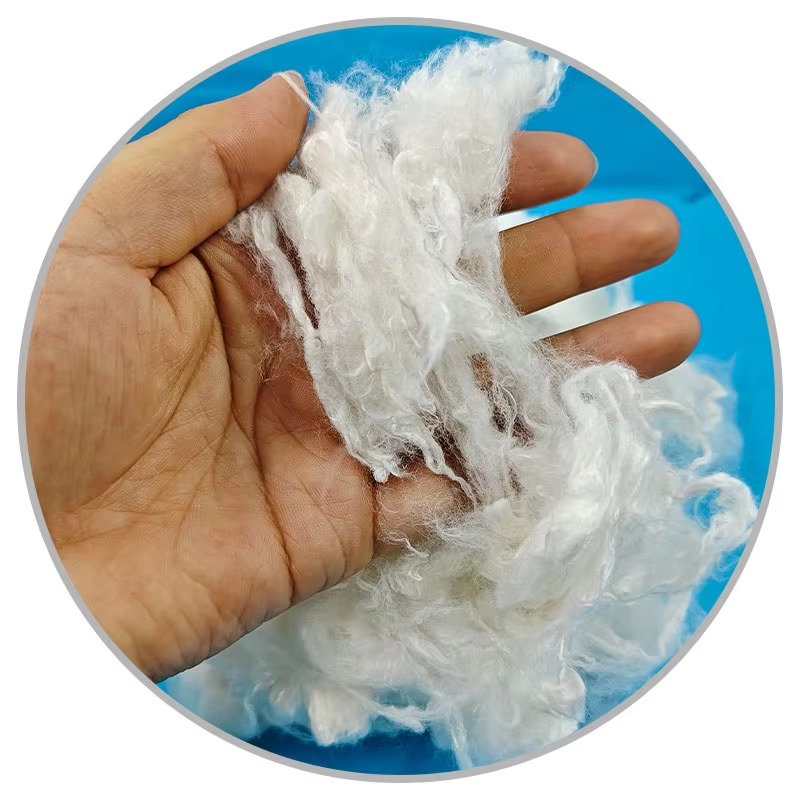
Key Synthetic Fiber Types: Performance Profiles
Within the synthetic fiber category, each major polymer family has a distinct performance profile that determines where it is used:
Polyester (PET) — The World’s Most Produced Fiber
Polyethylene terephthalate polyester accounts for approximately 57% of all global fiber production. Its combination of high tensile strength, dimensional stability, wrinkle resistance, low moisture absorption, UV stability, and low cost makes it the dominant fiber across apparel, home textiles, nonwovens, and technical textiles. The most important sustainable development: recycled polyester (rPET) from post-consumer PET bottles delivers equivalent performance with 60–70% lower GHG emissions, with GRS certification providing verified recycled content documentation.
Polyamide / Nylon (PA6 and PA66) — The High-Performance Synthetic
Nylon was the world’s first fully synthetic fiber (DuPont, 1938). Its outstanding abrasion resistance (10× cotton; 20× wool), excellent elastic recovery, and high strength make it the premium fiber for demanding mechanical applications: hosiery, activewear, swimwear, carpet, parachute fabric, airbag fabric, and industrial rope. PA66’s higher melting point and strength versus PA6 make it the engineering grade for the most demanding technical applications. Recycled nylon (Econyl, from fishing nets) is the leading sustainable alternative.
Polypropylene (PP) — The Technical Specialist
The only commercial fiber lighter than water (density 0.91 g/cm³), with essentially zero moisture absorption and outstanding chemical resistance across the full pH range. PP dominates the nonwoven sector (geotextiles, hygiene product facings, meltblown filtration media including N95 mask filter layers, spunbond crop covers) and concrete reinforcement (short-cut PP fiber controls plastic shrinkage cracking). Cannot be dyed conventionally — must be solution-dyed at polymer stage.
Acrylic (PAN) — The Wool Alternative
Polyacrylonitrile fiber provides the warmth and bulk of wool at significantly lower cost. Excellent UV stability makes it the standard for outdoor textiles, awnings, and boat covers. Also serves as the precursor fiber for carbon fiber production — PAN fiber is heat-treated to produce graphite-structure carbon fiber for aerospace and sports equipment. Sustainability is acrylic’s weakest dimension: it is not currently recycled at commercial scale and is a significant microplastic source.
Elastane / Spandex (Polyurethane)
Segmented polyurethane fiber with extreme elongation (400–700%) and near-perfect elastic recovery. Always blended at 2–20% with other fibers to add stretch without compromising other properties. Essential in activewear, swimwear, shapewear, and any form-fitting apparel. The polyurethane component significantly complicates end-of-life recycling of blended fabrics — a growing industry challenge.
Key Regenerated Fiber Types: The Man-Made, Not Synthetic Family
Viscose / Rayon — The Original Man-Made Fiber
Approximately 80% of all MMCF (man-made cellulosic fiber) production. Wood pulp dissolved in caustic soda and carbon disulfide, then extruded into an acid coagulation bath. Produces fiber that mimics silk in luster and cotton in moisture absorption. The production process has significant chemical management requirements — the carbon disulfide used is toxic and must be carefully managed. Better-practice viscose production (Lenzing’s EcoVero, with FSC-certified wood pulp and closed chemical loops) significantly reduces the environmental impact.
Lyocell (Tencel) — The Sustainability Leader
The most environmentally advanced commercial MMCF process. Wood pulp cellulose is dissolved in NMMO (N-methylmorpholine N-oxide) solvent, which is recovered and recycled at 99%+ efficiency in a closed loop — no toxic effluent, no carbon disulfide. The resulting fiber is biodegradable, soft, strong, and highly absorbent. Tencel (Lenzing’s branded lyocell) is produced from FSC-certified wood from sustainably managed forests. Lyocell represents the closest current commercial approximation to a circular man-made fiber.
Modal — The Soft Upgrade
A refined viscose process using beechwood pulp with additional stretching steps that produce finer, stronger fiber with significantly better wet strength than standard viscose. Modal fabric retains its softness even after many washes — a property that makes it the standard for premium underwear, base layers, and intimate apparel. Lenzing’s Modal is produced from beechwood grown in European sustainably managed forests without artificial irrigation.
Common Misconceptions — Corrected
‘Bamboo fabric is natural’
This is one of the most widely propagated fabric marketing misconceptions. If bamboo fiber is produced by the viscose process (which the vast majority of commercial ‘bamboo fabric’ is), it is a man-made regenerated fiber — not a natural fiber. The bamboo plant provides the cellulose feedstock, but the fiber itself is produced by the same chemical dissolution-and-spinning process as any other viscose. Mechanically processed bamboo fiber (where the bamboo stalks are physically crushed and the natural fibers extracted) is genuinely natural but produces a coarser, less commercially popular fiber. A product labeled ‘bamboo’ without specifying the production method is almost certainly bamboo viscose — man-made, not natural.
‘Recycled polyester is natural or eco-friendly in the way cotton is’
Recycled polyester (rPET) is still a synthetic fiber — same polymer chemistry, same non-biodegradability, same microplastic shedding as virgin polyester. What changes with recycling is the carbon footprint of production (60–70% lower) and the plastic waste diverted from landfill. rPET is a more sustainable synthetic fiber, but it remains synthetic. The GRS certification that verifies recycled content does not certify biodegradability or natural origin.
‘Bio-based synthetics are natural fibers’
Bio-based polyester (using MEG from sugarcane instead of petroleum) or bio-based nylon (using bio-derived adipic acid or caprolactam) are still synthetic fibers — the polymer chemistry is identical to fossil-derived versions, and the fiber is non-biodegradable and sheds microplastics. The ‘bio-based’ aspect refers to the feedstock origin of some monomers, not to the nature of the fiber itself. Bio-based synthetics reduce fossil fuel dependence but do not change the fundamental synthetic polymer nature of the resulting fiber.
Conclusion: Precision Matters in Fiber Classification
The distinction between synthetic fibers and man-made fibers is not pedantic — it maps directly onto practical decisions about sustainability, product labeling, regulatory compliance, end-of-life behavior, and environmental claims. Every synthetic fiber is man-made, but man-made fibers also include the regenerated cellulosic family (viscose, modal, lyocell, cupro) that has a fundamentally different raw material origin, biodegradability profile, and environmental story from petroleum-derived synthetics.
Using ‘synthetic’ and ‘man-made’ as synonyms is one of the most common sources of confusion in textile sustainability communication — and it leads to genuine errors in product labeling, sustainability reporting, and regulatory compliance. The framework in this guide provides the precision needed to work accurately with fiber classification in any professional textile context.