Virgin vs. Recycled Polyester Staple Fiber (PSF): The Complete Comparison Guide
Ask a fiber buyer in 2025 what the most important question is when sourcing polyester staple fiber, and the answer will frequently not be about denier or crimp — it will be about origin. Is this virgin or recycled? Do you have GRS certification? What is the carbon footprint compared to virgin production? Can I use this in my sustainability report?
The question of virgin polyester staple fiber versus recycled (regenerated) polyester staple fiber has moved from a niche sustainability discussion to a mainstream commercial decision that affects sourcing strategy, product certification, brand positioning, and regulatory compliance for manufacturers across bedding, apparel, automotive, and nonwoven sectors globally.
This guide answers every important question about both fiber types—what they are, how they are made, how they differ in production process, properties, performance, applications, cost, certification, and sustainability impact—and provides the decision framework that buyers, procurement teams, and product developers need to choose correctly for their specific situations.
Terminology Clarified: Virgin, Recycled, and Regenerated PSF
Before comparing the two fiber types, it is essential to clarify the terminology—because confusion over the terms ‘recycled’ and ‘regenerated’ polyester is widespread and causes real sourcing errors.
Term | What It Actually Means |
Virgin Polyester Staple Fiber (Virgin PSF) | Polyester fiber produced from 100% new, first-use petrochemical feedstocks — purified terephthalic acid (PTA) and monoethylene glycol (MEG) derived from petroleum. No previously used material is involved. Also called ‘prime grade’ or ‘100% virgin’ PSF. |
Recycled Polyester Staple Fiber (Recycled PSF / rPSF) | Polyester fiber produced by processing post-consumer or post-industrial PET waste — most commonly clear PET beverage bottles — back into fiber. The PET is melted and re-extruded into new fiber. Also called ‘regenerated PSF’ in some Asian markets and ‘rPET fiber’ internationally. GRS-certified when chain of custody is third-party verified. |
Regenerated Polyester Staple Fiber | In most markets, ‘regenerated’ is used interchangeably with ‘recycled’ PSF—both refer to fiber made from recycled PET feedstocks. This is the dominant terminology in Chinese and Vietnamese markets. In technical polymer science, ‘regenerated’ can also describe a different process (dissolving and re-spinning polymer), but in the PSF trade context, it means recycled from PET waste. |
RPSF / rPSF | Abbreviations for Recycled Polyester Staple Fiber. Standard abbreviation used in B2B trade, sustainability reports, GRS certification documents, and procurement specifications. |
Semi-Virgin / Semi-Recycled | Fiber produced from a blend of virgin PET and recycled PET feedstocks. Offers intermediate price and sustainability positioning. Must be accurately represented in GRS documentation—GRS requires a minimum of 20% recycled content to certify. |
Post-Consumer Recycled (PCR) | Recycled content from materials that were used by and discarded by end consumers — primarily PET bottles. Distinct from post-industrial recycled (PIR) content from manufacturing waste. Both qualify for GRS certification, but PCR is more valued for sustainability claims. |
The key practical point: when a supplier in China, Vietnam, or other Asian markets describes fiber as ‘regenerated polyester staple fiber,’ they almost always mean recycled PSF made from post-consumer PET bottles—not a chemically distinct process. If you need to verify recycled content for sustainability reporting, always require GRS certification rather than relying on labeling alone.
Part 1: Virgin Polyester Staple Fiber
What Is Virgin Polyester Staple Fiber?
Virgin polyester staple fiber is produced entirely from new, first-generation petrochemical feedstocks — purified terephthalic acid (PTA) and monoethylene glycol (MEG), both derived from petroleum refining and petrochemical processing. No previously used material enters the production chain. Virgin PSF undergoes the full polymerization process from monomer to polymer to fiber, with precise control over molecular weight, crystallinity, and all fiber properties at every stage.
The term ‘virgin’ reflects the purity of the feedstock: the polymer chains are freshly synthesized from chemically pure monomers, with no degradation from previous use or recycling cycles. This gives virgin PSF the most consistent molecular structure and, in principle, the highest achievable tensile properties—though the difference from quality recycled PSF in most commercial applications is negligible.
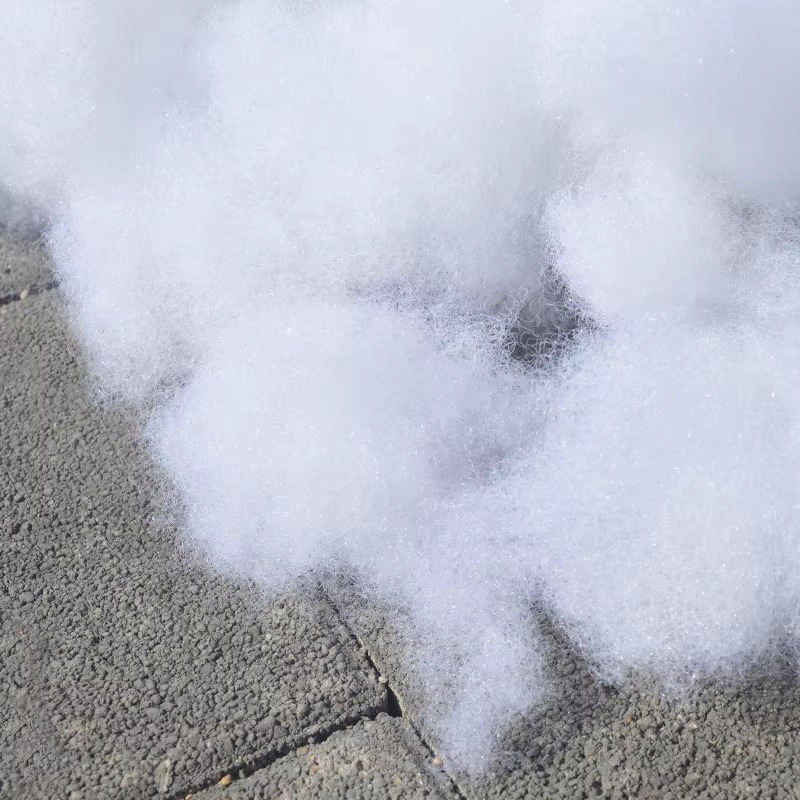
Virgin PSF Production Process
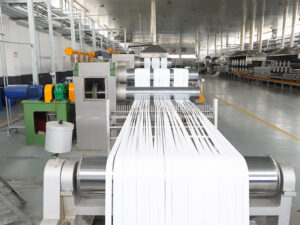
The virgin PSF production process begins with the polymerization of PTA and MEG in a continuous polymerization (CP) plant at 270–290°C under vacuum, using an antimony trioxide catalyst. The resulting PET melt flows directly to the melt-spinning operation—without intermediate solidification—where it is pumped through spinnerets, quenched by cooling air, drawn to develop tensile strength, crimped, cut to staple length, and baled. Additives including TiO₂ (delustrant), optical brighteners, antistatic agents, and spin finishes are incorporated during production.
Modern virgin PSF production uses the continuous polymerization process, which is more energy-efficient and consistent than the older DMT-based batch process. PTA + MEG-based CP production now accounts for approximately 70–75% of global virgin polyester production, producing fiber with tight property consistency across batches.
Key Properties of Virgin Polyester Staple Fiber
Property | Virgin PSF Performance |
Tensile strength (dry) | 3.5–9.0 g/denier depending on draw ratio and grade. High-tenacity grades reach 8–9 g/denier. Wet strength is essentially identical to dry strength—a key advantage over natural fibers. |
Color / whiteness | Bright optical white (with OBA) to semi-dull to full-dull. The cleanest, most consistent white available — important for bedding and hygiene applications where maximum whiteness is required. No natural yellowish tint. |
Molecular weight consistency | The highest and most uniform are freshly synthesized PET chains of precisely controlled length. This produces the tightest property tolerances across production batches. |
Tenacity in fine deniers | Excellent — virgin PET can be reliably spun to very fine deniers (0.9D and below) with the structural uniformity that fine spinning demands. More consistent than recycled PSF for sub-1D applications. |
Chemical purity | Highest — no contamination from mixed colorants, additives from previous use cycles, or incompatible polymer traces from the recycling feedstock. |
Dyeability | Standard polyester dyeing with disperse dyes at 130°C. Consistent dye uptake across batches due to uniform molecular structure. |
Heat resistance | Melting point 255–265°C. Glass transition temperature ~80°C. Full standard PET thermal properties. |
Moisture absorption | 0.4% at standard conditions — standard PET hydrophobicity fully maintained. |
Availability | Universally available. All denier ranges, all staple lengths, all colors. No feedstock variability constraints. |
When Virgin PSF Is the Right Choice
- Applications requiring the finest deniers (0.9D and below) where recycled PSF may show greater fiber-to-fiber property variation
- Medical and food-contact applications where maximum chemical purity and absence of contaminants from recycled feedstock is a regulatory or customer requirement
- Premium white applications where the cleanest optical white is essential and even slight natural yellowness from recycled PET would be unacceptable
- High-tenacity industrial grades (8–9 g/denier) where maximum molecular weight consistency is critical for performance
- Applications where GRS certification is not required and the price advantage of virgin PET over recycled is commercially significant
- Specialty grades where the additive chemistry is precisely specified and must not be affected by variability in recycled feedstock composition
Part 2: Recycled Polyester Staple Fiber (Regenerated PSF)
What Is Recycled Polyester Staple Fiber?
Recycled polyester staple fiber—also called regenerated PSF in Asian markets, rPSF or RPSF internationally—is produced by processing post-consumer PET waste back into fiber. The dominant feedstock is clear post-consumer PET beverage bottles, which are collected, sorted by color, washed, shredded into clean PET flake, melted, filtered, and re-extruded through spinnerets into new fiber filaments. The resulting fiber is then processed through the same crimping, cutting, and finishing steps as virgin PSF to produce the finished recycled staple fiber product.
Because the recycling process reconstitutes the PET at a molecular level—melting and re-extruding it into new polymer chains—the chemical composition and physical structure of the finished recycled fiber are essentially identical to virgin PET fiber. The PET polymer is the same; it is the origin of the feedstock and the environmental footprint of its production that differ.
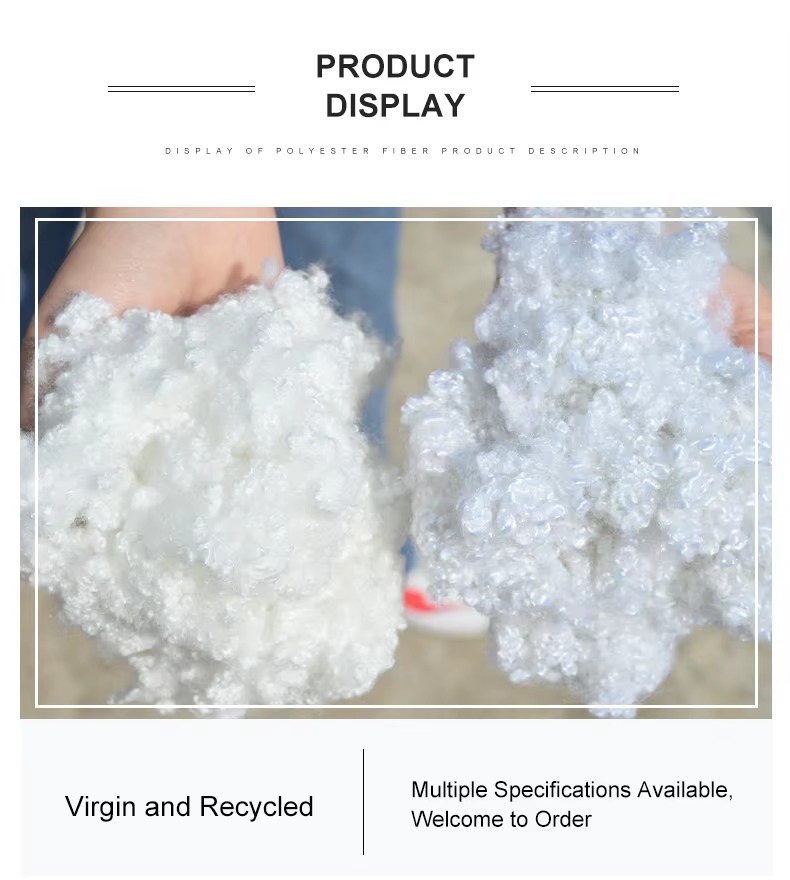
The Recycled PSF Production Chain: From Bottle to Fiber
- Collection and sorting: Post-consumer PET bottles are collected through municipal recycling programs, deposit schemes, and informal waste collection networks. Clear (transparent) bottles are separated from colored (green, blue) bottles—clear bottles produce the whitest recycled fiber, and colored bottles are used for natural-white or dope-dyed grades.
- Baling and transport: Sorted bottles are baled and transported to reclamation facilities. Supply chain traceability at this stage is fundamental to GRS certification—the chain of custody must be documented from the collection point forward.
- Washing and decontamination: Baled bottles are shredded, labels and caps removed, and the PET material is hot-washed and dried to remove residual food contamination, adhesives, colorants, and other impurities. This is the most critical quality-determining step in mechanical recycling — inadequate washing produces fiber with contamination that affects color, odor, and processing performance.
- PET flake production: The cleaned and dried PET material is shredded into uniform flakes—typically 8–12 mm in size. The flake is sorted by color and quality grade. Bright clear flake produces the cleanest white fiber; slightly yellowish or mixed flake produces natural-white or semi-dull grades.
- Melt extrusion and filtration: PET flake is melted in an extruder at 265–285°C and passed through multi-stage filtration systems to remove any remaining solid impurities. The intrinsic viscosity (IV) of the recycled melt — a measure of molecular weight — is monitored and adjusted through processing conditions. Chain extenders may be added to compensate for IV reduction from the thermal history of the recycled polymer.
- Spinning, drawing, crimping, cutting: The filtered recycled PET melt is spun through spinnerets, quenched, drawn, crimped, and cut by exactly the same process as virgin PSF production. Silicone finishes, dope-dyed pigments, and other additives are applied at the appropriate stages. The finished recycled fiber is baled, and the GRS transaction certificate documenting recycled content is issued.
Key Properties of Recycled Polyester Staple Fiber
Property | Recycled PSF Performance |
Tensile strength | 3.5–7.0 g/denier for standard mechanical recycled grades — equivalent to standard-grade virgin PSF. Mechanical recycling causes some molecular weight reduction (shorter chain lengths) that slightly limits maximum achievable tenacity vs. virgin. Chemically recycled grades (depolymerized and repolymerized) are equivalent to virgin at all strength levels. |
Color / whiteness | Natural white recycled is slightly more yellow or cream-toned than optical-white virgin PSF, a result of residual tint from the recycling process. This is completely acceptable for most pillow fill, nonwoven, and industrial applications. Optical brighteners can be added to improve whiteness. Dope-dyed black recycled PSF has essentially the identical color to virgin black. |
Batch consistency | Slightly greater batch-to-batch variability than virgin, reflecting natural variation in recycled feedstock composition. High-quality recycling operations with rigorous feedstock sorting, washing, and QC minimize this variation to commercially acceptable levels for the vast majority of applications. |
Fine denier capability | Excellent for 1.5D and above — commercial recycled PSF is produced routinely down to 1.2D–1.4D for spinning applications. Sub-1D recycled PSF is technically possible but less commonly available; some recyclers produce 0.9D recycled fine denier. |
Chemical purity | Very high when produced from properly washed clear PET bottle flake. GRS-certified and OEKO-TEX tested grades confirm the absence of harmful chemical residues. Not appropriate for applications requiring pharmaceutical-grade purity. |
Dyeability | Equivalent to virgin for standard disperse dye processing. The slightly rougher surface of recycled fiber (from minor molecular weight reduction) can actually improve dye uptake in some applications, producing deeper colors at equivalent dye concentration. |
Performance in fill | Completely equivalent to virgin for all standard fill applications—pillow fill, duvet fill, toy fill, and jacket insulation. Major fill brands globally use GRS-certified recycled HCS fiber with no consumer-detectable performance difference from virgin. |
Sustainability profile | 60–70% lower GHG emissions per kg vs. virgin PSF. Diverts post-consumer PET from landfill. Reduces fossil fuel feedstock demand. GRS certification enables verified sustainability claims for brand reporting and EU regulatory compliance. |
When Recycled PSF Is the Right Choice
- Any application where you need GRS-certified recycled content for sustainability reporting, brand commitments, or regulatory compliance—EU Textile Strategy 2030 mandatory recycled content requirements, retailer sustainability scorecards, corporate ESG targets
- Standard fill applications (pillows, duvets, stuffed toys, jacket insulation) where performance is equivalent to virgin and the cost advantage of recycled is commercially meaningful
- Nonwoven applications (needle-punch, thermal bonding, geotextile) where recycled PSF’s properties fully meet specifications
- Automotive interior fiber (carpet, acoustic padding) where recycled content documentation supports vehicle OEM sustainability requirements
- Dope-dyed black, brown, and green fiber was recycled, and its origin has no color or performance consequence
- Any market where sustainability credentials differentiate your product or meet customer requirements—growing rapidly in EU, North American, and premium Asian markets
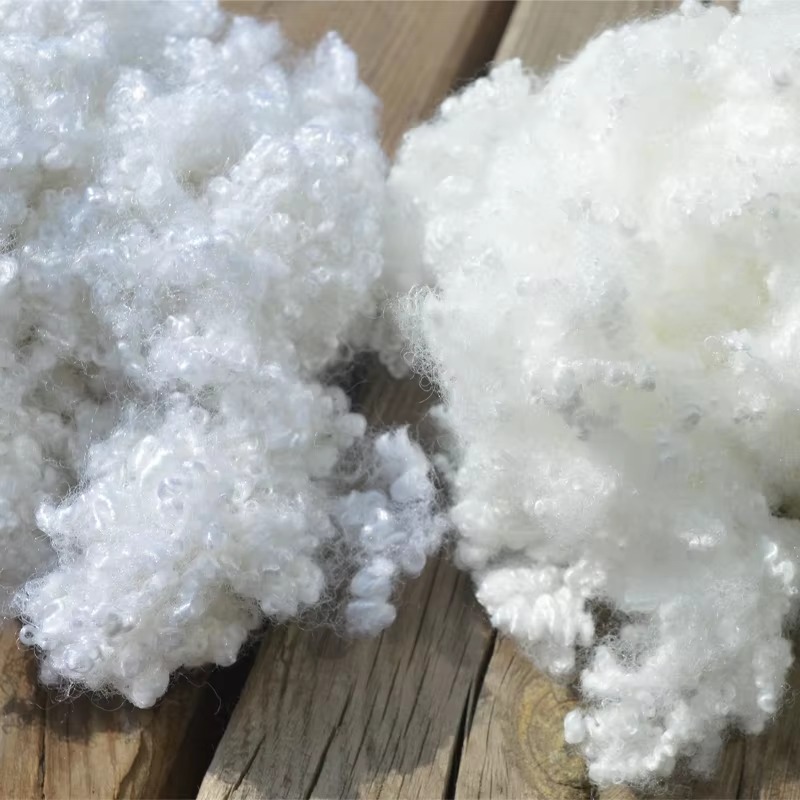
The Complete Head-to-Head Comparison
Dimension | Virgin PSF | Recycled PSF (rPSF) |
Raw material feedstock | PTA + MEG from petroleum refining — 100% new fossil-derived inputs | Post-consumer PET bottles or post-industrial PET waste — no new petroleum inputs for the fiber polymer |
Manufacturing process | Full polymerization chain from monomers to polymer to fiber | Mechanical: melt, filter, re-extrude. Chemical: depolymerize to monomers, re-polymerize, spin |
Molecular weight | Highest and most uniform—freshly synthesized PET at designed MW | Slightly lower and more variable (mechanical); equivalent to virgin (chemical recycling) |
Tensile strength | 3.5–9.0 g/den—full range achievable | 3.5–7.0 g/den (mechanical); 3.5–9.0 g/den (chemical recycling) |
Whiteness / color | Purest optical white with OBA; no natural tint | Natural white, slightly cream/yellow-tinted; optical white achievable with OBA; dope-dyed, unaffected |
Fine denier range | Full range to 0.9D and below | 0.9D available; 1.2D+ is the most common commercial range |
Batch consistency | Tightest—virgin feedstock fully controlled | Very good with quality reclaimer; slightly wider than virgin |
Chemical purity | Highest — no recycling contamination risk | High—GRS and OEKO-TEX certified grades tested clean |
GHG emissions | ~5.5 kg CO₂e per kg fiber — full polymerization energy burden | ~1.5–2.5 kg CO₂e per kg fiber — 60–70% lower than virgin |
Fossil fuel use | High—directly requires petroleum feedstocks | Low to nil for fiber polymer itself—existing PET reprocessed |
GRS certification | Not applicable — no recycled content | Available—provides third-party verified recycled content chain of custody |
OEKO-TEX 100 | Available — standard for all PSF grades | Available—GRS-certified grades commonly dual-certified |
Cost (typical) | Higher polymerization cost from raw monomers included | Lower—reprocessing cost lower than full polymerization; bottle feedstock cost offset by avoided polymer cost |
Price volatility | Tied to PTA and MEG/crude oil prices—can be volatile | More insulated from crude oil price swings; influenced by PET bottle availability |
Application’s advantage | Fine spinning (sub-1D); maximum purity medical/food contact; premium optical white | Standard fill; nonwovens; automotive; spinning (1.2D+); dope-dyed; sustainability-required applications |
Best choice for | Applications requiring maximum purity, whitest white, or finest deniers where recycled is not sufficient | The vast majority of fill, nonwoven, spinning, and industrial PSF applications—with superior sustainability profile |
The Sustainability Case: Why Recycled PSF Is the Growing Default
Carbon Footprint — The Numbers That Matter
The environmental case for recycled PSF over virgin is quantitatively compelling. Life cycle assessment (LCA) studies consistently show:
- Virgin PSF production: approximately 5.0–6.0 kg CO₂ equivalent per kilogram of fiber — including the polymerization of PTA and MEG from petroleum feedstocks, which accounts for the majority of production energy
- Mechanically recycled PSF: approximately 1.5–2.5 kg CO₂ equivalent per kilogram — primarily the energy of bottle collection, washing, extrusion, and fiber processing, with no polymerization burden from new monomer synthesis
- Net reduction: 60–70% lower greenhouse gas emissions per kilogram of fiber—a material, measurable, and third-party verifiable sustainability improvement
Beyond carbon, each kilogram of recycled PSF also diverts approximately 25 standard 500 ml PET bottles from landfill or ocean waste streams—creating a tangible plastic waste reduction story that brands can communicate credibly to consumers and regulators.
Regulatory Tailwinds — Why the Market Is Moving Toward Recycled
The commercial demand for recycled PSF is growing faster than any other segment of the fiber market, driven by converging regulatory and market forces:
- EU Textile Strategy 2030: The European Commission’s textile sustainability framework includes mandatory minimum recycled content requirements for synthetic textiles, phased implementation of extended producer responsibility (EPR), and mandatory digital product passports with supply chain transparency requirements. These regulations make GRS-certified recycled content a compliance requirement rather than merely a marketing choice for brands selling into the EU.
- Corporate net-zero commitments: Major global brands across bedding, apparel, outdoor gear, and automotive have committed to net-zero carbon targets with interim milestones requiring significant reductions in Scope 3 emissions—which include raw material embodied carbon. Switching from virgin to recycled PSF is one of the most impactful and immediately available levers for reducing fiber supply chain emissions.
- Retailer sustainability scorecards: Major retail buyers use sustainability scorecards to evaluate suppliers and products. Verified recycled content—through GRS certification—is a scored criterion that directly influences listing decisions, shelf placement, and pricing negotiations for brands supplying sustainability-conscious retail channels.
- Consumer demand: Consumers in premium markets increasingly seek and pay a modest premium for products with verified sustainable credentials. Certified recycled content — presented as ’25 PET bottles recycled per pillow’ or similar specific claims — resonates with sustainability-aware consumer segments across bedding, apparel, and home textile categories.
The Bottle-to-Fiber Supply Chain: How It Works
Understanding the recycled PSF supply chain is important for buyers who need to make GRS documentation claims or assess feedstock security:
Post-consumer PET bottle collection is primarily organized through municipal recycling programs (in Europe, North America, and some Asian markets) and informal waste collection networks (dominant in much of South and Southeast Asia and China). Collection rates vary enormously by country — Germany’s deposit return scheme achieves over 90% collection rates; collection rates in many developing markets are 20–40% for bottles entering formal recycling channels.
The collected bottles are processed through reclamation facilities (called reclaimers) that shred, wash, and flake the PET. The clean PET flake is the primary traded commodity in the recycled PET supply chain—it is priced relative to virgin PET chips, typically at a modest discount that narrows as demand for rPET grows. The PET flake flows to fiber manufacturers who melt and spin it into recycled PSF, producing the GRS transaction certificate that documents the recycled content for downstream buyers.
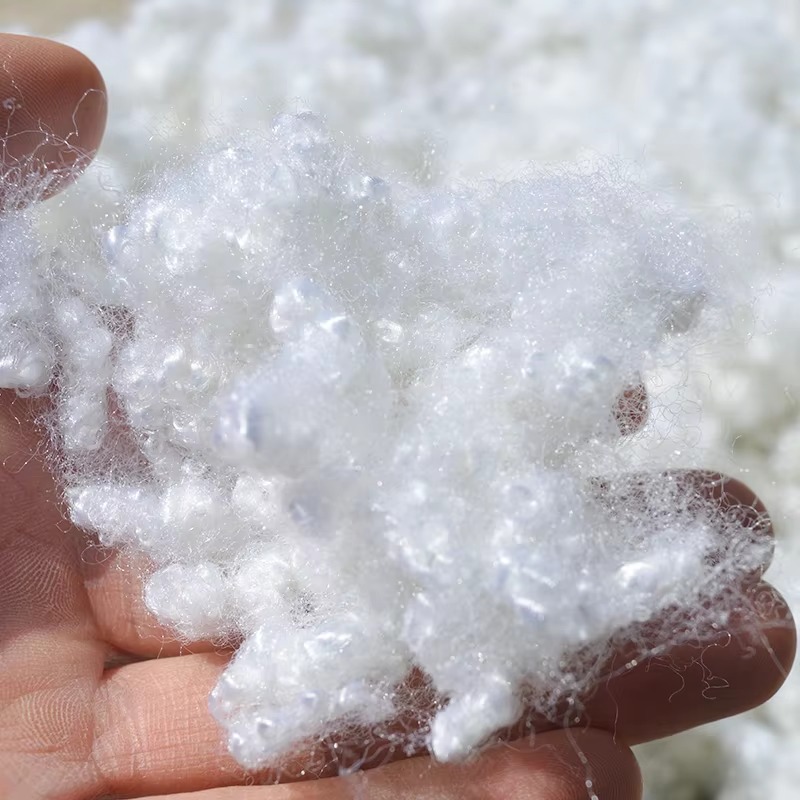
Mechanical vs. Chemical Recycling: Understanding the Distinction
Dimension | Mechanical Recycling | Chemical Recycling |
Process | Melt, filter, re-extrude—physical reprocessing without breaking polymer chains | Depolymerize PET back to monomers (PTA + MEG or BHET/DMT), purify, re-polymerize—full chemical reconstitution |
Feedstock capability | Clean, sorted single-polymer PET — primarily clear bottles | Can process mixed, contaminated, or blended PET, including colored bottles and textile waste |
Fiber quality | Very good — slight molecular weight reduction; fully equivalent for standard PSF applications | Virgin-equivalent — full molecular weight restoration; suitable for premium and fine-denier applications |
Fiber-to-fiber circularity | Limited—mixed polymer textile waste difficult to recycle mechanically | Enables true fiber-to-fiber circularity—can process used polyester textiles into new virgin-quality fiber |
Commercial scale | Globally commercially established mature industry | Scaling to commercial volumes 2024–2027—companies including Loop Industries, Carbios, Ioniqa |
Cost relative to virgin | Typically lower processing cost below polymerization | Currently higher—depolymerization chemistry adds cost; expected to achieve parity as scale increases |
GRS eligible | Yes | Yes |
For the vast majority of commercial PSF applications today, mechanical recycling is the practical and commercially available solution. Chemical recycling is the critical future technology that will enable genuine fiber-to-fiber circularity—processing used polyester textiles (including blended fabrics that mechanical recycling cannot handle) back into virgin-quality fiber—but is not yet available at the scale needed to supply commercial PSF production at volume.
GRS Certification: The Essential Verification Layer
The fundamental problem with ‘recycled’ claims in the PSF market is that they are unverifiable without third-party certification. Any supplier can claim their fiber is ‘made from recycled bottles’—but without a documented, audited chain of custody from bottle collection to finished fiber, the claim is unverifiable and potentially fraudulent. GRS (Global Recycled Standard) exists precisely to solve this problem.
What GRS Certification Verifies
- Recycled content: Minimum 20% recycled content in the certified product (most PSF is certified at 100% recycled content from post-consumer bottles)
- Chain of custody: Every step from bottle collection through reclaimer, PET flake trading, fiber extrusion, and staple fiber production is audited and documented—preventing the substitution of virgin material at any point in the chain
- Environmental standards: Certified facilities must meet standards for chemical management, wastewater treatment, energy use, and emissions—ensuring the recycling operation itself meets minimum environmental standards
- Social standards: Labor rights, safe working conditions, and fair wages are audited at certified production facilities
- Transaction certificates: Every shipment of GRS-certified fiber is accompanied by a transaction certificate (TC) documenting the specific recycled content—the critical document for your supply chain audit and sustainability report
What GRS Does Not Guarantee
- Biodegradability — GRS certifies recycled content, not end-of-life behavior. Recycled PET fiber is no more biodegradable than virgin PET fiber
- Zero microplastic shedding — recycled polyester still sheds microfibers during washing, just like virgin polyester
- Carbon neutrality—GRS certification does not make fiber carbon neutral; it verifies recycled content that enables a lower carbon footprint claim
Performance Comparison: Where Virgin and Recycled PSF Are Equivalent
One of the most commercially important facts about recycled PSF — often under-communicated — is how narrow the actual performance gap with virgin PSF is for the majority of applications. The table below summarizes application-level performance equivalence:
Application | Equivalence | Notes |
Pillow fill (HCS 6D–15D) | ★★★★ ★ Equivalent | Loft, softness, resilience, and washability are identical. Major global bedding brands use recycled HCS routinely. |
Duvet / comforter fill | ★★★★ ★ Equivalent | Warmth, loft, and recovery are fully equivalent. The fill material in most sustainability-positioned duvets is recycled. |
Stuffed toy fill | ★★★★ ★ Equivalent | Safety (OEKO-TEX Class I), softness, and fill stability are identical to virgin for toy applications. |
Jacket insulation | ★★★★ ★ Equivalent | Warmth-to-weight, compressibility, and moisture resistance are fully equivalent. Patagonia, The North Face, and most outdoor brands use recycled insulation fiber. |
Needle-punch nonwoven | ★★★★☆ Excellent | Mechanical properties fully meet standard nonwoven specifications. Slight batch variation requires consistent supplier QC. |
Geotextile fiber | ★★★★☆ Excellent | Tensile strength, UV stability, and chemical resistance meet geotextile standards. Available with GRS. |
Automotive carpet | ★★★★ ★ Equivalent | Dope-dyed black recycled fiber meets all automotive interior performance and quality standards. |
LMF bicomponent fiber | ★★★★ ★ Equivalent | Recycled beige and white LMF are available; bonding performance is equivalent to virgin for wadding applications. |
Spinning blend (1.5D+) | ★★★★☆ Excellent | For cotton-system spinning at 1.5D and above, recycled PSF is routinely used by yarn spinners globally. |
Fine spinning (sub-1D) | ★★★☆ ☆ Good | Sub-1D recycled PSF is available but with slightly greater fiber-to-fiber variation. Virgin preferred for the most demanding fine-denier applications. |
Optical white bedding | ★★★☆☆ Good with OBA | Natural recycled white is slightly cream-tinted. With optical brighteners, near-equivalent whiteness is achievable but not identical to virgin bright white. |
Medical / food-contact | ★★☆☆☆ Application-specific | Requires specific purity validation. OEKO-TEX Class I recycled PSF is used safely in hygiene and baby products. Pharmaceutical-grade applications need individual assessment. |
Cost Comparison: The Commercial Reality
The cost relationship between virgin and recycled PSF is dynamic and varies by market, grade, and feedstock availability—but the general pattern is consistent:
- Recycled PSF is typically priced 5–20% lower than equivalent-specification virgin PSF — the recycling processing cost is lower than the full polymerization cost from virgin monomers, and this is passed through to fiber pricing. This cost advantage is a commercial benefit of the sustainability switch, not a tradeoff.
- Price volatility differs: Virgin PSF pricing tracks crude oil prices and PTA/MEG feedstock costs, which are subject to significant volatility. Recycled PSF pricing is more influenced by PET bottle collection availability and demand from the packaging industry (which also uses rPET), giving it different — often lower — volatility characteristics.
- Competition for rPET feedstock is increasing: As major beverage companies commit to high recycled content in their bottles (Coca-Cola, PepsiCo, and others have committed to 25–50% rPET in packaging by 2025–2030), competition for clean post-consumer PET bottle feedstock between the packaging and fiber industries is intensifying—a dynamic that will influence rPSF pricing in the coming years.
- GRS certification carries a modest premium: fiber with full GRS chain-of-custody documentation commands a small premium over uncertified ‘recycled’ fiber—reflecting the value of verified, auditable sustainability claims versus unverified assertions. For most buyers who need to document sustainability claims, this premium is fully justified.
How to Choose: A Decision Framework
Use these questions to determine which fiber grade is right for your specific application:
Question | If YES → Choose Recycled. If NO → Consider Virgin |
Do you need GRS-certified recycled content for sustainability reporting, brand claims, or regulatory compliance? | YES → Recycled PSF with GRS is mandatory. NO → Both options available. |
Is your application standard fill, nonwoven, or spinning at 1.5D and above? | YES → Recycled PSF delivers equivalent performance at lower cost. NO → Evaluate fine denier requirements. |
Is dope-dyed (black, brown, or green) acceptable for your color requirements? | YES → Recycled PSF has no color disadvantage vs. virgin for dope-dyed. NO → Evaluate whiteness requirements. |
Does your customer, retailer, or brand require recycled content documentation? | YES → GRS-certified recycled PSF only. NO → Consider overall cost-performance fit. |
Is your application in the EU or for EU-market products subject to textile sustainability regulations? | YES → Recycled PSF with GRS is the direction of regulatory travel. NO → Current regulations may not yet require it. |
Does your application require sub-1D fine denier fiber, maximum optical whiteness, or pharmaceutical-grade purity? | NO → Virgin PSF may be technically preferred for these specific requirements. YES → Evaluate recycled availability for your specific spec. |
The practical conclusion for the vast majority of PSF buyers in 2025: recycled polyester staple fiber (rPSF) delivers equivalent performance to virgin in standard fill, nonwoven, spinning, and industrial applications—at a lower cost and with a dramatically better sustainability profile. The switch from virgin to GRS-certified recycled PSF is the single highest-impact, lowest-risk sustainability improvement most PSF buyers can make today.
VNPOLYFIBER: Supplying Both Virgin and GRS-Certified Recycled PSF
VNPOLYFIBER supplies both virgin polyester staple fiber and GRS-certified recycled polyester staple fiber (rPSF) across our complete product range—giving buyers the flexibility to specify the grade that best matches their performance, certification, and cost requirements for each application.
- Virgin PSF: Available in all standard grades and deniers from our manufacturing partner network. Full technical data sheets and OEKO-TEX certificates provided. Preferred for applications requiring maximum optical whiteness, finest deniers, or highest purity specifications.
- GRS-Certified Recycled PSF (rPSF): Our primary and fastest-growing product range. All hollow conjugated siliconized (HCS), solid, low melt (LMF), dope-dyed, and specialty grades are available in 100% post-consumer recycled content with GRS transaction certificates per shipment. OEKO-TEX Standard 100 Class I and Class II dual certification is available. Produced from verified post-consumer PET bottle feedstock at our partner facilities across China, Vietnam, Malaysia, Thailand, and Indonesia.
We can supply side-by-side specifications for both virgin and recycled grades of any product in our range, enabling direct comparison of pricing, performance data, and certification documentation to support your sourcing decision. Sample quantities available before commercial commitment.
Contact VNPOLYFIBER with your specific denier, staple length, color, finish, volume, and certification requirements—and specify whether you need virgin PSF, GRS-certified recycled PSF, or a comparative quotation for both—and we will respond within 24 hours.