Man-Made Fibers: The Complete Classification Guide — Types, Manufacturing Processes, Properties & Comparison
The clothes you wear today almost certainly contain man-made fiber. The bedding you sleep on, the car seat you sit in, the carpet under your feet, the disposable wipe you use, the medical mask you carry — these all rely on fibers manufactured in industrial facilities rather than grown in fields or harvested from animals. Man-made fibers now account for approximately 70% of all textile fiber produced globally, and understanding what they are, how they are classified, how they are made, and how they compare to each other and to natural fibers is fundamental knowledge for anyone in the textile, apparel, or technical materials industry.
The term ‘man-made fiber’ covers a vast and structurally diverse family of materials—from viscose rayon (first commercialized in the 1890s and still widely used today) to the latest generation of bio-based synthetic fibers derived from agricultural waste and recycled textiles. Understanding the classification system that organizes this family — and the logic behind the distinctions — is the foundation for making informed decisions about fiber selection, performance requirements, and sustainability credentials.
This complete guide maps the entire man-made fiber landscape: the overarching classification framework, each major fiber category and its key members, the three principal manufacturing processes used to produce all man-made fibers, the manufacturing stages from raw material to finished staple or filament, how man-made fibers compare to natural fibers across the dimensions that matter most for buyers and specifiers, and the evolving sustainability story of next-generation man-made fibers.
The Complete Fiber Classification System
All textile fibers can be organized within a single coherent classification framework based on their origin and chemical nature. Understanding this framework precisely — especially the distinction between regenerated and synthetic fibers within the man-made category — is essential for accurate material identification and specification.
Level 1 | Level 2 | Level 3 / Examples | Key Characteristics |
Natural Fibers | Plant (Cellulosic) | Cotton, Linen, Hemp, Jute, Ramie | Cellulose polymer, grown from plants, is generally biodegradable but requires agricultural land and water |
Animal (Protein) | Wool, Silk, Cashmere, Alpaca | Protein polymers (keratin or fibroin); harvested from animals; biodegradable; premium pricing | |
Mineral | Asbestos (largely banned), basalt | Inorganic; non-biodegradable; limited modern textile use | |
Man-Made Fibers | Regenerated (Cellulosic) | Viscose, Modal, Lyocell (Tencel), Cupro, Acetate | Natural cellulose dissolved and re-spun; semi-synthetic; biodegradable; natural origin but industrial processing |
Regenerated (Protein) | Soy fiber, Casein fiber, Zein fiber | Natural protein dissolved and re-spun; niche; limited commercial scale | |
Synthetic — Polyester | PET, PCDT, PTT, PBT | Fully synthetic; petroleum-derived; most produced fiber globally; not biodegradable | |
Synthetic — Polyamide | Nylon 6, Nylon 66, Nylon 11, Nylon 12 | Synthetic; high strength and abrasion resistance; not biodegradable | |
Synthetic — Polyolefin | Polypropylene (PP), Polyethylene (PE) | Synthetic, lowest density of all fibers, chemical resistant, not biodegradable | |
Synthetic — Acrylic | Polyacrylonitrile (PAN) | Synthetic; wool-like; UV resistant; not biodegradable | |
Synthetic — Elastomeric | Spandex/Elastane (Polyurethane) | Synthetic; extreme elasticity; usually blended; not biodegradable | |
High-Performance | Aramid (Kevlar, Nomex), Carbon fiber, UHMWPE | Specialty engineering fibers; extreme performance; not biodegradable | |
Inorganic Man-Made | Glass fiber, Ceramic fiber, Metal fiber | Inorganic; non-combustible; technical/industrial use only |
The most important distinction within man-made fibers is between regenerated fibers (which start with a natural polymer — cellulose or protein — that is dissolved and re-formed) and synthetic fibers (which are built entirely from small chemical molecules through polymerization). Both are manufactured fibers, but their raw material origin, chemistry, and environmental profile are fundamentally different.
Part 1: Regenerated Man-Made Fibers
Regenerated fibers occupy a unique middle ground in the fiber world: they start with a natural raw material (most commonly wood pulp cellulose) but are transformed through industrial chemistry into fibers that nature cannot directly produce. The cellulose molecule is the same in both a wood pulp sheet and a viscose rayon fiber — but the physical form, structure, and performance properties of the regenerated fiber are entirely determined by the manufacturing process rather than by plant biology.
Regenerated Cellulosic Fibers — The MMCF Family
Man-made cellulosic fibers (MMCFs) are the most commercially significant group of regenerated fibers. They all share cellulose as their polymer backbone — giving them a family resemblance of properties (biodegradability, moisture absorption, soft hand feel, and breathability) — but differ substantially in their production processes and the environmental and performance consequences of those processes.
The four generations of commercial MMCFs, in order of development and increasing environmental responsibility:
- Viscose (Rayon)—1st generation: Developed in the 1890s; still the most produced MMCF at ~80% of the total. Uses caustic soda and carbon disulfide chemistry. Wide range of sources (wood pulp, bamboo, cotton linters). Best known variants: standard viscose, bamboo viscose, EcoVero (Lenzing). Softest drape and widest applications from hygiene to fashion.
- Cupro — 2nd generation: Developed in the early 1900s; uses cotton linter cellulose dissolved in copper-ammonia (cuprammonium) solution. Produces the finest, most silk-like filaments of any commercial MMCF. Today produced exclusively by Asahi Kasei (Japan) in a closed-loop process under the Bemberg brand. Premium garment lining fiber.
- Modal — 3rd generation: Developed in Japan in 1951; commercialized by Lenzing (Austria) in 1964. Uses beechwood pulp with a modified viscose process incorporating additional stretching steps that create superior wet strength and fineness. Best known for exceptional softness in underwear, base layers, and intimate apparel.
- Lyocell — 4th generation: Commercialized in the 1990s. Uses NMMO (N-methylmorpholine N-oxide) solvent in a closed-loop process with 99%+ recovery — no carbon disulfide, no toxic waste stream. The most environmentally advanced commercial MMCF process. Best known under the Tencel brand (Lenzing). Applications: activewear, premium denim, bedding.
Acetate and Triacetate
Acetate fibers are produced from cellulose that has been chemically modified by reaction with acetic acid—producing cellulose acetate (secondary acetate, with approximately 2 acetyl groups per glucose unit) or cellulose triacetate (with approximately 3 acetyl groups per glucose unit). Unlike viscose and lyocell, where the cellulose is fully regenerated in the final fiber, acetate fiber is an ester derivative of cellulose—making it technically distinct from both regenerated cellulose and fully synthetic fiber.
Acetate is produced by dry spinning: the acetate polymer is dissolved in acetone, and the solution is extruded through a spinneret into a warm air stream that evaporates the acetone, solidifying the filaments. The recovered acetone is recycled back into the process—a partial closed-loop solvent system.
- Acetate properties: Silk-like luster and soft drape; good dimensional stability (does not shrink like viscose); comfortable against skin; takes dye well with specific acetate dye classes; relatively low wet strength; biodegradable
- Triacetate properties: More thermoplastic than acetate — can be heat-set into permanent pleats and textures; washable and quick-drying; wrinkle-resistant; less absorbent than regular acetate
- Applications: Garment linings (a traditional acetate stronghold), fashion fabrics, blouse and dress fabrics, intimate apparel, cigarette filter tow (the largest single application by volume of cellulose acetate globally)
Part 2: Synthetic Man-Made Fibers
Synthetic fibers are built entirely from small molecular building blocks (monomers) through chemical polymerization reactions—no natural polymer is used as a starting material. The monomers are almost exclusively derived from petroleum refining and petrochemical processing, giving synthetic fibers their shared dependency on fossil fuel feedstocks and their characteristic non-biodegradability.
Polyester (PET) — The World’s Most Produced Fiber
Polyethylene terephthalate (PET) polyester is the single most produced textile fiber in the world, accounting for approximately 57% of global fiber production in 2023. Produced by polycondensation of purified terephthalic acid (PTA) and monoethylene glycol (MEG), both petroleum-derived, PET is melt-spun into continuous filaments or cut into staple fiber. Its combination of high tensile strength, dimensional stability, wrinkle resistance, easy care, UV resistance, and cost-efficiency makes it the dominant fiber across apparel, home textiles, nonwovens, technical textiles, and fill applications.
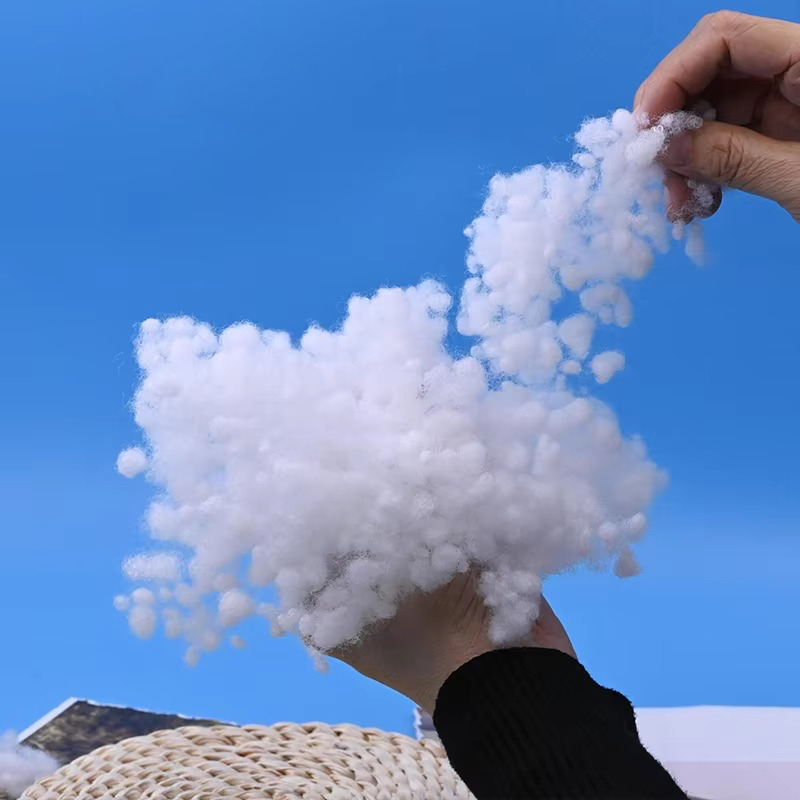
Recycled polyester (rPET)—produced from post-consumer PET bottles—accounted for approximately 12.5% of total polyester production in 2023, with the share growing rapidly as brand sustainability commitments and regulatory requirements drive demand for recycled content. GRS (Global Recycled Standard) certification verifies recycled content from bottle collection through fiber production.
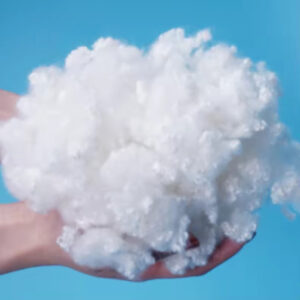
Key polyester fiber variants: solid staple fiber, hollow conjugated siliconized (HCS) fill fiber, microfiber, dope-dyed, high-tenacity, low-melt bicomponent, flame retardant, and antibacterial grades—each engineered for specific applications from pillow fill to tire cord.
Polyamide (Nylon)—The Original Synthetic Fiber
Polyamide fiber—commercially known as nylon—was the world’s first fully synthetic textile fiber, developed by DuPont chemist Wallace Carothers and commercialized in 1938. Nylon is produced from monomer units linked by amide bonds (–CO–NH—); the hydrogen-bonding capability of these amide groups gives nylon its characteristic toughness, elasticity, and moisture absorption relative to polyester.
The two dominant commercial nylon types are the following: Nylon 6 (PA6, from caprolactam by ring-opening polymerization) and Nylon 66 (PA66, from adipic acid and hexamethylene diamine by condensation polymerization). PA66 has approximately 20% higher tensile strength and better heat resistance than PA6; PA6 has better flexibility, impact resistance, and processability at lower temperatures. Recycled nylon (from fishing nets and industrial waste) is commercially produced under brands including Econyl.
Nylon’s outstanding abrasion resistance (10× cotton; 20× wool) and elastic recovery make it the premium fiber for hosiery, activewear, swimwear, carpet, parachute fabric, and airbag fabric. High-tenacity nylon grades serve demanding technical applications in ropes, webbing, and tire cord.
Polypropylene (PP) — The Technical Specialist
Polypropylene fiber is produced by melt spinning isotactic polypropylene — a polyolefin polymer with the unique property of having a density below 1.0 g/cm³ (approximately 0.91 g/cm³), making it the only commercial fiber lighter than water. PP fiber absorbs essentially zero moisture (moisture regain <0.1%), has outstanding chemical resistance across the full pH range, and is the most affordable of the major synthetic fibers.
PP dominates the nonwoven sector (approximately 63% of all nonwoven fiber), where its cost, processability, and hydrophobicity make it the standard for hygiene product facings and backsheets, geotextiles, spunbond crop covers, and meltblown filtration media (including N95 mask filter layers). In concrete and construction, short-cut PP fiber provides distributed micro-reinforcement against plastic shrinkage cracking. PP cannot be dyed with conventional aqueous dyestuffs and must be solution-dyed (dope-dyed) at the polymer stage.
Acrylic — The Wool Alternative
Acrylic fiber is produced from polyacrylonitrile (PAN)—a polymer of acrylonitrile monomer—by solution spinning (either dry spinning in acetone or wet spinning in DMF solution). Acrylic’s wool-like texture, warmth, and bulk at significantly lower cost than wool made it enormously commercially successful in the 1960s–1980s as a substitute for wool in knitwear, blankets, and carpets. Acrylic fiber is lighter than wool, highly resistant to UV degradation and weathering (making it the preferred fiber for outdoor textiles, awnings, and boat covers), and very easy to dye with excellent color fastness.
Acrylic’s sustainability profile is among the most challenging of synthetic fibers: it is not currently recyclable in standard plastic recycling streams, has limited biodegradability, and is a significant source of microplastic shedding during washing. It also serves as the precursor fiber for carbon fiber production—PAN precursor is heat-treated in a controlled atmosphere to produce the graphite carbon structure of high-performance carbon fiber.
Elastomeric Fibers (Spandex/Elastane)
Spandex—known as elastane in Europe and sold under the brand name Lycra (Invista)—is a segmented polyurethane fiber with extraordinary elastic elongation (400–700% at break) and near-perfect elastic recovery. It is produced by dry spinning or wet spinning of polyurethane polymer solutions. Spandex is almost never used as a 100% fiber in textiles—it is always blended (typically 2–20% by weight) with polyester, nylon, cotton, or other fibers to add stretch and shape-retention to garments.
Spandex is essential in activewear, swimwear, shapewear, hosiery, and any form-fitting garment where comfort stretch and shape recovery are required. Its presence in blended fabrics significantly complicates end-of-life recycling — the polyurethane component is difficult to separate from polyester or cotton in mixed fabrics.
The Three Manufacturing Processes: How All Man-Made Fibers Are Made
Despite the enormous diversity of man-made fiber types, all are produced by one of three fundamental spinning processes—each defined by how the liquid polymer (the spin mass) is converted into solid fiber:
Process | How It Works | Key Fibers Using This Process | Advantages & Limitations |
Melt Spinning | Polymer is melted and pumped through a spinneret in molten form. Filaments solidify by cooling in an air stream as they exit the spinneret. No solvent required. | Polyester (PET), Polypropylene (PP), Nylon 6 and 66, Polyethylene, Low melt bicomponent fiber | Most economical; high throughput; no solvent handling. Limited to thermoplastic polymers that melt cleanly without degradation. |
Dry Spinning | The polymer is dissolved in a volatile solvent, extruded through a spinneret, and filaments solidify by solvent evaporation in a warm air chamber. Solvent is recovered. | Acrylic, Acetate, Triacetate, spandex/elastane, and some PVC fiber | Good for polymers that cannot be melt-spun (too heat-sensitive). Solvent recovery required; capital-intensive. |
Wet Spinning | Polymer is dissolved in a solvent and extruded through a spinneret directly into a liquid coagulation bath, where the polymer precipitates as solid filaments by solvent diffusion. | Viscose, Modal, Lyocell (NMMO process), Acrylic (DMF/water), Aramid (sulfuric acid) | Enables processing of cellulosics and high-performance polymers that cannot be melt-spun. Complex wastewater management is required. |
From Spin Mass to Finished Fiber: The Complete Manufacturing Sequence
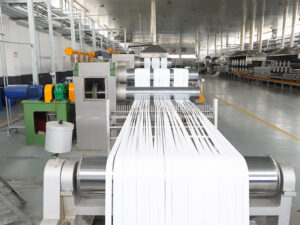
Regardless of which spinning process is used, all man-made fibers pass through the same sequence of manufacturing stages from raw material to finished staple or filament:
Stage 1: Polymer Preparation
The starting polymer — whether PET pellets for melt spinning, cellulose pulp sheets for viscose wet spinning, or polyacrylonitrile for acrylic dry spinning — must be prepared into a spinnable form. For melt spinning, this means drying and melting the polymer. For wet and dry spinning, this means dissolving the polymer in the appropriate solvent to form a homogeneous, filterable spin dope of the correct viscosity.
Additives are incorporated at this stage: delustrants (TiO₂ for matte finish), pigment masterbatches (for dope-dyed colored fiber), UV stabilizers (for outdoor-use PP fiber), antimicrobial agents, and other functional additives whose properties would be destroyed by subsequent processing heat or chemical exposure if added later.
Stage 2: Filtration and Spinning
The prepared spin mass is carefully filtered to remove any undissolved particles, gels, or impurities that would block spinneret holes or create fiber defects. The filtered spin mass is then pumped under controlled pressure through the spinneret—a precision-machined metal plate containing hundreds to thousands of precisely sized holes. The geometry of the spinneret holes (circular, annular for hollow fiber, trilobal, ribbon-shaped, etc.) determines the fiber’s cross-sectional shape and therefore its light-scattering, moisture-wicking, and tactile properties.
Stage 3: Solidification and Filament Formation
As the spin mass exits the spinneret holes, it is solidified into filaments by the process-specific mechanism: cooling air for melt spinning, evaporating solvent for dry spinning, or diffusion-driven coagulation in a liquid bath for wet spinning. The rate of solidification, the quench air temperature and velocity (for melt spinning), or the coagulation bath composition and temperature (for wet spinning) all influence the fiber’s internal structure—crystallinity, orientation, and void content—which in turn determine its mechanical properties.
Stage 4: Drawing — Developing Properties
As-spun filaments from any spinning process have partially disorganized polymer chain structures with suboptimal mechanical properties. Drawing—stretching the filaments under controlled tension at elevated temperature—orients the polymer chains along the fiber axis, increases molecular crystallinity, and dramatically improves tensile strength and stiffness. The draw ratio (how much the fiber is stretched) is the primary process variable controlling the final fiber’s strength vs. elongation balance. High draw ratios produce high-tenacity, low-elongation fiber for industrial applications; lower draw ratios produce lower-strength, higher-elongation, softer fiber for textile applications.
Stage 5: Texturing and Special Treatments
After drawing, filament yarn may be textured—imparting a permanent crimp or bulk to the otherwise smooth, straight filaments. False-twist texturing (the most common method) twists, heat-sets, and untwists the yarn simultaneously, producing a crimped, bulky yarn with improved stretch, softness, and insulation. Stuffer-box crimping mechanically forces staple fiber tow into a confined chamber, inducing a regular zig-zag crimp. Conjugate crimp (three-dimensional spiral) is achieved by using bicomponent fiber designs or asymmetric cooling that produces differential shrinkage stress within the fiber cross-section. Surface finishes (silicone, antistatic, hydrophilic) are applied at this stage.
Stage 6: Cutting (for Staple Fiber) and Baling
For staple fiber production, the continuous tow is cut to the target length—typically 25–150 mm depending on application—using a rotary cutter. Shorter lengths (25–38 mm) mimic cotton staple for spinning on cotton systems; medium lengths (38–64 mm) are standard for pillow fill and nonwoven carding; longer lengths (76–150 mm) are used for heavy industrial nonwovens. The cut staple is dried, pressed into bales, and shipped to downstream manufacturers.
Spinneret Cross-Section Shapes: How Geometry Determines Performance
One of the most powerful tools in man-made fiber engineering is spinneret hole geometry—the shape of the holes through which the spin mass is extruded determines the cross-sectional shape of the fiber, with significant consequences for its optical, tactile, and functional properties:
Cross-Section Shape | Properties | Typical Applications |
Round (circular) | Standard baseline — smooth surface, balanced properties, moderate luster | Standard apparel, home textiles, most general staple fiber applications |
Trilobal (3-lobed) | Mimics silk’s triangular cross-section; multi-directional light reflection creates natural luster and sheen; improved moisture-wicking through capillary channels | Premium apparel fabrics, moisture-wicking sportswear, silk-replacement fabrics |
Hollow (single channel) | Internal air channel reduces fiber weight by 15–25%; traps air for thermal insulation; improves loft-per-gram ratio in fill applications | Pillow fill (HCS fiber), duvet fill, jacket insulation, down alternative products |
4-hole hollow | Four channels distributed across the cross-section achieve 25–30% hollowness while maintaining stronger fiber walls than single-hole design; maximum warmth per gram | Premium down-alternative fill for ultra-lightweight insulation applications |
Flat / ribbon | Large surface area-to-volume ratio, high cover factor in fabrics, used in specialized technical applications | Industrial wipes, some filtration media, specialty nonwovens |
Dog-bone / H-shape | Channels for moisture transport along fiber surface by capillary action without fiber being absorbent—wicking structure | Moisture-management sportswear, technical base layers, athlete performance fabrics |
Filament Yarn vs. Staple Fiber: The Two Commercial Forms
Every man-made fiber can, in principle, be produced in either continuous filament or staple (cut) form—and the choice between these two forms determines the fiber’s downstream processing route and the character of the finished textile:
Continuous Filament Yarn
In filament yarn production, the continuous filaments emerging from the spinneret are gathered, drawn, and wound directly onto a package—producing a yarn of endless length. Filament yarn produces smooth, even fabrics with a characteristic luster (in unmodified form) and is used wherever a uniform, smooth surface and high tensile efficiency are required: woven apparel fabrics, tire cord, sewing thread, and high-performance technical textiles.
Filament yarn can be texturized—imparting crimp or bulk—to produce textured yarns that feel softer, warmer, and more like spun yarn in hand feel while retaining the continuous filament’s tensile efficiency. Texturized polyester filament is the standard for knitted jersey and fleece fabrics in activewear.
Staple Fiber
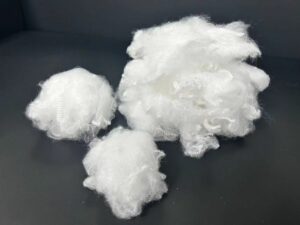
In staple fiber production, the continuous tow from the spinning process is crimped and cut to defined short lengths—from 6 mm (for concrete reinforcement) to 150 mm (for heavy industrial nonwovens). Staple fiber must be processed into yarn or nonwoven fabric by spinning or fiber-bonding operations, just like natural cotton or wool. Staple fiber produces spun yarns with a characteristic matte, soft character distinctly different from filament yarn—and is the form used for pillow fill, nonwoven wadding, geotextiles, blends with natural fibers in yarns, and most technical nonwoven applications.
Man-Made Fibers vs. Natural Fibers: The Complete Comparison
Dimension | Man-Made Fibers | Natural Fibers |
Origin | Chemical / industrial production from petroleum or plant cellulose | Plants, animals, or minerals—grown or harvested |
Property control | Precise engineering of all properties possible at production stage | Properties constrained by biology of source plant/animal |
Consistency | Highly uniform — consistent batch-to-batch quality | Variable — seasonal, geographic, and agricultural variation |
Biodegradability | Most synthetic, man-made fibers are not biodegradable. Regenerated cellulosics: fully biodegradable | Almost all fully biodegradable (except some mineral fibers) |
Moisture absorption | Highly variable: synthetics very low (PET 0.4%); regenerated cellulosics high (viscose 11–12%) | Generally good to high (cotton 8%; wool 15–17%; linen 12%) |
Breathability | Generally lower for synthetics; comparable for regenerated cellulosics | Generally high—open fiber structures allow air circulation |
Strength consistency | Very high — produced to specification | Variable—fiber quality depends on growing conditions |
Wrinkle resistance | Excellent (most synthetics retain shape) | Poor to moderate (most natural fibers wrinkle readily) |
Cost | Generally lower — industrial production economies of scale | Variable: cotton affordable; wool and silk premium-priced |
Microplastic risk | Yes (synthetic fibers shed microplastics in washing) | No persistent synthetic microplastics |
Agricultural water/pesticides | None for purely synthetic fibers | Cotton uses significant water and pesticides; linen/hemp minimal |
Dye compatibility | Variable: synthetics need specialist dyes at high temp; cellulosics dye well | Generally excellent; broad dye class compatibility |
Blending | Excellent — combine properties with natural fibers | Blend well with man-made fibers — many commercial blends |
The Sustainability Frontier: Next-Generation Man-Made Fibers
The man-made fiber industry is undergoing the most significant sustainability transformation in its history—driven by regulatory pressure, brand commitments, and consumer awareness. Three innovation streams are reshaping what ‘man-made fiber’ means for the future:
Recycled Synthetic Fibers
Mechanical recycling of PET bottles into rPET fiber is the most commercially mature sustainability innovation in the fiber sector, now accounting for approximately 12.5% of total polyester production. Recycled nylon (from fishing nets, carpet waste, and industrial scrap) is growing through commercial brands, including Econyl. Chemical recycling — depolymerizing used textiles back to monomers — promises genuine fiber-to-fiber circularity for contaminated or blended textile waste that mechanical recycling cannot handle.
Bio-Based Fibers
Bio-based man-made fibers replace some or all of the petroleum-derived feedstocks with renewable biological materials. Successful commercial examples include PA11 (100% bio-based from castor oil, by Arkema); partially bio-based PET using bio-MEG from sugarcane; lyocell and modal produced from FSC-certified wood pulp with closed-loop chemical processes; and next-generation MMCFs produced from agricultural waste (wheat straw, sugarcane bagasse) or post-consumer textile waste (Infinited Fiber’s Infinna, produced from recycled cotton).
Biodegradable Synthetics
Addressing the non-biodegradability of conventional synthetic fibers, several commercial approaches are emerging: PHA (polyhydroxyalkanoate) bioplastic fibers produced by bacterial fermentation that biodegrade in soil and marine environments; PLA (polylactic acid) from corn starch or sugarcane that biodegrades under industrial composting conditions; and modified polyester variants designed for accelerated biodegradation in active landfill conditions. These represent the frontier of sustainable synthetic fiber development.
How Man-Made Fibers Are Described on Care Labels
Understanding the abbreviations used on garment care labels is practically useful for any fiber professional or educated consumer. International textile labeling standards (ISO 2076 / EN ISO 2076) define the standard abbreviations:
Label Code | Fiber Name | Notes |
PES | Polyester | Most common synthetic fiber globally; standard in apparel, home textiles, technical applications |
PA | Polyamide (Nylon) | Denotes nylon 6, nylon 66, or other polyamide types without distinguishing between them |
PP | Polypropylene | Rare in apparel; common in technical textiles, nonwovens, rope |
CV | Viscose (Rayon) | Regenerated cellulosic: natural-origin but industrial processing |
MD | Modal | Refined regenerated cellulose from beechwood; softer and more wash-durable than standard viscose |
CLY | Lyocell | Closed-loop regenerated cellulosic; Tencel is the most recognized brand |
CUP | Cupro | Cotton linter-derived regenerated fiber; luxury lining alternative to acetate or silk |
CA | Acetate | Cellulose acetate; dry-spun; garment linings and fashion fabrics |
EL | Elastane | Polyurethane elastic fiber, also known as spandex or Lycra, provides stretch |
PAN / AC | Acrylic | Polyacrylonitrile, wool-like synthetic, is used in knitwear and outdoor fabrics |
PU | Polyurethane | Elastomeric polymer; used for coatings and some fiber applications |
VNPOLYFIBER’s Man-Made Fiber Portfolio
VNPOLYFIBER specializes in supplying the polyester staple fiber segment of the man-made fiber family—the largest, most commercially significant, and most rapidly innovating segment of the man-made fiber market. Our product range covers the full spectrum of polyester staple fiber types:
- Hollow Conjugated Siliconized Fiber (HCS): The premium fill fiber for pillows, duvets, stuffed toys, and jacket insulation. Available in 6D–15D, 32–76 mm staple lengths, virgin and GRS-certified recycled grades.
- Solid Polyester Staple Fiber: The workhorse staple for nonwovens, geotextiles, automotive, acoustic, and spinning applications. Wide denier range (1.4D–25D), multiple staple lengths, white and black grades.
- Low Melt Bicomponent Fiber (LMF): The thermal bonding fiber for non-adhesive wadding, batting, and bonded nonwovens. Core-sheath construction with a standard PET core and an 110–130°C melting point sheath.
- Hollow Non-Siliconized (Dry) Fiber: Hollow cross-section with dry surface for thermal bonding and automotive padding applications requiring bonding performance rather than fill softness.
- Hollow Slick Fiber: Enhanced siliconized variant for premium down-alternative and fiber ball fill applications requiring maximum fiber flowability.
- Dope-Dyed / Solution-Dyed Fiber: Pigment incorporated at the polymer stage for exceptional color fastness, reduced water consumption, and elimination of dyehouse wastewater.
All our polyester fiber products are available with GRS (Global Recycled Standard) certification for recycled grades and Oeko-Tex Standard 100 certification (Class I for children’s products; Class II for adult bedding and apparel). We ship to more than 30 countries from our network of trusted manufacturing partners across China, Vietnam, Malaysia, Thailand, and Indonesia.
Conclusion: Understanding Man-Made Fibers Is Understanding Modern Textiles
Man-made fibers are not a monolithic category—they are a richly diverse family spanning from biodegradable regenerated cellulosics produced from sustainably managed wood pulp to high-performance technical fibers engineered for life-safety applications in airbags and bulletproof vests. The ability to engineer fiber properties from the molecular level upward — choosing raw material, polymerization chemistry, spinneret geometry, draw ratio, and surface finish to achieve precisely specified performance — is what distinguishes man-made fibers from natural ones and enables the extraordinary breadth of applications they serve.
Understanding the classification framework — natural vs. man-made; regenerated vs. synthetic; melt-spun vs. wet-spun vs. dry-spun; filament vs. staple — is the foundation for making informed fiber selection decisions. Every fiber property, every application strength, every sustainability credential, and every cost consideration flows from choices made within this framework.
The future of man-made fibers is one of increasing sustainability sophistication: recycled feedstocks, bio-based monomers, closed-loop production processes, and biodegradable polymer systems are all commercially advancing along trajectories that will substantially reshape the environmental profile of man-made fibers within this decade. The binary choice between ‘natural = good, synthetic = bad’ is already an oversimplification—and will become increasingly inadequate as bio-based, recycled, and biodegradable man-made fibers reach commercial scale.