What Is Polyester Fiber? The Complete Guide to PET Fiber, Types, Properties, Uses & Recycled rPET
Polyester fiber is the most produced textile fiber in the world—by a significant margin. In 2023, PET (polyethylene terephthalate) polyester accounted for approximately 57% of the 124 million tonnes of fiber produced globally. More polyester is produced each year than all cotton, all wool, all linen, and all other natural fibers combined. It is the foundation of the modern textile industry: the fiber in your sportswear, the fill in your pillow, the nonwoven in the medical mask, the backing of your carpet, the fill in your winter jacket, and the geotextile under the road you drove on today.
Yet polyester is widely misunderstood—dismissed by some as the low-quality synthetic of fast fashion or praised uncritically by others as a modern miracle material. The reality is more nuanced and more interesting than either position. Polyester is an engineering achievement that enables performance characteristics no natural fiber can match in certain applications and a genuine sustainability challenge that the industry is actively addressing through recycled content, chemical recycling, and bio-based feedstocks.
This complete guide covers what polyester fiber is, its full chemistry and manufacturing process, all key properties with their commercial significance, every important fiber type and grade, all major application sectors, how it compares to cotton and other fibers, and the critical sustainability story of recycled polyester — including what GRS certification means and why it matters for your supply chain.
What Is Polyester Fiber? Definition and Chemistry
Polyester is a category of polymer in which repeating ester linkages (–COO–) form the polymer backbone. For textile fiber purposes, ‘polyester’ almost exclusively means polyethylene terephthalate (PET), a specific polyester produced by the reaction of purified terephthalic acid (PTA) and monoethylene glycol (MEG), both derived from petroleum refining. PET is also the polymer used for plastic bottles, food containers, and packaging films — and this shared material identity is the foundation of the recycled polyester (rPET) supply chain.
The ester linkage in PET’s backbone gives the polymer its characteristic combination of high melting point, rigidity, and hydrophobicity. The benzene ring (aromatic group) from the terephthalic acid component contributes stiffness to the polymer chain—increasing crystallinity, raising the melting point to approximately 255–265°C, and giving PET its excellent dimensional stability and heat resistance. The ethylene glycol component provides the flexible spacing between aromatic groups that allows the polymer to be drawn into strong, oriented fibers.
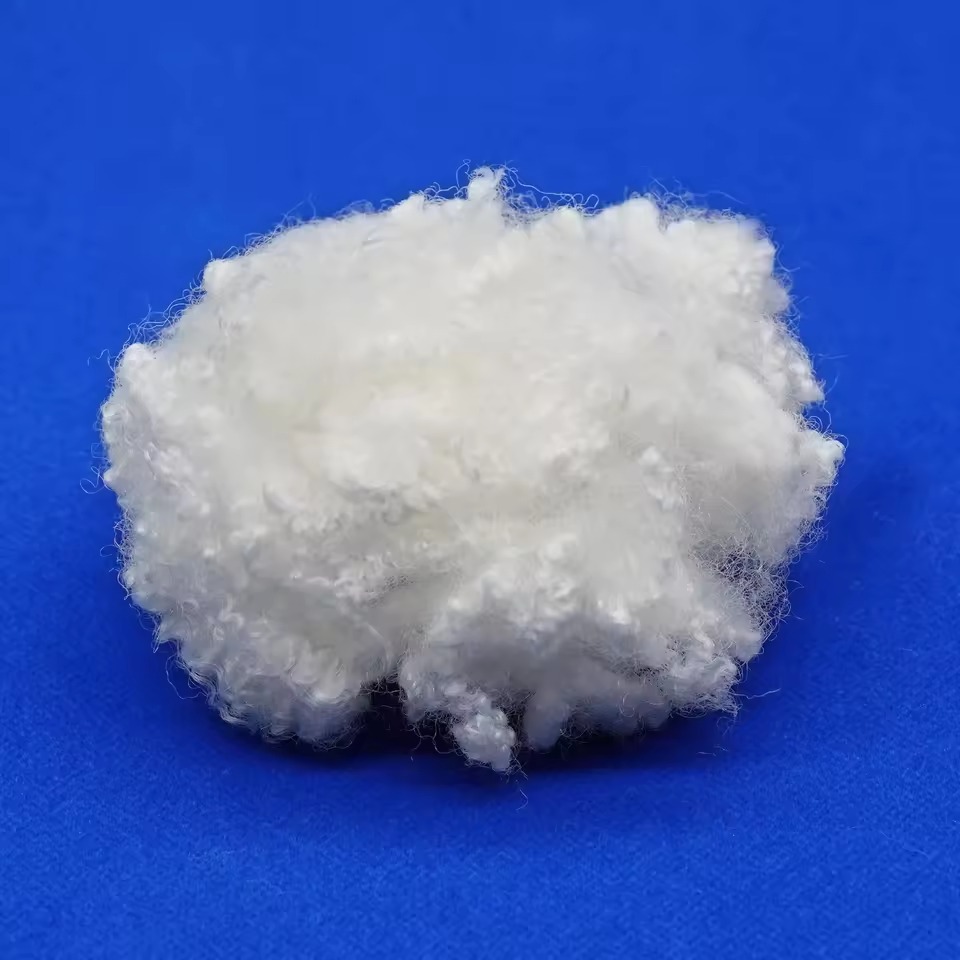
In 2023, polyester fiber accounted for 57% of global fiber production—approximately 70 million tonnes annually. Of this, approximately 12.5% came from recycled PET (rPET), mostly sourced from post-consumer PET bottles. The rPET share is growing rapidly, with major brands committing to mandatory minimum recycled content targets driven by EU Textile Strategy 2030 requirements.
How Polyester Fiber Is Made: The Manufacturing Process
Step 1: PTA and MEG Production
PTA (purified terephthalic acid) is produced by the catalytic oxidation of p-xylene, a petroleum-derived aromatic hydrocarbon. MEG (monoethylene glycol) is produced by the catalytic oxidation of ethylene, also petroleum-derived. Both monomers are commodity chemicals produced at a very large scale globally, predominantly in China, India, and Southeast Asia—which is why PET fiber is among the most cost-competitive synthetic materials available.
Step 2: Polymerization—Creating PET Polymer
PTA and MEG are reacted together in a two-stage continuous polymerization process. In the first stage (esterification), the two monomers react at 250–280°C, eliminating water to form short-chain oligomers. In the second stage (polycondensation), the oligomers are heated under vacuum at 270–290°C with an antimony-based catalyst (typically antimony trioxide, Sb₂O₃), causing further chain growth as ethylene glycol is eliminated. The reaction continues until the polymer chains reach the target molecular weight (intrinsic viscosity)—longer chains produce stronger fiber but are harder to process.
Modern polyester production uses the continuous polymerization (CP) process, where PTA and MEG are fed continuously and molten PET flows continuously to the spinning process without intermediate solidification—reducing energy consumption and improving product consistency versus the older batch process using DMT (dimethyl terephthalate) and MEG. TiO₂ (titanium dioxide) is added as a delustrant to control fiber luster from bright (no TiO₂) to semi-dull to full-dull; optical brighteners and pigments are added for specific color requirements.
Step 3: Melt Spinning
Molten PET at approximately 280–295°C is pumped through a spinneret—a metal plate containing many precisely sized holes whose geometry determines the fiber’s cross-sectional shape. Circular holes produce standard round fiber; annular (ring-shaped) holes produce hollow fiber; trilobal holes produce three-lobed fiber with different light-scattering properties. The molten polymer streams emerging from the spinneret are immediately quenched by cross-flow cooling air, solidifying into filaments that are collected on godets and drawn into a tow.
Step 4: Drawing — Developing Fiber Strength
As-spun PET filaments are strong but brittle, with low orientation of polymer chains. Drawing—stretching the tow through a series of hot godets at a draw ratio of approximately 3:1 to 4:1—orients the PET polymer chains along the fiber axis. This orientation dramatically increases tensile strength (from approximately 1 g/denier to 4–8 g/denier depending on draw ratio) and stiffness while reducing elongation to the target range. For standard textile fiber, heat-setting during drawing also locks in dimensional stability, reducing shrinkage in the finished fiber.
Step 5: Crimping, Finishing, Cutting, and Baling
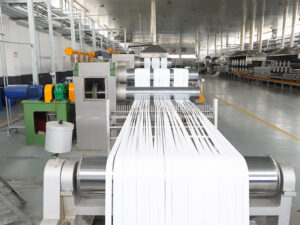
For staple fiber production, the drawn tow passes through a stuffer-box crimper that imparts a zig-zag or—in the case of conjugate fiber—a three-dimensional spiral crimp that gives the fiber its bulk and processability on carding and nonwoven lines. Surface finishing agents (silicone oil for HCS fiber, hydrophilic surfactant for hygiene applications, and no finish for dry bonding fiber) are applied. The crimped tow is cut to the target staple length by a rotary cutter, dried to the specified moisture level, and compressed into bales for shipping.
Key Properties of Polyester Fiber
Property | Detail & Commercial Significance |
High Tensile Strength | Standard polyester staple fiber has dry tensile strength of 3.5–7.0 g/denier; high-tenacity grades reach 7.0–9.0 g/denier for industrial applications. Critically, polyester retains essentially its full dry strength when wet—wet tenacity equals dry tenacity—unlike natural fibers (cotton loses ~10% strength wet; viscose loses ~50%). This wet-strength retention is fundamental to polyester’s durability in laundering and wet applications. |
Excellent Dimensional Stability | Polyester fiber has very low moisture absorption (moisture regain of 0.4% at standard conditions—compared to 8% for cotton and 4.5% for nylon). This low moisture uptake means polyester fabric does not swell, stretch, or distort when wet, producing garments and products that maintain their shape through many wash cycles and do not shrink. |
Outstanding Wrinkle Resistance | The high elastic modulus of PET fiber (22–141 cN/dtex) gives polyester fabrics excellent recovery from creasing. Polyester fabric returns to its original shape after being compressed or wrinkled—the basis of ‘easy care’ and ‘wash and wear’ apparel that needs no ironing. This property is unmatched by any natural fiber. |
Good Abrasion Resistance | Polyester fiber has excellent resistance to mechanical abrasion — second among synthetic fibers only to nylon. Polyester fabrics maintain their surface appearance and structural integrity through extended mechanical contact and laundering. This makes polyester the standard for workwear, activewear, upholstery, and carpet applications subject to regular wear. |
Good Light Fastness | Polyester is inherently resistant to UV degradation—maintaining approximately 70–80% of its tensile strength even after long-term sun exposure (unlike nylon or viscose, which degrade more rapidly). This makes polyester suitable for outdoor applications and curtains exposed to sunlight, without requiring UV stabilizer additives. |
Quick Drying | Polyester’s hydrophobic surface means water sits on the fiber surface rather than being absorbed into the fiber structure—enabling rapid moisture evaporation and quick-drying performance. A polyester garment dries in a fraction of the time of an equivalent cotton garment — important for sportswear, swimwear, and travel clothing. |
Thermal Properties | Polyester’s glass transition temperature (Tg) is approximately 80°C, above which the fiber softens and can be permanently reshaped (the basis of heat-setting and pleating). Its melting point of 255–265°C is the highest of all standard textile synthetics. It is thermoplastic, so it melts rather than burns at high temperatures, but it does burn at sufficiently high temperatures with a sweet aromatic odor characteristic of PET combustion. |
Poor Moisture Management in Apparel | Polyester’s very low moisture absorption produces its most discussed consumer limitation: a clammy, non-breathable feel against skin in warm conditions. Sweat cannot be absorbed into the fiber and instead sits at the skin-fabric interface, reducing evaporative cooling. Moisture-wicking polyester (with hydrophilic finishing or fine-denier wicking structures) partially addresses this through capillary action, but fundamental moisture management remains inferior to natural fibers. |
Dyeability Challenges | PET’s hydrophobic, non-polar polymer structure has no accessible dye sites for conventional water-based dyes. It requires disperse dyes at high temperature (typically 130°C under pressure) to achieve good dye penetration. This high-energy dyeing process is a significant environmental and cost consideration. Cationic-dyeable polyester (CDP) can be dyed at atmospheric pressure — important for energy savings and blend dyeing with wool or nylon. |
Static Electricity Accumulation | Polyester is an electrical insulator that accumulates static charge—causing garments to cling, attract lint, and generate static shocks. Antistatic finishes or conductive fiber blending partially addresses this, but static tendency remains a limitation compared to natural fibers and some other synthetics (like nylon and viscose). |
Types of Polyester Staple Fiber: A Complete Guide
Polyester staple fiber (PSF) is not a single product—it is a family of variants, each engineered for specific applications through modifications to the cross-section geometry, crimp design, surface finish, raw material, and polymer formulation.
1. Hollow Conjugated Siliconized Fiber (HCS)
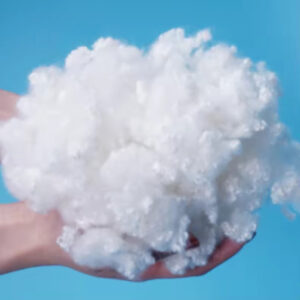
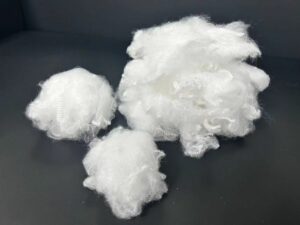
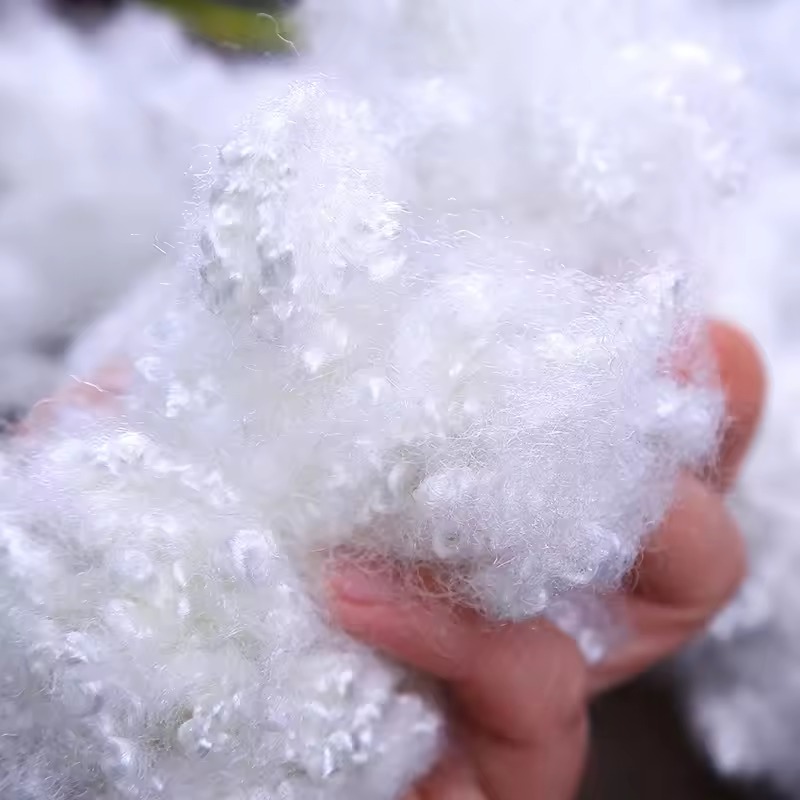
The most widely used premium fill fiber globally. HCS combines three engineered features: a hollow cross-section (air channel for warmth and lightness), a three-dimensional spiral conjugate crimp (permanent loft recovery), and a silicone surface finish (smooth, anti-clumping behavior). Used in premium pillow fill, duvet fill, stuffed toys, and down-alternative jacket insulation. Available in virgin and GRS-certified recycled (rPET) grades. Denier range: 6D–15D; staple lengths: 32–76 mm.
2. Solid Fiber (Standard PSF)
The standard workhorse polyester staple fiber has a fully solid cross-section, standard mechanical crimp, and no silicone finish. Used in nonwoven fabrics, geotextiles, automotive carpets, acoustic insulation, needle-punch applications, and spinning blends with cotton and other fibers. Available in a wide denier range (1.4D for spinning to 25D+ for heavy industrial nonwovens) and in both virgin and recycled grades, with raw white, colored, and black options.
3. Low Melt Fiber (LMF / Bicomponent Fiber)
A bicomponent (core-sheath) fiber with a standard polyester core and a modified polyester sheath that melts at 110–130°C—well below the melting point of the core (255°C). When a web or batting containing LMF is heated through an oven or calendar, the sheath melts and acts as a binder, fusing fibers at their crosspoints to create a bonded nonwoven structure without adhesives. LMF is the critical component in thermally bonded wadding for mattresses, quilts, automotive padding, and insulation batts.
4. Hollow Non-Conjugated Fiber (HC Non-Sil)
Hollow cross-section but with a standard 2D mechanical crimp rather than the 3D spiral conjugate crimp of HCS fiber, and without silicone finish. The dry (non-siliconized) surface creates higher fiber-to-fiber friction — making it suitable for thermal bonding applications where the fiber needs to grip and bond within a nonwoven structure rather than slide freely. Used in thermal-bonded wadding, automotive padding, and nonwovens where bonding performance is prioritized over fill softness.
5. Microfiber Polyester
Polyester is produced at very fine deniers—typically below 1 denier (1 dtex), with ultra-fine grades at 0.5 dtex or below. Microfiber’s extreme fineness creates a very large total fiber surface area per unit weight, producing fabrics with exceptional softness, absorbency (when hydrophilic-finished), and filtration efficiency. Used in premium apparel fabrics that mimic the hand of silk, high-performance cleaning cloths (where the mechanical action of billions of fine fiber tips captures dirt), and filtration media. The finest microfiber grades produce materials with a ‘peach skin’ surface texture that is among the softest of all synthetic fabrics.
6. Dope-Dyed (Solution-Dyed) Polyester Fiber
Colored pigment or dye is added to the PET melt before spinning—producing fiber where the color is distributed throughout the polymer matrix rather than applied as a surface dye. Solution-dyed polyester has exceptional color fastness (rated 7–8 out of 8 on the Blue Wool Scale), does not bleed or fade in washing or UV exposure, and eliminates the water consumption and chemical use of the conventional aqueous dyeing process—reducing dyeing water use by over 90%. Available in an extensive color range; commonly used in outdoor textiles, automotive fabrics, dark-colored nonwovens, and applications where consistent deep color and wash fastness are critical.
7. High-Tenacity Polyester (HT PSF)
Produced by increasing the draw ratio during fiber manufacturing, HT polyester achieves tensile strength above 7.0 g/denier — suitable for applications where standard fiber strength is insufficient. Used in geotextiles with high mechanical load requirements, safety harnesses and webbing, sewing thread, tire cord, and industrial ropes and belts. HT fiber trades some elongation for higher strength—giving it a stiffer, less elastic character than standard textile grades.
8. Flame Retardant (FR) Polyester
Standard PET fiber burns when exposed to flame, producing molten droplets and continuing to burn after the ignition source is removed. FR polyester incorporates flame-retardant additives—either reactive (copolymerized into the polymer chain) or additive (compounded into the melt before spinning)—that interrupt the combustion process. FR polyester self-extinguishes when the flame source is removed and does not produce molten burning droplets. Required by law in many jurisdictions for curtains and upholstery in public buildings, aircraft interiors, automotive seating, children’s nightwear, and institutional bedding.
9. Antibacterial Polyester
Silver-ion-based, zinc-based, or other antimicrobial agents incorporated into the fiber (either in the polymer matrix or applied as a surface treatment) inhibit the growth of bacteria and fungi on the fiber surface. This is particularly valuable in activewear and sportswear (preventing odor from bacterial breakdown of perspiration), medical textiles, hygiene products, and home textiles such as mattress covers and pillow protection where microbial growth would reduce product hygiene or cause odor problems.
10. Cationic Dyeable Polyester (CDP)
A modified PET formulation containing sulfonate groups that provide dye sites for cationic (basic) dyes—enabling CDP fiber to be dyed at atmospheric pressure (rather than the 130°C pressurized conditions required for standard disperse dyeing). CDP can be blended with standard polyester and dyed in two distinct colors in a single bath—producing heather, marl, and multi-tone effects without separate dyeing steps. Also used in blends with wool or nylon where yarn-level mixing requires compatible dyeing conditions.
Applications of Polyester Fiber: A Complete Survey
Apparel and Fashion
Polyester is the dominant fiber in apparel globally — present in sportswear, casual wear, workwear, formal wear linings, and blends with virtually every other fiber. Its wrinkle resistance and dimensional stability make it the standard for easy-care shirts, trousers, and workwear. Its quick-drying and moisture-wicking properties (in technical finishes) make it the dominant fiber for activewear, running gear, and athletic apparel. Polyester microfiber produces the soft, fluid fabrics used in women’s blouses and dresses as an affordable alternative to silk or premium natural fibers.
Polyester’s single greatest apparel limitation—poor moisture management and breathability against skin—is the primary driver of polyester-cotton blends, which combine polyester’s durability and easy-care properties with cotton’s comfort and moisture absorption. A 65% polyester/35% cotton blend fabric (poplin cotton) is among the most widely produced fabrics globally.
Home Textiles and Bedding
Hollow conjugated siliconized polyester fiber is the world’s dominant pillow fill and duvet fill material—combining loft, softness, washability, hypoallergenic properties, and affordability. Polyester batting and wadding fill mattress toppers, quilted mattress covers, and comfort layers in both spring and foam mattress constructions. Polyester-cotton blended fabric is the standard for everyday bedding sheets and pillowcases. Polyester upholstery fabric dominates mid-range furniture upholstery for its durability and easy maintenance.
Nonwoven Fabrics
Polyester staple fiber is the foundation of a vast global nonwoven fabric industry. Needle-punched polyester nonwovens are used in geotextiles, automotive carpet and insulation, roofing underlays, and filtration. Thermally bonded polyester nonwovens (using LMF bicomponent fiber as binder) produce the wadding used in mattresses, quilts, sleeping bags, and winter jackets. Spunbond polyester nonwovens are used in medical gowns, drapes, and sterilization packaging. Polyester airlaid nonwovens are used in feminine hygiene and adult incontinence products. Hydroentangled (spunlace) polyester is used in industrial wipes and some hygiene wipe applications.
Industrial and Technical Textiles
High-tenacity polyester fiber and yarn form the reinforcement in conveyor belts, safety belts and harnesses, tarpaulins, tents, and awnings. Polyester tire cord reinforces the belt layers of radial tires, providing dimensional stability and tensile strength. Geotextile polyester nonwovens stabilize road sub-bases, control soil erosion, and filter drainage in civil engineering applications worldwide. Polyester sewing thread is the dominant thread material globally—its combination of strength, color range, and dimensional stability makes it suitable for virtually all garment construction. Polyester rope and cordage are used in marine, industrial, and agricultural applications where UV resistance and low moisture uptake are valued.
Filtration
Polyester fiber’s chemical resistance, durability, and ability to be produced at fine deniers make it a versatile filtration material across liquid and air applications. Polyester needle-felt filter bags are used in industrial dust collection and air filtration. Polyester spunbond and meltblown nonwovens are used in HVAC filtration, automotive cabin air filters, and liquid filtration for water treatment and food processing. Polyester microfiltration membranes and filter papers are used in laboratory, pharmaceutical, and analytical applications.
Automotive Textiles
Modern vehicles contain 20–30 kg of textile material—predominantly polyester—in seat fabric, headliners, door panel covers, floor carpet and underlays, trunk liners, acoustic insulation nonwovens, airbag fabric (typically nylon 66, but polyester is used in some regions), seat belt webbing reinforcement, and underbody protection mats. Polyester’s UV stability, chemical resistance to automotive fluids, dimensional stability, and processability on standard automotive textile manufacturing equipment make it the dominant fiber across most vehicle interior categories.
Polyester vs. Cotton: The Most Important Comparison
Polyester and cotton are the world’s two most produced textile fibers—and the comparison between them is the most searched fiber topic on the internet. Their properties are genuinely complementary rather than directly substitutable, which is why polyester-cotton blends dominate so many global apparel and home textile markets.
Dimension | Polyester (PET) | Cotton |
Origin | Synthetic — petroleum-derived PET polymer | Natural seed fiber from Gossypium cotton plant |
Moisture absorption | 0.4% — very low; hydrophobic surface | 8% — high; hygroscopic; excellent moisture management |
Breathability | Limited — less air permeation; can feel clammy | Excellent — allows air circulation; comfortable in heat |
Wrinkle resistance | ★★★★★ — excellent; fabrics stay smooth | ★★☆☆☆ — poor; wrinkles readily; requires ironing |
Dimensional stability | ★★★★★ — minimal shrinkage; maintains shape | ★★★☆☆ — can shrink significantly; needs pre-washing |
Durability / abrasion | ★★★★☆ — excellent; resists wear through laundering | ★★★☆☆ — good but fibers eventually break with friction |
Quick drying | ★★★★★ — very fast; low moisture retention | ★★☆☆☆ — slow; retains absorbed moisture |
Softness (initial) | ★★★☆☆ — acceptable; microfiber can be very soft | ★★★★★ — naturally soft; softer with high thread count |
UV resistance | ★★★★☆ — good; resists yellowing outdoors | ★★★☆☆ — moderate; degrades with prolonged UV |
Dyeability | ★★★☆☆ — requires high-temp disperse dyes | ★★★★★ — excellent; broad dye class compatibility |
Biodegradability | Not biodegradable—persists in environment | Fully biodegradable — decomposes naturally |
Microplastics | Sheds synthetic microfibers in washing | Does not shed persistent microplastics |
Water in cultivation | No agricultural water use | High irrigation water consumption (global average) |
Pesticide use | No agricultural pesticides | ~4% of global pesticide use (conventional cotton) |
Cost | Lower—commodity synthetic | Higher — seasonal agricultural commodity |
Best applications | Sportswear, easy-care apparel, home fill, technical textiles | Summer apparel, skin-contact garments, premium bedding |
Recycled Polyester (rPET): The Most Important Sustainability Development
The recycled polyester story is one of the most significant developments in the global fiber industry—connecting the environmental urgency of plastic waste reduction to the massive scale of the textile market’s demand for affordable, high-performance fiber. Understanding rPET is now essential for any textile manufacturer, brand, or buyer making sustainability decisions.
What Is Recycled Polyester (rPET)?
Recycled polyester fiber (rPET) is produced by processing post-consumer PET waste — predominantly clear PET beverage bottles — back into polyester fiber. The process involves collecting, sorting, and cleaning used PET bottles; shredding them into PET flakes; melting and filtering the flakes; and re-extruding the molten PET through spinnerets into fiber filaments. The resulting fiber is chemically identical to virgin PET fiber and delivers equivalent mechanical performance in fill, nonwoven, and most textile applications.
Each kilogram of mechanically recycled rPET fiber represents a reduction in greenhouse gas emissions of approximately 60–70% compared to virgin polyester—by eliminating the energy-intensive polymerization of virgin PTA and MEG from petroleum feedstocks and replacing it with the lower-energy mechanical processing of existing PET. Approximately 25 standard 500 ml PET bottles provide the raw material for one kilogram of recycled fiber—creating a direct connection between consumer plastic waste diversion and fiber production.
Mechanical vs. Chemical Recycling
- Mechanical recycling (current dominant method): PET bottles are shredded into flakes, washed, melted, and re-extruded as fiber. This is a commercially mature, cost-competitive process producing fiber at scale globally. Limitation: each mechanical recycling cycle causes some molecular weight reduction (polymer chain shortening), limiting the number of recycle cycles and requiring the addition of chain extenders to maintain fiber quality in higher-recycle-count streams.
- Chemical recycling (emerging — the key to true circularity): PET is chemically depolymerized back to its monomer building blocks (PTA and MEG, or their intermediates such as BHET or DMT), which are then re-polymerized into virgin-equivalent PET. Chemical recycling can process mixed or contaminated textile waste that mechanical recycling cannot handle — potentially enabling genuine fiber-to-fiber circularity for blended textile waste streams. Companies including Loop Industries, Carbios, and Ioniqa are scaling chemical PET recycling to commercial volumes.
The Bottle-to-Fiber Competition
An important challenge for the textile rPET sector: the beverage industry also uses rPET bottles and competes directly with textile manufacturers for the same post-consumer bottle feedstock. As beverage companies commit to increasing recycled content in their bottles (major brands have committed to 25–50% rPET content in bottles by 2025–2030), the supply of rPET feedstock available to the fiber sector is under increasing competitive pressure. This is the primary driver of investment in textile-to-textile chemical recycling — creating a recycled fiber supply chain independent of beverage bottle collection.
GRS Certification: What It Means for Your Supply Chain
The Global Recycled Standard (GRS) is the most recognized third-party certification for recycled content claims in polyester fiber and textile products. GRS provides:
- Chain of custody traceability: Verifies that recycled content claims can be traced from the original waste material collection point through every step of processing and manufacturing to the finished product—preventing greenwashing through unverified ‘recycled’ claims.
- Minimum recycled content thresholds: GRS requires a minimum of 20% recycled content by weight to qualify for certification, with products typically certified at higher recycled content levels.
- Environmental and social criteria: GRS also sets environmental management requirements (for wastewater, chemical management, and energy use) and social standards (for labor rights and working conditions) at certified facilities.
- Credible market communication: GRS certification allows brands to make substantiated recycled content claims in consumer communications, sustainability reports, and supply chain disclosures—increasingly required by retailers and regulatory frameworks.
At VNPOLYFIBER, our recycled polyester staple fiber range—including hollow conjugated siliconized (HCS), solid fiber, dope-dyed, and low melt fiber grades—is available with GRS certification. This provides our manufacturing customers with verified recycled content documentation for their own sustainability reporting and brand communication.
Technical Specifications of Polyester Staple Fiber
Specification | Standard Range | Notes for Buyers |
Denier (linear density) | 0.9D to 25D | 0.9–1.5D: spinning blends; 3–7D: fill and soft nonwovens; 7–15: D: heavy fill and furniture; 15–25D: industrial nonwovens and geotextiles |
Staple (cut) length | 25 mm to 76 mm | 32 mm: carding and fine nonwovens; 51 mm: standard fill machinery; 64–76 mm: heavy nonwovens and specialty applications |
Tensile strength (dry) | 3.5–9.0 g/denier | Standard: 3.5–5.5 g/den; High tenacity: 6.0–9.0 g/den for geotextile and industrial uses |
Elongation at break | 15–50% | Higher elongation for softness and drapability; lower for dimensional stability in technical applications |
Crimp type | 2D mechanical or 3D conjugate | 2D for cost-sensitive nonwovens; 3D conjugate for premium fill with superior loft recovery |
Hollow % (for hollow fiber) | 15–30% | 15–20%: standard HCS; 20–30% (4-hole): maximum warmth and lightness for premium down alternative |
Moisture regain | 0.4% | Effectively constant — does not vary significantly with humidity |
Melting point | 255–265°C | Consistent across standard PET grades; lower for LMF bicomponent (sheath: 110–130°C) |
Color | Bright white, semi-dull, full-dull, black, dope-dyed colors | Specify brightness level for application: bright white for premium bedding, semi-dull for most apparel, and full-dull for technical |
Raw material | Virgin PTA + MEG / Recycled rPET | Specify the GRS certification requirement for recycled grades. Virgin for food-contact or medical; recycled for sustainability preference |
Environmental Sustainability of Polyester Fiber: An Honest Assessment
Genuine Environmental Challenges
- Fossil fuel feedstock: Virgin PET is produced from petroleum-derived PTA and MEG — connecting polyester to fossil fuel extraction and the associated greenhouse gas emissions. Producing 1 kg of virgin polyester fiber generates approximately 5.5 kg of CO₂ equivalent.
- Non-biodegradability: PET does not biodegrade under natural environmental conditions. Polyester products reaching landfill or the environment persist for decades to centuries.
- Microplastic pollution: Polyester garments shed synthetic microfibers during machine washing — typically tens of thousands of microfibers per wash cycle. These microfibers pass through wastewater treatment systems and accumulate in marine and freshwater environments. Microplastic contamination from synthetic textiles is one of the most significant environmental challenges associated with polyester.
- High dyeing energy: Standard polyester dyeing at 130°C under pressure is energy-intensive. Dope-dyed fiber eliminates this step; atmospheric-pressure-dyeable CDP fiber reduces it.
The Improving Sustainability Picture
- Recycled polyester (rPET) at scale: Recycled content in polyester fiber reached approximately 12.5% of total polyester production in 2023, with Textile Exchange’s Recycled Polyester Challenge targeting 45% recycled content in apparel polyester by 2025. Each kg of rPET saves approximately 60–70% of the GHG emissions of virgin PET production.
- Dope dyeing expansion: Solution-dyed polyester eliminates the conventional dyeing process entirely, reducing water consumption by over 90% and eliminating dyehouse wastewater generation for colored fiber applications.
- Chemical recycling scaling: Commercial-scale chemical PET depolymerization is approaching commercial viability, promising a pathway to true fiber-to-fiber circularity that mechanical recycling cannot achieve.
- Bio-based PET: MEG from sugarcane (bio-MEG) is commercially available from Braskem; fully bio-based PTA is in development. Partial bio-based PET (using bio-MEG, which represents approximately 30% of PET’s molecular weight) is used in Coca-Cola’s PlantBottle.
- Regulatory tailwinds: The EU Textile Strategy 2030 targets mandatory minimum recycled content requirements for synthetic textile products—creating structural regulatory demand for rPET fiber that will accelerate investment in recycled capacity.
Conclusion: Polyester — The World’s Fiber, Evolving
Polyester fiber occupies a unique position in the global material economy: it is simultaneously the most produced, the most versatile, the most affordable, and — in its virgin form — one of the most environmentally challenging textile fibers. Its combination of strength, dimensional stability, durability, easy care, and processability in virtually every textile manufacturing system gives it competitive advantages across more application categories than any other single fiber.
The sustainability trajectory of polyester is improving materially and measurably: recycled polyester is growing faster than any other fiber segment, dope dyeing is reducing the dyeing footprint of colored fiber, and chemical recycling promises genuine circularity for textile waste streams that mechanical recycling cannot address. The EU’s regulatory push for mandatory recycled content will accelerate this transition from voluntary brand commitment to structural market requirement within this decade.
For manufacturers, brands, and buyers sourcing polyester fiber, the most impactful decisions available today are: specifying GRS-certified recycled polyester (rPET) wherever performance requirements are met; requesting dope-dyed fiber for colored applications to eliminate dyehouse water consumption; and engaging with suppliers who can provide transparent, certified supply chain documentation for sustainability reporting.
VNPOLYFIBER supplies the full range of polyester staple fiber—hollow conjugated siliconized (HCS), solid fiber, low-melt bicomponent fiber, dope-dyed fiber, and specialty grades—in both virgin and GRS-certified recycled grades, from our network of trusted manufacturing partners across Asia. We ship to over 30 countries and maintain stock availability across our full product range. Contact us for samples, technical data sheets, and pricing for your specific application requirements.